Finance · Deals
Evergrande Founder Fined $1.31 Billion as China's Treasury Holdings Decline
Court penalty for Hui Ka-yan caps a turbulent week for Chinese markets, as Beijing reduces exposure to US government debt amid rising yields
KEY TAKEAWAYS
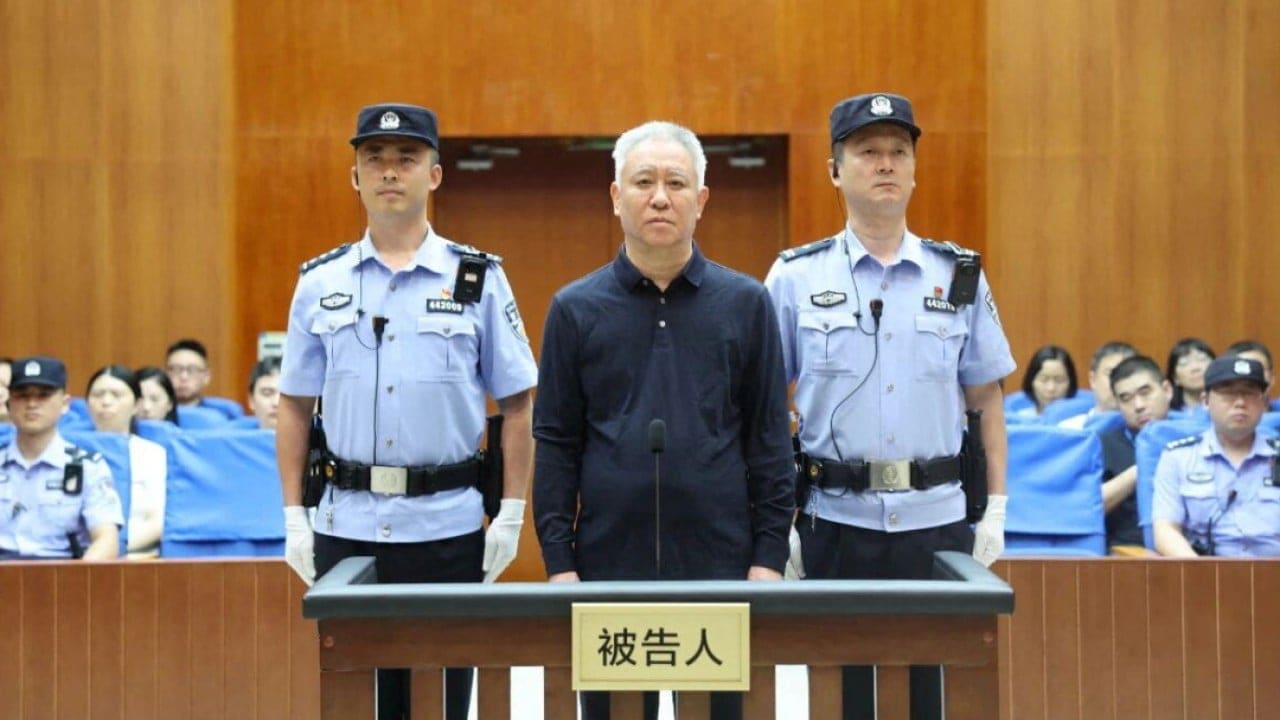
- ·A Shenzhen court fined China Evergrande founder Hui Ka-yan 8.82 billion yuan ($1.31 billion) alongside a life sentence, marking the end of regulatory proceedings against the collapsed developer.
- ·China reduced its holdings of US Treasury securities as yields rose, continuing a multi-year diversification strategy away from dollar-denominated assets toward euros, gold, and regional bonds.
- ·The dual developments signal Beijing's focus on domestic financial accountability and external portfolio rebalancing amid shifting geopolitical and economic priorities in Asia.
A Symbolic Reckoning
A Shenzhen court imposed an 8.82 billion yuan (US$1.31 billion) fine on Hui Ka-yan, founder and former chairman of China Evergrande Group, bringing formal closure to one of the most spectacular corporate collapses in recent Asian history. The penalty accompanies a life sentence handed down to Hui, marking the culmination of a regulatory crackdown that reshaped China's property sector over the past three years.
The fine represents the latest chapter in Evergrande's unraveling, which began in 2021 when the developer defaulted on offshore debt obligations exceeding $300 billion. Once China's largest property company by sales, Evergrande became the poster child for overleveraged expansion fueled by cheap credit and soaring land prices. Hui's sentencing sends a clear signal that Beijing intends to hold executives personally accountable for corporate malfeasance, particularly in sectors deemed systemically important.
Evergrande's collapse triggered a cascade of defaults across China's property industry, freezing construction on thousands of residential projects and leaving homebuyers stranded with unfinished apartments. The ripple effects extended beyond real estate, dampening consumer confidence and weighing on economic growth. For investors watching Asia's largest economy, the court ruling closes a chapter while questions about sectoral recovery remain open.
Beijing Trims US Debt Exposure
The same week brought fresh data showing China reduced its holdings of US Treasury securities, continuing a multi-year trend of diversification away from dollar-denominated assets. The move coincided with a climb in Treasury yields, reflecting investor recalibration of interest rate expectations and fiscal policy uncertainty in Washington.
China's Treasury position has declined steadily since peaking in 2013, when Beijing held over $1.3 trillion in US government debt. The shift reflects both strategic considerations and practical portfolio management. As trade tensions and sanctions rhetoric intensified over the past decade, Chinese policymakers sought to reduce vulnerability to potential asset freezes or restrictions. At the same time, higher yields on alternative assets and currency diversification goals made rotating out of Treasuries a rational choice.
The timing of the latest reduction is notable. With US yields rising, selling into strength allowed Chinese reserve managers to capture better pricing while rebalancing toward assets denominated in euros, yen, and other currencies. The People's Bank of China has also increased gold reserves over the past two years, part of a broader strategy to insulate the financial system from geopolitical volatility.
For Asian fixed income markets, China's Treasury positioning matters. As the region's largest economy and a major holder of foreign reserves, Beijing's allocation decisions influence capital flows and pricing dynamics across the yield curve. A continued drift away from US debt could lift borrowing costs for Washington while channeling liquidity into regional bonds and infrastructure financing.
What the Numbers Signal
The juxtaposition of Evergrande's penalty and China's Treasury moves highlights two distinct but interconnected facets of Beijing's economic management. Domestically, authorities are tightening accountability and working to contain financial risks that accumulated during years of credit-fueled growth. Externally, policymakers are recalibrating foreign asset exposure to align with shifting geopolitical realities and return optimization.
For investors, Hui's sentencing offers a measure of certainty around regulatory direction. The era of unchecked property sector expansion is definitively over, replaced by a regime emphasizing financial discipline and risk containment. Whether this translates into sectoral stabilization depends on how effectively Beijing can complete unfinished projects, restore homebuyer confidence, and prevent further contagion.
The Treasury data, meanwhile, underscores the gradual decoupling of Chinese and US financial linkages. While the two economies remain deeply intertwined through trade and investment, the financial architecture connecting them is evolving. Asian investors will be watching whether other regional central banks follow China's lead in diversifying reserve portfolios, a shift that could reshape global bond markets over the coming decade.
Both data points landed during a week when market participants were already reassessing risk exposure across Asian equities and credit. The combination of domestic regulatory enforcement and external portfolio adjustment reinforces a narrative of Chinese policymakers managing multiple transitions simultaneously: from property-led growth to alternative engines, from dollar dependence to multipolar reserve management, and from regulatory forbearance to stricter oversight.
Observers will be tracking whether the Evergrande fine marks the final act in the property saga or merely sets the stage for further enforcement actions against other developers. Similarly, the pace and composition of China's reserve diversification will offer clues about Beijing's expectations for US fiscal policy and currency stability. For now, the numbers point to a market environment where old certainties are giving way to a more complex and multipolar financial landscape.
RELATED STORIES
Evergrande Founder's Life Sentence Adds New Layer to $57 Billion Debt Recovery
Cheng Wei-Lun · 3 min
China's Yuan Appreciation Slows as Export Sector Faces Earnings Pressure
Cheng Wei-Lun · 2 min
Guotai Haitong Asset Arm Fined $7.8 Million Over Offshore Capital Breaches
Cheng Wei-Lun · 3 min

China's Wealthy Pull Back From Luxury as Offshore Tax Crackdown Takes Hold
Cheng Wei-Lun · 4 min
Spot something wrong? Email editor@briefasia.com. We log every correction publicly.