Lifestyle · Luxury
China's Wealthy Pull Back From Luxury as Offshore Tax Crackdown Takes Hold
Sales at top luxury brands fell more than 10 percent in July, marking a sharp reversal from earlier in the year as Beijing's capital controls dampen high-end spending
KEY TAKEAWAYS
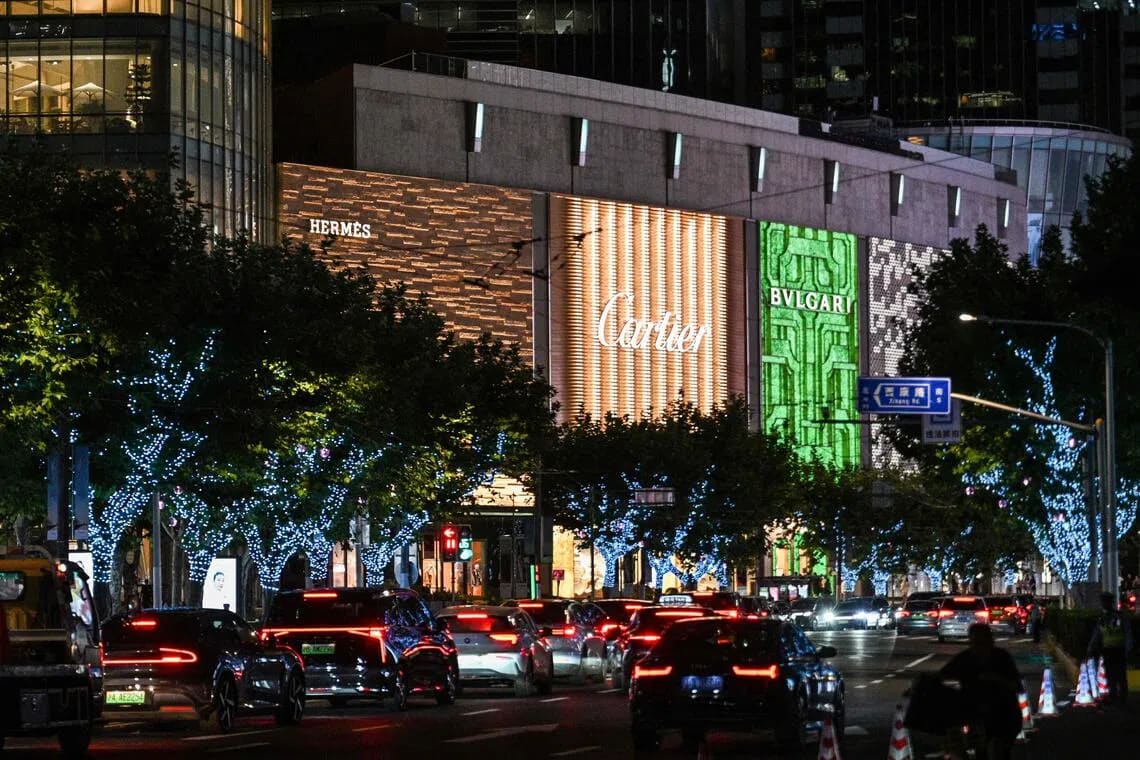
- ·The 25 largest luxury brands in China recorded sales drops exceeding 10 percent in July, with Louis Vuitton, Gucci, and Hermès all posting double-digit declines.
- ·Beijing's campaign to tax offshore wealth and tighten cross-border financial controls is dampening spending by affluent consumers whose portfolios have shifted from property to equities.
- ·Chinese Valentine's Day this week will test whether the July slump marks a temporary blip or the start of a sustained downturn in luxury demand.
Luxury Brands Face Double-Digit Declines
The 25 largest luxury labels operating in China recorded sales drops exceeding 10 percent in July, according to research firms tracking industry data. Louis Vuitton, Dior, Gucci, Bottega Veneta, and Balenciaga all posted double-digit declines. Hermès, which had been posting gains, swung to negative territory. Growth rates at Chanel and Prada slowed significantly.
The downturn represents a sharp about-face from the first months of 2026, when luxury sales were growing at a healthy clip. June had already shown signs of cooling, but July's figures confirmed a more serious retreat among China's wealthiest shoppers.
The Tax Factor
Beijing's intensifying campaign to reclaim tax revenues from offshore assets and investment gains has emerged as a primary driver of the slowdown. The government has implemented sweeping measures to stem capital outflows, including tighter controls on cross-border stock trading and demands for citizens to settle billions of dollars in levies on wealth held outside the mainland.
These policies represent the most significant overhaul of China's cross-border financial system in a decade. For affluent households that have long relied on offshore channels to preserve and diversify wealth, the restrictions are forcing a fundamental reassessment of spending patterns.
Jacques Roizen, co-founder of Shanghai consultancy Foresight Performance Partners, noted that luxury operators are reporting increased caution among VIP clients. The combination of a diminished wealth effect and a stricter tax environment for high earners has created what he termed "legitimate concern" among luxury executives.
Market Contagion
The stock market has amplified the pain. The MSCI China Index, which rallied 28.3 percent in 2025 on the back of artificial intelligence euphoria, has fallen 8.9 percent in 2026, making it one of the worst performers globally. Hong Kong's Hang Seng Index has similarly lost momentum after strong gains the previous year.
Luxury conglomerates felt the impact in their share prices. LVMH declined 2.8 percent on August 20, reaching its lowest level in nearly two months. Kering dropped 3.6 percent, and Hermès fell 2.1 percent on Euronext.
The market downturn matters more now than it used to. With property values depressed, wealthy Chinese have shifted a larger share of their portfolios into stocks and financial assets, making them more sensitive to equity market swings. Robert Wu, chief executive of Shanghai market research firm Baiguan, observed that correlation between capital market performance and luxury sales has strengthened over the past two years, a pattern less evident when real estate dominated household wealth.
Ripple Effects Beyond Retail
The spending pullback extends beyond boutiques. Macau casinos reported steeper-than-expected revenue declines in June and July, with high-rollers betting less and visiting less frequently. The slowdown in gambling revenue underscores how broadly the tax clampdown and market weakness are affecting discretionary spending among affluent Chinese.
Stella Lin, a 37-year-old financial product saleswoman in Shanghai, used to spend at least 15,000 US dollars annually on luxury goods, attending VIP events and buying designer handbags and clothing during summer holidays. This year, she has not purchased any luxury items in recent months. The value of her stock portfolio, which accounts for more than half her invested capital, has plunged, putting her in what she describes as a "money-losing mood."
China's broader consumer sector is showing similar strain. Retail sales growth slowed to just 0.6 percent in July. Big-ticket categories, including jewelry and automobiles, saw sales plunge more than 10 percent.
Testing Consumer Confidence
August will provide a crucial read on whether the July slump was an aberration or the start of a sustained downturn. Chinese Valentine's Day, which falls this week, typically ranks among the strongest luxury shopping occasions of the year. If brands fail to produce positive growth even with that seasonal boost, Roizen said it would constitute strong evidence of a genuine slowdown rather than a temporary blip.
Luxury executives are also contending with factors beyond tax policy and market turbulence. Extreme heat, heavy rainfall, and a surge in outbound travel during the July summer holidays contributed to weaker foot traffic in stores. LVMH separately dealt with fallout from a trademark dispute with local beverage company Molly Tea. Although Louis Vuitton won the case involving its signature four-petal floral motif, the episode triggered a social media backlash and accusations of cultural appropriation.
A Market in Transition
China has long been the engine of global luxury growth, but the dynamics are shifting. Competition for the wealthiest shoppers has intensified, while middle-class consumers have curtailed spending amid the country's broader economic slowdown. The interplay of tax enforcement, capital controls, and volatile equity markets has added a new layer of complexity for brands that have come to rely on Chinese demand.
For global luxury houses, the uncertainty in China complicates an already challenging environment. The market that once seemed to promise endless expansion now requires navigating regulatory shifts, consumer caution, and the unpredictable effects of policy decisions made in Beijing. How brands adapt to this new reality will shape their performance in one of the world's most important luxury markets.
RELATED STORIES
Chinese Luxury Brands Use Southeast Asia as Overseas Testing Ground
Cheng Wei-Lun · 3 min
Beijing's Tax Sweep Puts $1.2 Trillion in Offshore Wealth Under Pressure
Cheng Wei-Lun · 4 min
China Orders 4.3 Million Vehicles Off Roads Over Emergency Exit Design
Cheng Wei-Lun · 3 min
Tesla Recalls Nearly 3 Million Vehicles in China Over Door Handle Safety Flaw
Cheng Wei-Lun · 3 min
Spot something wrong? Email editor@briefasia.com. We log every correction publicly.