Asia · Business
China Orders 4.3 Million Vehicles Off Roads Over Emergency Exit Design
Tesla leads massive safety action as Beijing clamps down on concealed door handles that trap occupants during crashes
KEY TAKEAWAYS
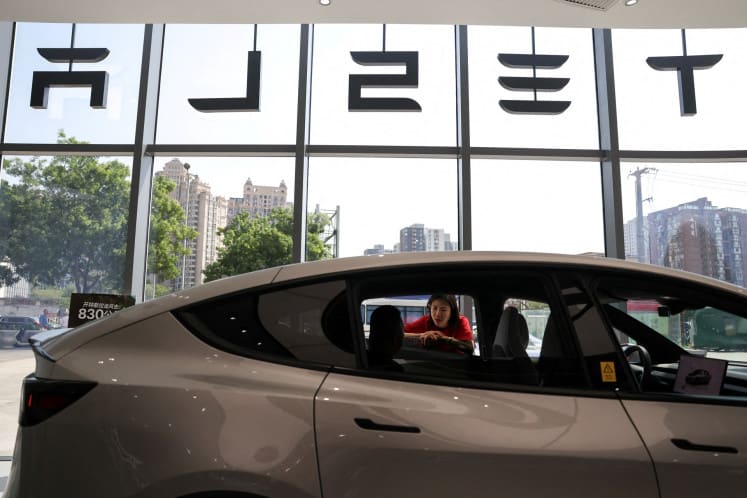
- ·Nine automakers will address emergency door systems on 4.3 million vehicles in China, the country's largest automotive recall, with Tesla accounting for 2.98 million units starting September 25.
- ·Beijing will ban concealed door handles from 2027 after fatal crashes where occupants could not escape burning vehicles, making China the first country to prohibit the design popularized by Tesla.
- ·Most fixes will deploy through remote software updates and adhesive labels rather than dealership visits, limiting costs as regulators intensify safety scrutiny amid fierce EV price competition.
Biggest Safety Action in Chinese Auto History
Nine automakers will address emergency door-release systems on 4.3 million vehicles sold in China, the country's largest automotive safety action on record. The State Administration for Market Regulation ordered the fixes after fatal incidents where occupants became trapped inside vehicles following collisions.
Tesla accounts for 2.98 million units in the action, covering Model 3, Model Y, Model S, and Model X vehicles built domestically and imported. The company will begin the process on September 25, installing warning labels and deploying remote software that automatically lowers windows after impact detection.
Xiaomi will address 390,000 vehicles, Leapmotor 371,000, and Xpeng 264,000. Geely Holding and four other manufacturers filed smaller actions with SAMR. The combined total reflects both the scale of China's EV fleet and Beijing's tightened regulatory posture toward software-dependent vehicle systems.
Fatal Crashes Drive Regulatory Response
The action targets mechanical backup door releases that regulators determined may be difficult to locate or operate when electrical systems fail during severe crashes. Chinese state media documented a fatal October crash involving a Xiaomi SU7 sedan where bystanders could not extract the driver from a burning vehicle because they could not find or operate the manual release mechanism.
Beijing announced earlier this year it will prohibit concealed door handles from 2027, the first government worldwide to ban the design. The handles, which retract flush with the body when not in use and open via smartphone, key fob, or capacitive touch, became widespread after Tesla introduced them to reduce aerodynamic drag. Domestic Chinese EV makers adopted the design rapidly as the industry entered a brutal price war that squeezed margins and accelerated feature proliferation.
Leapmotor said its remedy involves only labeling and power-window software changes but classified the work as a formal recall out of responsibility to customers. Xiaomi declined to provide information beyond the regulatory filing. Xpeng and Geely did not comment.
Software Fixes Keep Costs Contained
Most manufacturers will deploy fixes through over-the-air updates rather than requiring physical dealership visits. Tesla's remedy combines adhesive labels identifying the manual release location with software that triggers automatic window lowering when collision sensors activate, giving occupants an alternative exit path if doors jam.
Sam Fiorani, vice president at AutoForecast Solutions, noted that remote update capability sharply reduces the financial impact compared to traditional recall campaigns that require parts shipment and technician labor. The actions represent the largest on record for Tesla, Xiaomi, Leapmotor, Xpeng, and Geely based on SAMR filings.
Beijing Tightens EV Oversight Amid Market Chaos
China has escalated safety scrutiny of electric vehicles throughout 2026 as manufacturers locked in aggressive price competition rush new technologies to market. The country remains the world's largest vehicle market and accounts for more than half of global EV sales, making regulatory decisions by SAMR influential beyond China's borders.
United States regulators have also examined the door-handle issue. The National Highway Traffic Safety Administration said in late July it would evaluate new standards addressing occupant entrapment during electrical failures. NHTSA confirmed Friday it had not received recall filings from automakers for the US market mirroring the Chinese action.
The scale of the Chinese recall underscores how quickly design choices can propagate through a hyper-competitive market where dozens of manufacturers chase the same styling cues and feature sets. What began as an aerodynamic optimization by one California company became an industry-wide convention in China within five years, now subject to the largest safety reversal in the country's automotive regulatory history.
RELATED STORIES
Tesla Recalls Nearly 3 Million Vehicles in China Over Door Handle Safety Flaw
Cheng Wei-Lun · 3 min
Beijing Orders 4.3 Million Vehicle Recall Over Emergency Exit Flaws
Cheng Wei-Lun · 4 min

Global Efforts to Break China's Rare Earth Grip Fall Short
Cheng Wei-Lun · 4 min
Trump's Iran Sanctions Strategy Threatens China Trade Tensions
Cheng Wei-Lun · 4 min
Spot something wrong? Email editor@briefasia.com. We log every correction publicly.