Asia · Business
Beijing Orders 4.3 Million Vehicle Recall Over Emergency Exit Flaws
Regulators mandate fixes for concealed door releases after fatal incidents expose safety gap in China's EV fleet
KEY TAKEAWAYS
- ·Nine automakers must retrofit 4.3 million vehicles in China after regulators found concealed door handles create life-threatening risks during crashes with electrical failures.
- ·Tesla accounts for 2.98 million affected units, deploying software that lowers windows automatically post-collision while adding visual markers for manual releases starting September 25.
- ·China will ban flush door handle designs from 2027, becoming the first country to prohibit the feature after a fatal October crash where bystanders could not extract a trapped driver.
Largest Safety Action in Chinese Automotive History
Nine automakers operating in China must retrofit approximately 4.3 million vehicles after regulators determined that flush-mounted door systems pose life-threatening risks during collisions. The State Administration for Market Regulation announced the measures Friday, citing incidents where occupants remained trapped inside vehicles following crashes.
The action affects vehicles manufactured and sold by multiple companies, with remedies ranging from software patches deployed wirelessly to physical warning labels installed at service centers. Beijing's intervention comes as the world's largest automotive market tightens safety standards amid a price war that has accelerated technology rollout across hundreds of EV models.
Tesla Faces Largest Individual Compliance Burden
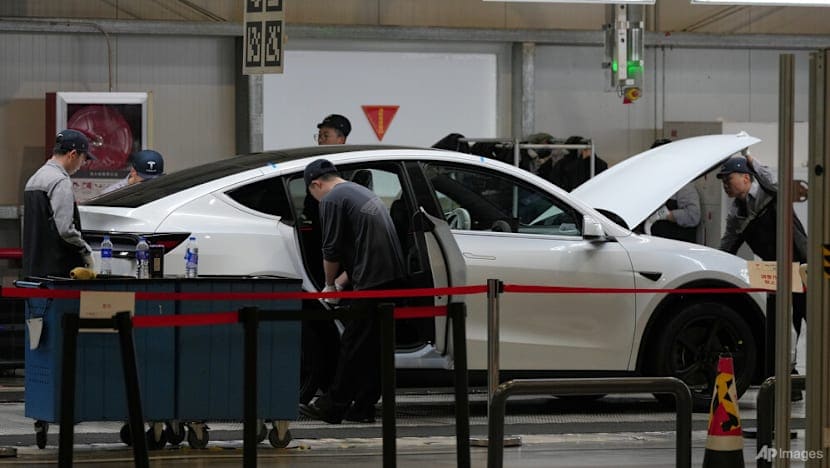
The American manufacturer must address 2.98 million units across its Model 3, Model Y, Model S, and Model X lineups beginning September 25, according to filings with SAMR. The company plans to deploy over-the-air software that automatically lowers windows following impact, while adding visual markers to help occupants locate manual release mechanisms.
Xiaomi faces a recall covering roughly 390,000 units, Leapmotor 371,000, and Xpeng 264,000. Geely Holding also filed notices with the regulator. Each represents the largest compliance action these companies have faced in China.
Leapmotor stated it would manage the process "out of a sense of responsibility to our users," noting the upgrade involves warning labels and power-window control software adjustments.
Fatal Crash Highlights Design Vulnerability
Chinese state media documented a fatal October incident involving a Xiaomi SU7 sedan, where bystanders could not extract the driver from the burning wreckage after a collision. The case intensified regulatory scrutiny of emergency egress systems in vehicles where traditional door handles have been replaced by electronic touch panels or smartphone-activated mechanisms.
SAMR identified the core defect as mechanical backup releases that occupants struggle to find or operate when electrical systems fail during severe impacts. The design flaw affects vehicles where flush aerodynamic surfaces prioritize efficiency and aesthetics over immediate tactile identification.
Regulatory Ban Takes Effect in 2027
China will prohibit concealed door handle designs from 2027, becoming the first jurisdiction globally to phase out the feature. The ban targets hardware popularized across dozens of domestic EV brands competing in a market where styling differentiation and range optimization drive purchasing decisions.
The regulatory shift reflects Beijing's heightened oversight of an industry that delivered more than 9 million new energy vehicles in 2025. Authorities have introduced multiple safety protocols this year as software-defined architectures and rapid feature deployment outpace traditional testing cycles.
Limited Financial Impact Expected
Sam Fiorani of AutoForecast Solutions noted that modern wireless update capabilities significantly reduce compliance costs compared to historical recalls requiring physical dealership visits. "The physical work needed will not be very costly compared to significant recalls of the past," he said.
Most affected vehicles will receive software patches remotely, with only label installation requiring service appointments. The approach mirrors strategies automakers have adopted globally to manage safety actions across large fleets without disrupting operations.
U.S. Regulators Monitoring, No Parallel Action Yet
The U.S. National Highway Traffic Safety Administration said in July it would evaluate new standards addressing occupant entrapment risks during electrical failures. However, the agency confirmed Friday that no automaker has filed parallel recall notices for the American market.
The divergence highlights differing regulatory approaches between Beijing and Washington, where NHTSA typically waits for manufacturers to self-report defects or conducts independent investigations before mandating action.
Market Dynamics Behind Safety Scrutiny
China's automotive sector remains locked in a price war that has compressed margins and accelerated technology deployment timelines. Manufacturers have raced to differentiate products through software features, autonomous capabilities, and design elements that appeal to younger, tech-focused buyers.
Regulators now face the challenge of balancing innovation incentives with public safety as the installed base of software-driven vehicles grows. The door handle recall signals Beijing's willingness to impose retrospective fixes when design choices create measurable risk, even when affecting millions of units already on roads.
The action also underscores the practical limits of features optimized for user experience in normal conditions but inadequate during emergencies. As electric architectures eliminate mechanical linkages between controls and physical systems, regulators worldwide are reassessing minimum fail-safe requirements for critical functions like door operation, braking, and steering.
What Comes Next
Vehicle owners will receive notifications through official channels and manufacturer apps, with service appointments scheduled on a rolling basis. Over-the-air updates will deploy automatically for vehicles with active connectivity, while label installation will require brief service center visits.
The 2027 ban on concealed handles will force redesigns across model lines currently in development, potentially creating competitive advantage for manufacturers whose existing designs already incorporate visible mechanical backups. Industry observers expect other markets to monitor China's experience before considering similar restrictions.
RELATED STORIES

Geely's First-Half Profit Jumps 46% on Overseas Push
Cheng Wei-Lun · 4 min
Geely Auto Appoints New Chairman as Founder Steps Back from Listed Unit
Cheng Wei-Lun · 2 min

Global Efforts to Break China's Rare Earth Grip Fall Short
Cheng Wei-Lun · 4 min

Trump's Iran Sanctions Strategy Threatens China Trade Tensions
Cheng Wei-Lun · 4 min
Spot something wrong? Email editor@briefasia.com. We log every correction publicly.