Technology · Products
China's EV Market Faces Deluge of Launches in Single Day
Eight automakers unveiled models simultaneously last month, reflecting the industry's breakneck pace and mounting competitive pressure
KEY TAKEAWAYS
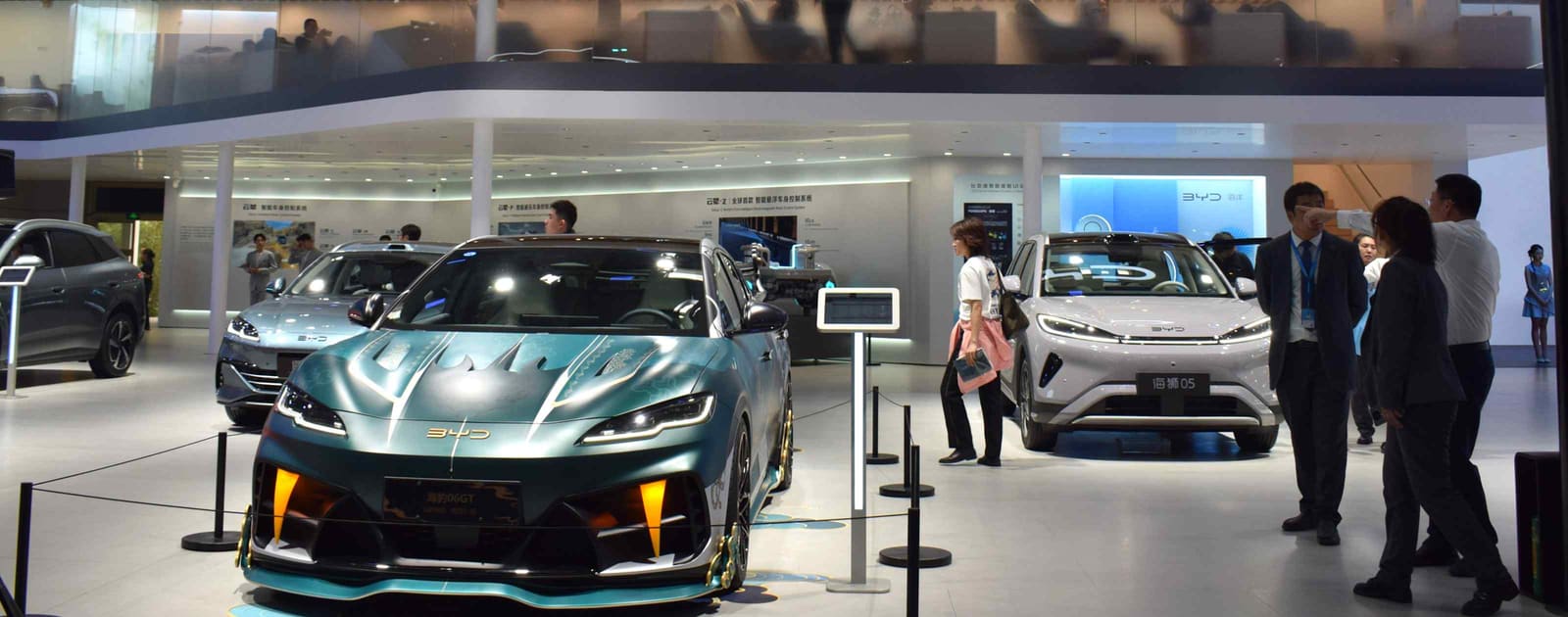
- ·Eight Chinese automakers, including Great Wall Motor and Leapmotor Technology, unveiled new models on the same day in July, with six introducing electric or new energy vehicles.
- ·BYD, China's largest EV maker, described the industry-wide release pace as brutal, reflecting mounting competitive pressure as domestic demand weakens.
- ·Manufacturers are pivoting to export markets and premium segments to escape margin compression, while subsidy reductions have forced companies to compete on product merit rather than state support.
Collision of Debuts
At least eight Chinese automakers released new models on the same Thursday in July, marking what industry observers have begun calling the country's most concentrated vehicle launch day on record. The lineup ranged from established manufacturers like Great Wall Motor to emerging players such as Leapmotor Technology, with six of the eight unveiling electric or new energy vehicles.
The synchronized releases underscore the intensity of competition in China's crowded EV sector, where manufacturers are racing to capture market share in a domestic market that has become saturated with choices. Even BYD, the country's largest electric vehicle producer, has acknowledged the punishing tempo. An executive at the company described the release schedule across the industry as "brutal," according to internal communications.
Market Dynamics Shift
The phenomenon reflects deeper structural changes in China's automotive landscape. Domestic demand for electric vehicles has weakened relative to earlier growth trajectories, prompting manufacturers to accelerate product cycles and diversify their offerings. The glut of launches signals both ambition and anxiety, as companies attempt to differentiate themselves in a market where dozens of brands now compete for attention.
Great Wall Motor, one of China's oldest private automakers, used the day to showcase updated SUV variants. Leapmotor Technology, a smaller manufacturer backed by contemporary investors, introduced a compact EV aimed at urban buyers. The other participants included mid-tier brands attempting to secure footholds before consolidation reshapes the sector.
Supply Chain Under Pressure
The launch frenzy coincides with mounting pressure on China's EV supply chain. Battery manufacturers, component suppliers, and assembly facilities are stretched thin as automakers demand faster turnaround times and greater customization. CATL, the world's largest battery producer, has maintained profitability even as vehicle makers face margin compression, highlighting the uneven distribution of value across the ecosystem.
Automakers are also pivoting toward export markets as a release valve for production capacity. Several Chinese brands have increased their overseas sales targets, recognizing that the domestic market cannot absorb the current rate of output. BYD has entered partnerships with dealership networks in Japan and Europe, while Xpeng and other manufacturers are exploring Southeast Asian and Latin American markets.
The Upmarket Gamble
Some manufacturers are attempting to escape the pricing war by moving upmarket. BYD and Xpeng have both introduced premium SUVs with price tags exceeding $50,000, targeting buyers who previously purchased vehicles from European or American brands. The strategy carries risk; Chinese consumers have historically shown reluctance to pay luxury premiums for domestic nameplates, and the high-end segment remains dominated by Tesla and legacy German manufacturers.
The competitive environment has also prompted unexpected alliances. Honda and Toyota, traditionally cautious about partnerships, have embraced technology-sharing agreements with Chinese EV suppliers to accelerate their own electrification timelines. Japanese automakers, once dominant in Asia's automotive sector, are playing catch-up as Chinese manufacturers establish technological leads in battery chemistry, software integration, and autonomous driving systems.
Regulatory and Subsidy Context
Government policy continues to shape market behavior. Changes to China's EV subsidy structure earlier this year reduced direct purchase incentives, contributing to the sales decline at major manufacturers. BYD reported a 16 percent drop in first-half sales, attributed in part to the subsidy adjustments. The policy shift has forced companies to compete on product merit rather than price advantages derived from state support.
Chinese parts manufacturers are also pushing into international markets, attempting to penetrate Japan's historically closed automotive supply networks. The move represents a reversal of historical trade flows and signals China's ambition to export not just finished vehicles but also the industrial ecosystem that supports them.
What Comes Next
The concentration of launches on a single day may become routine rather than exceptional. Industry analysts expect the pace of new model introductions to remain elevated through the end of the year, as manufacturers attempt to meet annual targets and clear inventory before the next subsidy cycle begins. The question is whether the market can sustain this velocity without triggering a wave of bankruptcies among smaller players.
For now, the industry continues to sprint. The "Crazy Thursday" of simultaneous launches reflects a market where standing still is not an option, and where even the largest players acknowledge the challenge of keeping pace.
RELATED STORIES
China's Electric Vehicle Market Enters Seventh Month of Decline
Cheng Wei-Lun · 3 min
Xiaomi's Q2 Revenue Slides 6% as Smartphone Sales Weaken Despite EV Gains
Cheng Wei-Lun · 3 min

Japanese Automakers Turn to Startups for Self-Driving Technology
Aiko Nakamura · 2 min
Tesla Recalls Nearly 3 Million Vehicles in China Over Door Handle Safety Flaw
Cheng Wei-Lun · 3 min
Spot something wrong? Email editor@briefasia.com. We log every correction publicly.