Asia · Trade
Global Efforts to Break China's Rare Earth Grip Fall Short
Friendshoring strategies and autonomy goals collide as nations struggle to diversify critical mineral supply chains away from Beijing's control
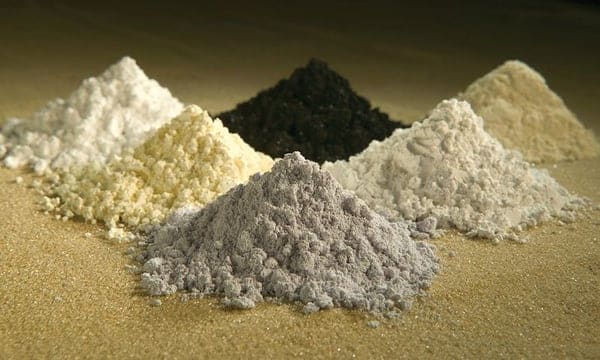
KEY TAKEAWAYS
- ·China controls 70 percent of rare earth mining and over 85 percent of processing, with diversification efforts achieving limited progress after three years of coordinated action.
- ·Competing strategies between U.S.-led friendshoring and EU-India strategic autonomy have created inefficiencies, driving up costs and duplicating infrastructure investments.
- ·Non-Chinese sources will supply at most 25 percent of global rare earth demand by 2030, with processing capacity outside China remaining below 20 percent for five more years.
The Diversification Dilemma
The world's campaign to reduce reliance on Chinese critical minerals has hit a fundamental obstacle: nations cannot agree whether to pool resources with allies or build independent supply chains. This split has undermined efforts to challenge Beijing's decades-long dominance in rare earth elements, materials essential for everything from smartphones to missile guidance systems.
China controls approximately 70 percent of global rare earth mining and over 85 percent of processing capacity. This stranglehold has prompted urgent responses from governments across Asia, North America, and Europe. Yet three years into coordinated diversification efforts, alternative supply chains remain fragile and heavily dependent on Chinese expertise and capital.
Friendshoring Versus Going Solo
The tension plays out in two competing visions. Friendshoring advocates, led primarily by Washington, push for integrated supply networks among democratic allies. The United States, Japan, South Korea, and Australia have signed multiple memoranda of understanding to share technology, finance joint ventures, and coordinate procurement.
Meanwhile, the European Union and India have pursued what officials call strategic autonomy, investing billions to develop domestic processing facilities and secure bilateral deals with resource-rich nations in Africa and Southeast Asia. Brussels allocated 3.4 billion euros under its Critical Raw Materials Act to reduce import dependence below 65 percent by 2030.
These parallel tracks have created inefficiencies. Competing bids for the same lithium deposits in Zimbabwe and cobalt mines in the Democratic Republic of Congo have driven up acquisition costs. Duplicate investments in separation technology and refining infrastructure stretch limited pools of technical talent.
Where the Money Goes
Financial commitments tell part of the story. Japan's state-backed JOGMEC has earmarked $10.5 billion for rare earth projects through 2028. South Korea established a $2.3 billion fund targeting battery materials and permanent magnet metals. The U.S. Defense Production Act released $750 million for domestic processing, while the Inflation Reduction Act offers tax credits worth an estimated $4 billion over a decade for critical mineral refining.
Yet capital alone has not translated into operational mines or refineries. Regulatory delays, environmental reviews, and community opposition have slowed projects. Mountain Pass in California, the only operating rare earth mine in the United States, still ships concentrate to China for separation. Proposed facilities in Texas and Wyoming face permitting timelines extending into 2029.
The Technical Reality
Rare earth processing requires not just equipment but accumulated know-how. Chinese engineers have spent 30 years optimizing chemical processes that separate 17 chemically similar elements with minimal waste and cost. Replicating that expertise takes time, even with substantial investment.
Several joint ventures have discovered this the hard way. An Australian-Japanese processing plant in Malaysia, inaugurated in 2024 with much fanfare, operates at 40 percent of nameplate capacity due to yield issues. A European rare earth refinery in Estonia postponed commercial production twice, citing problems with cerium and lanthanum separation.
China has not stood idle. State-owned enterprises have acquired stakes in lithium projects in Chile, nickel operations in Indonesia, and cobalt assets in Central Africa. Beijing's Belt and Road Initiative continues to finance infrastructure connecting mines in Zambia and Tanzania to Chinese-operated ports. These moves extend supply chain influence even as other nations seek alternatives.
Regional Fractures
Within Asia, coordination remains patchy. Vietnam and Thailand have rare earth deposits but lack capital and technology for large-scale development. Both have entertained Chinese investment offers, despite pressure from Washington and Tokyo to align with friendshoring frameworks.
India's pursuit of self-sufficiency has led New Delhi to restrict rare earth exports, frustrating Japanese and South Korean manufacturers who hoped to diversify sourcing within the region. Indonesia's nickel export ban, designed to build domestic battery production, has similarly complicated supply planning for carmakers in Japan and Europe.
What Comes Next
Industry analysts point to a sobering timeline. Even under optimistic scenarios, non-Chinese sources will supply at most 25 percent of global rare earth demand by 2030. Processing capacity outside China will remain below 20 percent for at least another five years.
Some companies have quietly resumed long-term contracts with Chinese suppliers, accepting the geopolitical risk in exchange for price stability and reliable delivery. Defense contractors in the United States and Europe continue to depend on Chinese rare earth permanent magnets, despite policy directives to source domestically.
The diversification push has not failed entirely. New mines in Australia, Canada, and Greenland will add supply. Technology improvements may reduce rare earth intensity in some applications. Recycling from end-of-life electronics and magnets could provide 10 to 15 percent of demand within a decade.
But the original goal of breaking Chinese dominance has receded. The current trajectory points instead toward a modest reduction in dependence, achieved slowly and at considerable cost. The fundamental tension between allied cooperation and national autonomy continues to slow progress, leaving Beijing's position largely intact.
RELATED STORIES

Hebei and Vietnam Target Deeper Agricultural Supply Chain Integration
Cheng Wei-Lun · 3 min

Nokia to Exit Mainland China Operations Before Year End
Cheng Wei-Lun · 3 min
Taiwan Suppliers Face Delivery Delays as Beijing Slows Critical Materials Clearances
Cheng Wei-Lun · 3 min

Beijing Bars Cooperation With EU Investigation Into JD.com's German Acquisition Bid
Cheng Wei-Lun · 3 min
Spot something wrong? Email editor@briefasia.com. We log every correction publicly.