Asia · Business
DBS Hires 10% More Staff in Singapore as AI Adoption Tops 70%
Southeast Asia's largest bank frames artificial intelligence as cognitive enhancement, not workforce threat, while expanding graduate hiring and wealth management teams
KEY TAKEAWAYS
- ·DBS Bank increased new hires in Singapore by approximately 10 percent in 2026 compared to the prior year, while over 70 percent of employees now use AI tools generating 1.8 million prompts monthly.
- ·The bank hired 112 management associates so far this year, more than double the average annual intake from 2024 and 2025, with expansion focused on AI, data, wealth management, risk and cybersecurity roles.
- ·DBS invested millions in AI subscriptions and trained over 100 HR staff as career advisers to support internal mobility, with Singapore attrition at 2.8 percent reducing replacement hiring needs.
Hiring Surge Alongside AI Push
DBS Bank has increased its new hires in Singapore by roughly 10 percent so far in 2026 compared with the same period last year, even as more than 70 percent of its workforce now uses artificial intelligence tools daily.
The hiring uptick, if sustained through year-end, would reverse a two-year decline that saw new Singapore hires drop from 1,833 in 2023 to 1,097 in 2025. The bank has also taken on 112 management associates in 2026 to date, more than double the average annual intake from 2024 and 2025 combined.
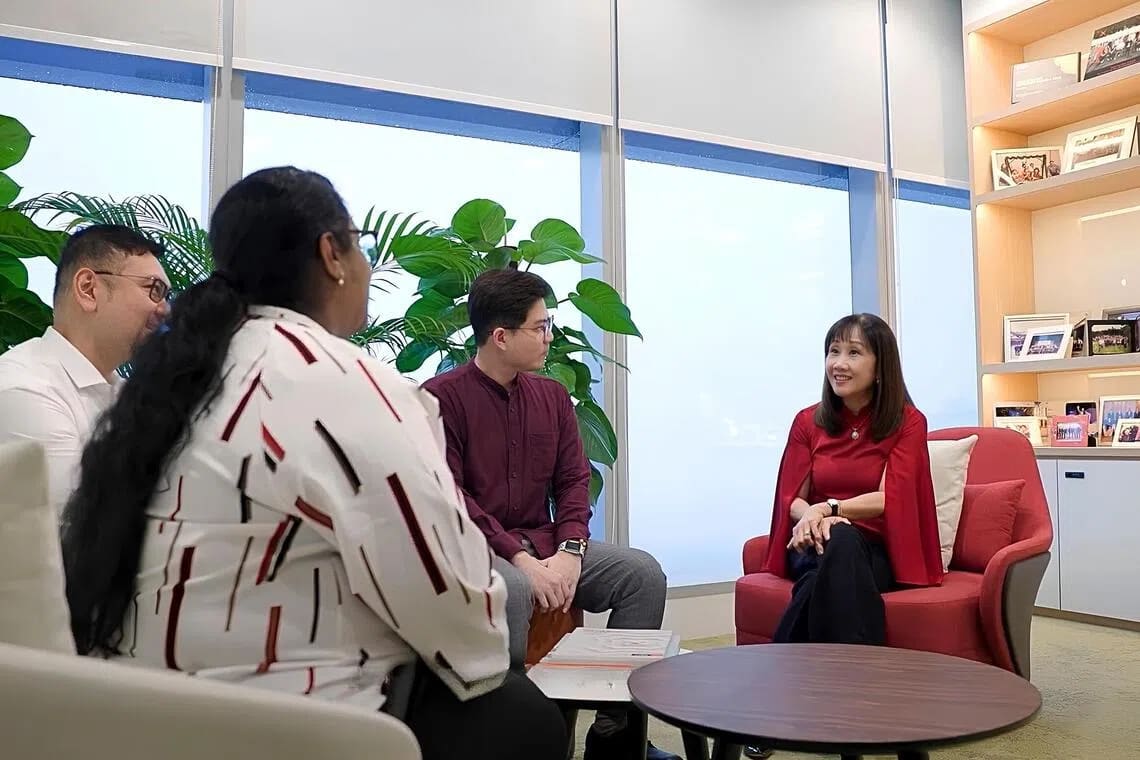
Lee Yan Hong, head of group human resources at Southeast Asia's largest bank by assets, said the institution is focused on creating roles in AI, data, wealth management, risk management and cybersecurity. The expansion reflects DBS's strategy to deploy AI as a capacity builder rather than a headcount substitute.
According to Lee, the bank's attrition rate in Singapore stands at 2.8 percent, reducing the need for replacement hiring. Over 500 graduates are expected to join through management associate, internship and traineeship programmes this year.
Cognitive Enhancement, Not Job Replacement
Lee reframes artificial intelligence as a tool that compensates for human cognitive limits, much as cars were invented to overcome physical constraints on travel. She described AI as enabling her to process information at scales previously impossible: reading vast volumes of material, synthesising patterns and producing summaries in minutes rather than hours.
Performance evaluations for senior executives, which once required eight hours of manual data gathering from 360-degree surveys and personality assessments, now produce a first draft in five minutes. The time saved allows for deeper analysis before final committee decisions.
DBS employees generate more than 1.8 million AI prompts each month across the bank's 19 markets. The institution has invested millions of dollars in subscriptions to tools including its in-house DBS GPT and Microsoft Copilot. Lee said adoption accelerated as staff observed colleagues producing higher-quality reports and writing in fluent English, creating a fear-of-missing-out dynamic.
Practical Applications in HR and Hiring
The bank uses AI for initial resume screening, particularly in India where a single job posting can attract between 10,000 and 100,000 applications. Lee said AI enables consistent, skills-based screening without human bias, though all candidates still undergo psychometric and technical assessments before final interviews.
DBS permits candidates to use generative AI during writing and coding tests. Lee noted that AI raises the baseline for all applicants, making differentiation dependent on deeper thinking, broad reading and the ability to connect disparate ideas into outstanding solutions.
The bank has trained more than 100 members of its 500-person HR team as career advisers, launching the service in late August to guide internal mobility. Call centre staff can transition into relationship management roles serving wealth clients or small and medium enterprises after obtaining necessary licences. Those preferring back-office work can move into operational support roles within the growing wealth management division.
Building AI Capability Across the Sector
DBS signed a memorandum of understanding with the Institute of Banking and Finance to jointly develop AI capabilities, support workers transitioning into redesigned roles and strengthen the pipeline of young talent for Singapore's financial sector.
Lee said removing fear around AI remains a crucial part of workforce preparation. She expressed frustration with jargon such as "prompt engineering," which she believes makes the technology sound unnecessarily intimidating. The core skill, she said, is simply learning to ask better questions.
The bank's digital transformation began in 2014, and it moved quickly to experiment with generative AI in 2023 as ChatGPT gained mainstream traction. Rather than waiting for organic adoption, DBS equipped employees with tools and encouraged broad usage across all markets.
Lee contrasted the AI transition with challenges she faced during the 2008 global financial crisis, when she worried whether her team would survive if the international bank she worked for collapsed, and the COVID-19 pandemic, which required keeping thousands of employees safe. AI, she said, feels more like a leadership opportunity where she has greater control.
Her message to the workforce is direct: focus on what AI can do for you, not what it might do to you. Fear, she said, is not a strategy, and inaction risks missing an industrial revolution.
RELATED STORIES
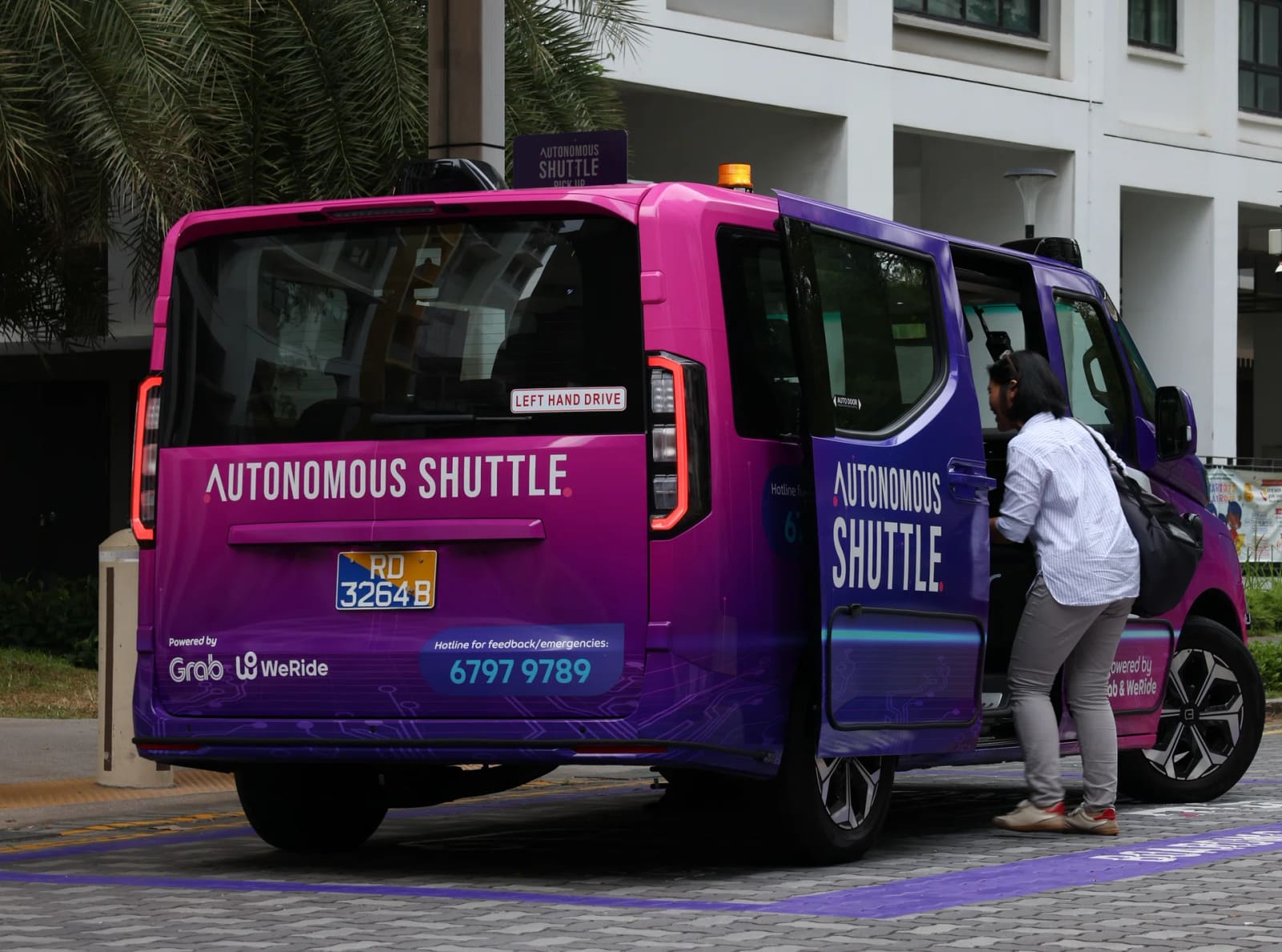
Singapore Backs Autonomous Vehicle Rollout Despite Taxi Industry Disruption
Lim Hui Ying · 3 min
Singapore's Full Childcare Leave Reimbursement Wins Employer Praise Despite Staffing Worries
Lim Hui Ying · 3 min
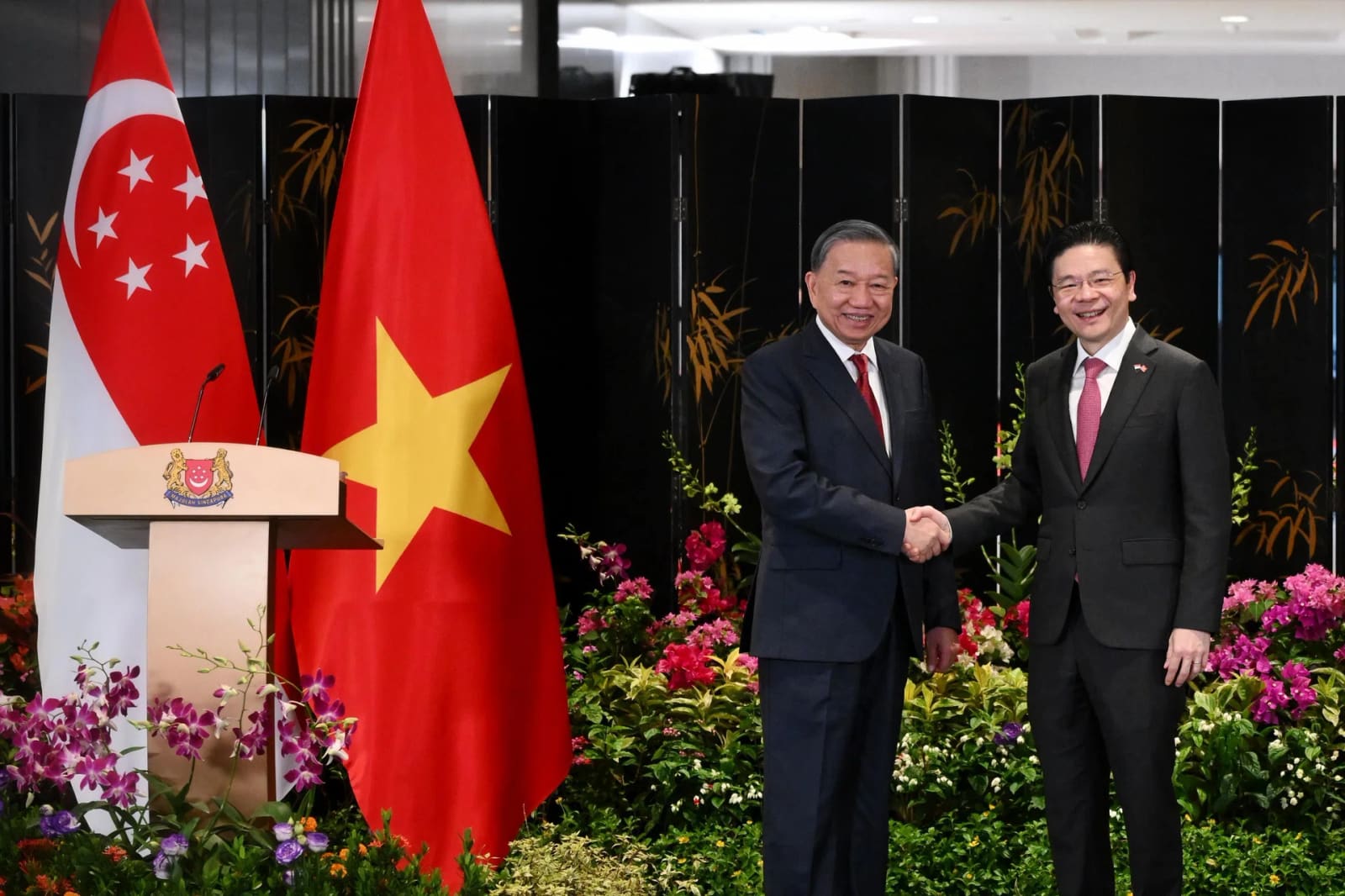
Singapore and Vietnam Launch Strategic Dialogue on Talent and Technology
Priyanka V. Rao · 3 min
Singapore Plans Western Island Megaproject to Anchor Next-Generation Industries
Lim Hui Ying · 4 min
Spot something wrong? Email editor@briefasia.com. We log every correction publicly.