Asia · Politics
Singapore Backs Autonomous Vehicle Rollout Despite Taxi Industry Disruption
Prime Minister Lawrence Wong pledges worker support as city-state plans progressive AV scale-up to address transport manpower crunch
KEY TAKEAWAYS
- ·Singapore will scale autonomous vehicle deployment beyond Punggol trials once technology is proven, addressing taxi workforce ageing and bus driver shortages.
- ·Prime Minister Lawrence Wong pledged progressive rollout calibrated to government capacity to retrain displaced taxi and private-hire drivers.
- ·AI agents now give Singapore SMEs access to automated marketing and operations capabilities previously limited to larger corporations with dedicated teams.
Tech Adoption Without Worker Abandonment
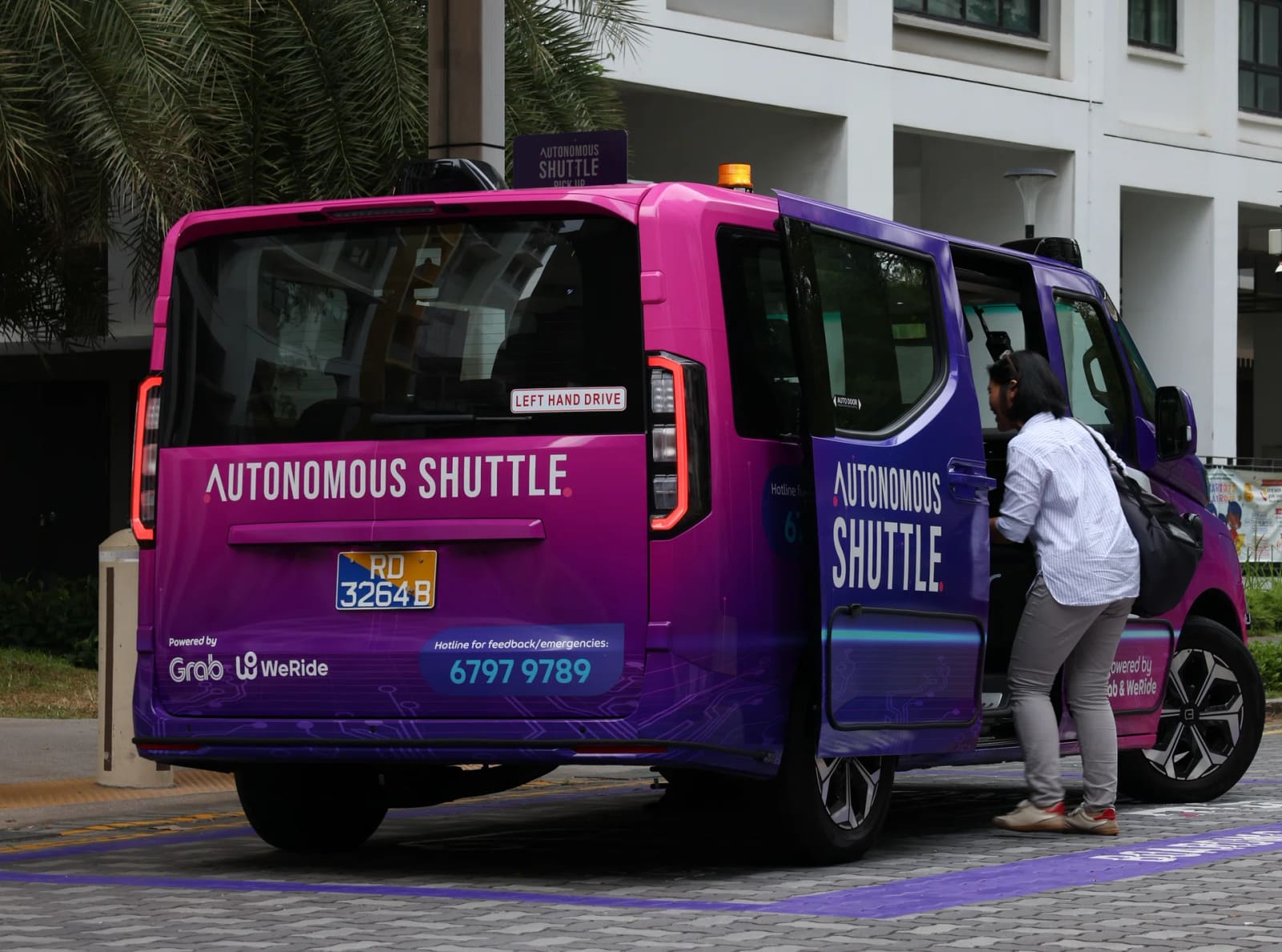
Singapore will push ahead with autonomous vehicle deployment despite the technology's threat to taxi and private-hire drivers, Prime Minister Lawrence Wong announced Sunday. The government intends to scale up AV use beyond current driverless shuttle trials in Punggol once the technology proves commercially viable, according to Wong.
The move addresses acute manpower constraints in Singapore's transport sector, including an ageing taxi workforce and persistent difficulty recruiting bus drivers. But Wong emphasized that policymakers would calibrate the rollout pace to match the government's capacity to retrain affected workers.
"We will not let adoption run ahead of our ability to retrain and support affected drivers, and help them move into new jobs," Wong said. The pledge reflects Singapore's longstanding policy of embracing disruptive technologies while managing workforce transitions, rather than blocking innovations to protect incumbent industries.
Ride-Hailing as Blueprint
Wong pointed to Singapore's 2013 handling of ride-hailing platforms as a template for the AV transition. When apps entered the local market thirteen years ago, regulators enacted competition rules and driver support measures instead of banning the services outright. The taxi industry adapted, and both commuters and drivers benefited from expanded options, according to Wong.
That approach has kept Singapore competitive through successive technology waves, from industrialization through computerization to the internet era. Each shift brought new capabilities, attracted leading firms, and created higher-value jobs for Singaporeans, Wong noted.
The AV strategy follows the same logic. Driverless shuttles are already operating in trial zones, and the government views wider deployment as essential to meeting growing transport demand in a city-state where labor supply cannot keep pace with infrastructure expansion.
AI Levels the Field for Small Business
Wong also highlighted artificial intelligence's potential to narrow the capability gap between Singapore's small and medium enterprises and larger corporations. AI agents now automate routine tasks in marketing and operations that previously required dedicated teams, freeing SME owners to focus on strategy and growth.
The technology shift has accelerated faster than expected since Wong's 2025 National Day Rally, where he first called AI "a defining technology of our time." Agentic AI systems that carry out complex, multi-step tasks autonomously have become commercially accessible in the past year, bringing enterprise-grade tools within reach of businesses that lack deep technical resources.
"That's the power of AI - it can enable SMEs to think bigger, move faster, and achieve more with fewer resources," Wong said. The comment underscores Singapore's broader economic strategy of using technology adoption to offset the productivity drag from a shrinking workforce.
Regional Implications
Singapore's AV commitment positions the city-state as Asia's most aggressive developed market for autonomous transport deployment. While trials are underway across the region, from Seoul to Shenzhen, few governments have signaled readiness to scale beyond controlled environments into commercial operations that directly displace human drivers.
The approach reflects Singapore's unique constraints and advantages. A compact geography, centralized infrastructure control, and high labor costs make the economics of AVs more favorable than in sprawling cities with cheaper labor pools. But the policy also tests whether Asian governments can manage technology-driven workforce disruption without triggering political backlash.
Wong's emphasis on progressive rollout and worker support suggests Singapore's leadership sees public trust as the binding constraint on AV adoption, not technical readiness. The government's ability to deliver on retraining promises will determine whether other regional capitals follow Singapore's path or opt for slower, more cautious deployment strategies.
RELATED STORIES
Singapore Pushes Back on US Tariff Expectations as Trade Tensions Reshape Global Order
Priyanka V. Rao · 3 min
Singapore Authorities Open Investigation Into Global Iron Ore Trading House Radiant World
Priyanka V. Rao · 5 min

Singapore's Dollar Stores Face Existential Threat as E-Commerce Slashes Margins
Lim Hui Ying · 3 min
Singapore's AEM Issues Rare Earnings Forecast as AI Chip Testing Demand Surges
Cheng Wei-Lun · 3 min
Spot something wrong? Email editor@briefasia.com. We log every correction publicly.