Asia · Trade
Singapore Pushes Back on US Tariff Expectations as Trade Tensions Reshape Global Order
Prime Minister Lawrence Wong says tracing every shipment's supply chain is unrealistic, while warning that geopolitics now drives trade more than economics
KEY TAKEAWAYS
- ·Singapore will enforce trade rules but cannot verify the supply chain of every product passing through its ports, Prime Minister Lawrence Wong said, as the US imposes 12.5 percent tariffs over forced labor concerns.
- ·Trade is now shaped more by security considerations than economics, Wong warned, with the US and China competing as peer powers while middle powers assert influence over markets, technology, and rule-setting.
- ·Singapore will deepen partnerships through its 2027 ASEAN chairmanship and broader engagement, building on trust in its rule of law and institutions to navigate geopolitical pressure on trade flows.
Unrealistic Expectations
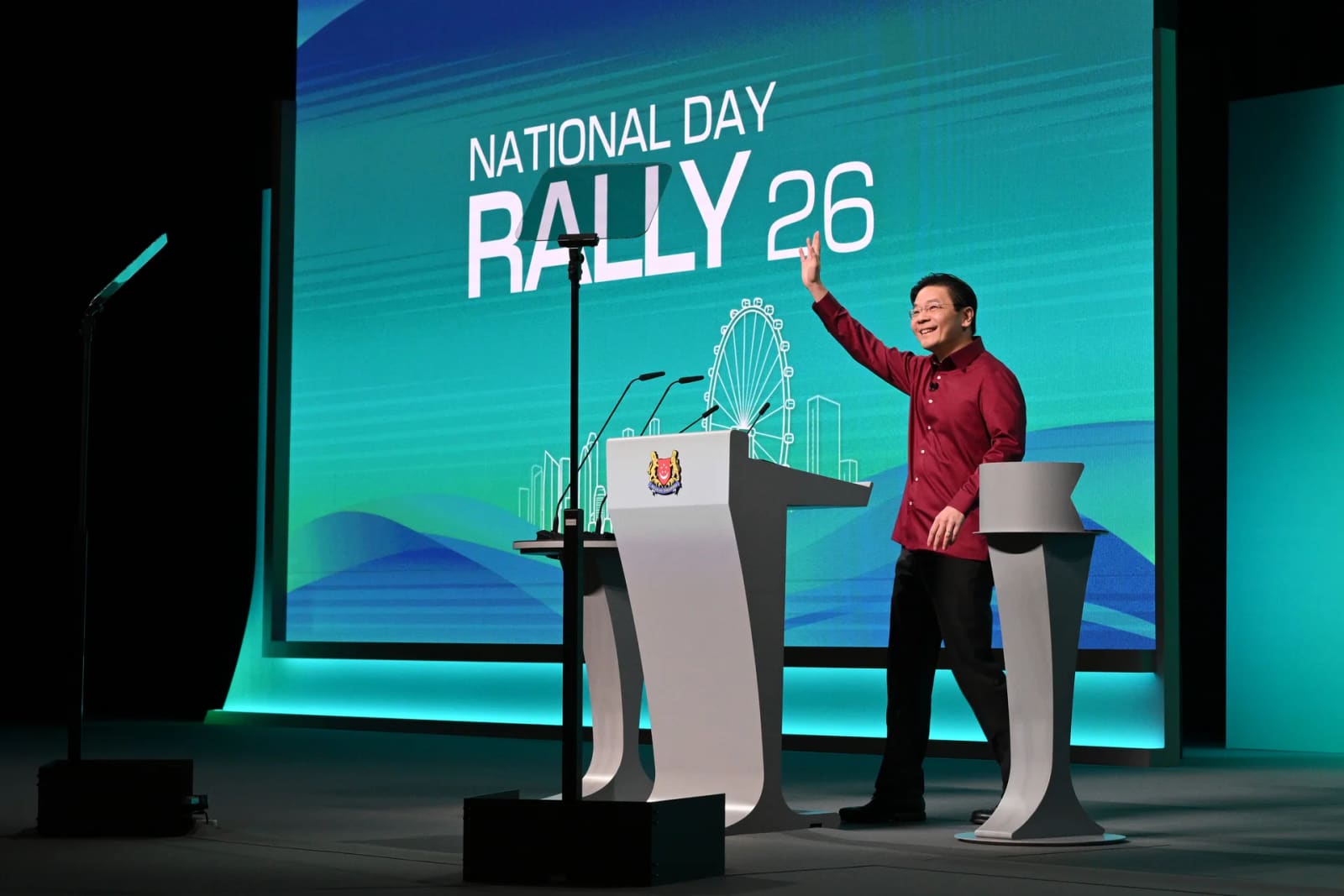
Singapore will not tolerate its ports being used for illegal trade, but it cannot realistically trace and verify the supply chain of every product moving through its territory, Prime Minister Lawrence Wong said on August 23. Speaking at the National Day Rally, Wong addressed mounting US pressure over forced labor concerns and allegations that Chinese goods are being rerouted through Southeast Asian hubs to evade tariffs.
The Republic has clear rules and enforcement mechanisms in place, Wong noted, and expects companies operating within its jurisdiction to comply. Singapore takes both forced labor and origin disguising seriously, agreeing these practices have no place in legitimate commerce. The government will continue engaging Washington to explain its position.
Yet the practical challenge remains. Singapore handles millions of containers annually across one of the world's busiest port complexes. Verifying the full provenance of every shipment passing through would require resources and visibility into supply chains that no single port authority can reasonably command.
From Liberation Day to Section 301
The context for Wong's remarks traces back to 2025, when the US imposed sweeping "Liberation Day" tariffs that courts later ruled unlawful. Washington subsequently found another mechanism through Section 301 provisions, this time citing forced labor concerns. More recently, US officials have flagged worries about Chinese goods transshipping through countries including Vietnam, Thailand, and Singapore to circumvent trade restrictions.
The White House has claimed that transshipped goods cost the US up to USD 26 billion in lost tariff revenue. In response, Washington imposed a 12.5 percent levy on Singapore under the forced labor rationale, part of a broader set of tariffs affecting 60 trading partners.
Economists in Singapore have suggested the direct impact on the city-state's economy may be contained, given its role as a logistics and financial hub rather than a manufacturing base. Still, the tariffs signal a shift in how the US approaches trade enforcement, one that places compliance burdens on intermediary jurisdictions.
Security Over Economics
Wong framed the tariff dispute as a symptom of a deeper transformation. Trade is no longer shaped primarily by economics, he said, but increasingly by security considerations. This shift reflects a broader change in the global order, where established rules and norms are being overturned as the balance of power shifts.
The US remains the world's leading power, but China has risen rapidly and now competes across multiple domains with deep capabilities. Europe remains a major force, India is ascending quickly, and middle powers are asserting their interests more actively. Power is dispersing, Wong said, with different centers jostling for influence over markets, technology, resources, and increasingly, over who sets the rules.
Tariffs are only one manifestation. Greater power competition is intensifying, and conflicts that seem geographically distant can escalate or draw in other actors through alliances and interests. New technologies, including cheap drones capable of inflicting serious damage, raise the risk of miscalculation. Economic coercion, foreign interference, disinformation campaigns, and cyberattacks on critical infrastructure now operate below the threshold of open war, yet can inflict real damage.
This is not a temporary disruption, Wong warned, but a new normal that Singapore will need to navigate for years.
Deepening Partnerships
The Republic's response cannot be to retreat, Wong said. Singapore has succeeded by connecting to the world and creating value for it, strengths that depend on trust. Countries, businesses, and investors trust Singapore because the rule of law prevails, institutions are strong, and commitments are honored.
Building on that trust, Singapore will deepen its links by reaching out to more partners and creating more opportunities. One avenue will be the country's upcoming chairmanship of the Association of Southeast Asian Nations in 2027. Singapore aims to strengthen ASEAN centrality and unity, deepen regional integration, and make the bloc a more effective single market.
Beyond the region, Singapore will work to bring diverse partners together, build common ground, and keep channels for dialogue and cooperation open. In an environment where trade flows are increasingly subject to geopolitical pressure, maintaining optionality and credibility matters more than ever.
The stakes are clear. Singapore's role as a trusted node in global supply chains depends on its ability to enforce standards without succumbing to demands that exceed any port authority's realistic capacity. How it navigates US pressure while preserving its broader relationships will test the Republic's diplomatic skill in an era where economics and security have become inseparable.
RELATED STORIES
Singapore's Dollar Stores Face Existential Threat as E-Commerce Slashes Margins
Lim Hui Ying · 3 min
Singapore Backs Autonomous Vehicle Rollout Despite Taxi Industry Disruption
Lim Hui Ying · 3 min
Singapore Authorities Open Investigation Into Global Iron Ore Trading House Radiant World
Priyanka V. Rao · 5 min
Sunway Construction Wins $257 Million Contract From US Tech Multinational
Cheng Wei-Lun · 3 min
Spot something wrong? Email editor@briefasia.com. We log every correction publicly.