Technology · Dev
Samsung Workers Plan Protest Over Pay Gap Between Chip and Device Units
Union representing consumer electronics employees cites widening compensation divide as semiconductor profits surge from AI memory demand
KEY TAKEAWAYS
- ·Samsung's Donghaeng union will hold a rally Friday in Seoul over pay disparities between the Device eXperience division and the semiconductor unit, which is posting record profits from AI chip demand.
- ·The semiconductor division's operating margins have climbed past 30 percent on surging HBM3E memory orders, while consumer-device margins remain in the mid-single digits amid component cost pressure.
- ·The protest follows a separate three-week strike in July by the National Samsung Electronics Union, marking a year of intensified labor activity at South Korea's largest employer.
Growing Divide in South Korea's Largest Employer
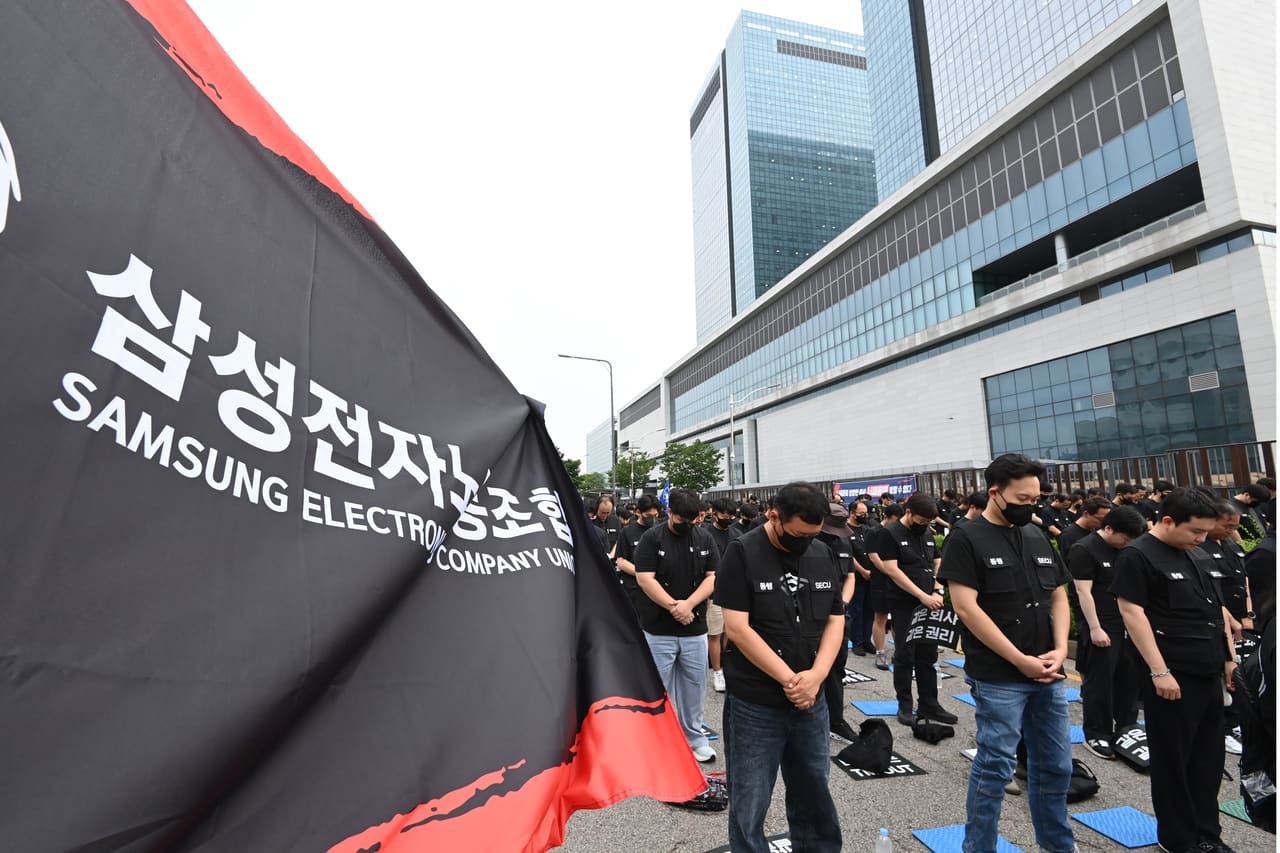
Samsung Electronics employees in the consumer-device business will gather in Seoul on Friday afternoon to protest compensation disparities that have widened sharply between the company's hardware divisions. The rally, scheduled for 3 p.m. near Samsung's Seocho offices, reflects mounting frustration as the semiconductor unit reaps record profits while smartphone, television and appliance operations face margin pressure.
The Donghaeng union, which primarily represents workers in Samsung's Device eXperience division, announced the protest as AI-driven demand for high-bandwidth memory chips generates unprecedented returns for the semiconductor business. The divergence in financial performance has translated into visible compensation gaps that union members say no longer reflect equal contributions to Samsung's global footprint.
Memory Boom Reshapes Internal Economics
Samsung's semiconductor division has posted consecutive quarters of operating profit growth, driven by surging orders for HBM3E memory chips used in AI training servers and data-center infrastructure. Industry data shows contract prices for DDR5 and LPDDR5X modules have climbed 15 to 20 percent year-on-year, while production costs have declined as the company ramps advanced 1-beta nanometer DRAM fabrication at its Pyeongtaek and Hwaseong facilities.
That profitability stands in contrast to the Device eXperience division, which produces Galaxy smartphones, QLED televisions, refrigerators and washing machines. Consumer electronics face intensifying competition from Chinese brands in Southeast Asia and India, while component costs have risen as memory and display panels command higher prices internally. The result is a margin squeeze that limits the division's ability to match the compensation increases awarded in the chip business.
Union Demands Structural Review
The Donghaeng union has called for a comprehensive review of Samsung's internal compensation framework, arguing that the current system disproportionately rewards semiconductor employees while undervaluing the engineering and manufacturing expertise required to deliver consumer hardware at global scale. Union representatives contend that Device eXperience workers contribute equally to Samsung's brand equity and revenue base, even if operating margins differ.
Samsung has not publicly commented on the planned rally or the union's compensation demands. The company historically sets pay through a combination of division-level performance metrics and individual evaluations, with bonuses and stock grants tied to unit profitability. That structure has amplified pay differences as semiconductor margins have surged past 30 percent while device margins hover in the mid-single digits.
Broader Labor Tensions in Korean Tech
The protest adds to a year of heightened labor activity at Samsung. In July, the National Samsung Electronics Union, which represents a separate and larger segment of the workforce, staged a three-week work stoppage over base wage increases and bonus formulas. That action, the first major strike in Samsung Electronics' history, ended with a negotiated settlement that included a 5.1 percent base wage increase and additional performance pay.
The Donghaeng union's focus on inter-divisional pay equity introduces a new dimension to labor negotiations in South Korea's technology sector. As semiconductor companies across the region post record earnings, workers in adjacent business lines are questioning whether existing compensation models adequately distribute the gains from cyclical booms. Similar tensions have emerged at SK hynix, where memory engineers have received retention bonuses while support and administrative staff have not.
What Comes Next
Friday's rally will test Samsung management's willingness to address compensation structures that predate the current AI chip cycle. The Device eXperience division employs tens of thousands of engineers, production workers and quality-assurance staff across South Korea, Vietnam and Brazil. Any revision to pay formulas would carry significant financial and operational implications, particularly if the semiconductor boom moderates or if device margins improve.
For now, the protest signals that internal pay equity has become a flashpoint at Asia's largest technology conglomerate, one that will require careful balancing as Samsung navigates divergent business cycles across its portfolio.
RELATED STORIES

Samsung and SK Hynix Chart Opposite Paths on Record Shareholder Returns
Cheng Wei-Lun · 4 min
Seoul Stocks Climb on Chipmaker Shareholder Return Expectations
Cheng Wei-Lun · 2 min

LG Display Turns Profitable as LCD Exit Cuts Production Costs
Cheng Wei-Lun · 3 min
Samsung Electronics Sets Aside Up to $79.5 Billion for Shareholder Returns in 2026
Cheng Wei-Lun · 3 min
Spot something wrong? Email editor@briefasia.com. We log every correction publicly.