Finance · Deals
Samsung and SK Hynix Chart Opposite Paths on Record Shareholder Returns
South Korea's memory chip giants are deploying contrasting strategies to distribute AI boom profits, with Samsung favoring dividends while SK hynix pursues aggressive buybacks
KEY TAKEAWAYS
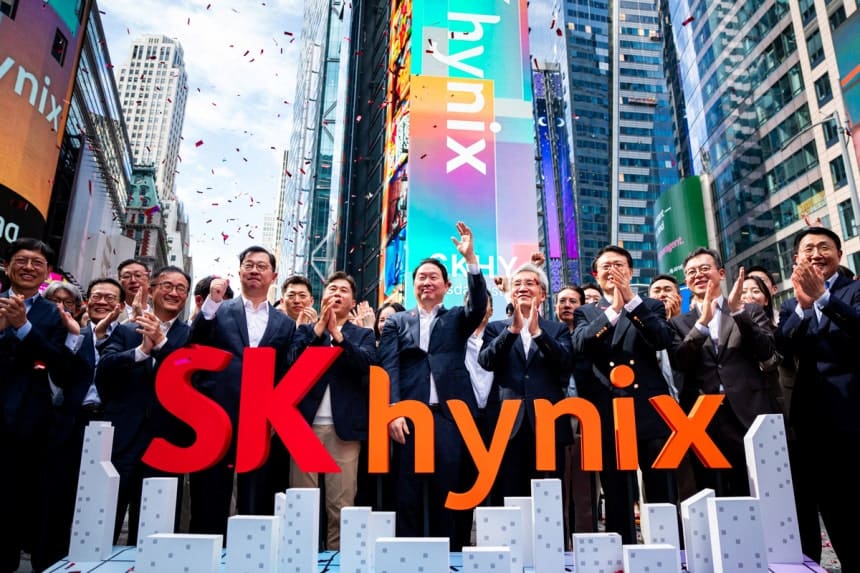
- ·SK hynix announced a 40 trillion won ($28.7 billion) buyback program while Samsung Electronics opted for expanded dividends, reflecting different ownership structures and capital priorities.
- ·SK hynix holds over 50 percent of the global high-bandwidth memory market and reported 6.7 trillion won in Q2 2026 operating profit, up sharply from losses a year earlier.
- ·The diverging strategies signal different views on valuation and investor base, with buybacks concentrating ownership and dividends appealing to income-focused portfolios amid cyclical uncertainty.
Two Giants, Two Strategies
South Korea's two memory chip powerhouses are flush with cash from the AI-driven semiconductor surge, and both have committed to unprecedented shareholder payouts. Yet the mechanics reveal a strategic divide that speaks to deeper differences in corporate structure and investor base.
SK hynix announced a 40 trillion won ($28.7 billion) program centered on share buybacks and cancellation. Samsung Electronics, meanwhile, is channeling its windfall through expanded dividend distributions. The divergence is not cosmetic. It reflects distinct approaches to capital allocation in an industry riding an unprecedented wave of demand for high-bandwidth memory chips used in AI data centers.
The Buyback Route
SK hynix's buyback-and-cancel strategy directly reduces the number of outstanding shares, concentrating ownership among remaining shareholders. For a company where institutional and foreign investors hold substantial stakes, this approach can deliver immediate per-share earnings accretion and signal management confidence without locking in a recurring cash commitment.
The scale is notable. At $28.7 billion, the program represents one of the largest buyback announcements in Asian corporate history outside of Japan. SK hynix has positioned itself as the leading supplier of high-bandwidth memory (HBM) chips to Nvidia, capturing more than 50 percent of the global HBM market as AI infrastructure spending accelerates.
Buybacks also offer flexibility. Unlike dividends, which create expectations of continuity, a buyback program can be calibrated or paused if market conditions shift. For a cyclical industry where memory prices have historically swung violently, that optionality matters.
The Dividend Commitment
Samsung Electronics is taking the opposite tack. The company has opted to raise its dividend payout, a move that establishes a recurring obligation but appeals to a different investor profile. Dividend-focused funds and retail investors in South Korea, where Samsung remains a retail favorite, tend to value predictable income streams.
Samsung's ownership structure plays a role here. The founding Lee family retains significant influence through a complex cross-shareholding arrangement, and dividends flow proportionally to all shareholders. A buyback, by contrast, would leave family holdings unchanged in absolute terms while increasing their percentage stake, a dynamic that can invite scrutiny in a market sensitive to chaebol governance.
The company has faced pressure from activist investors in recent years to improve shareholder returns. A higher dividend directly addresses that demand while avoiding the governance optics of a large-scale buyback that disproportionately benefits controlling shareholders.
Market Position and Cash Flows
Both companies are capitalizing on a memory market that has rebounded sharply from the 2023 downturn. AI applications require vastly more memory capacity and bandwidth than traditional workloads, and both Samsung and SK hynix have ramped production of specialized chips to meet that demand.
SK hynix reported operating profit of 6.7 trillion won in the second quarter of 2026, a dramatic recovery from losses a year earlier. Samsung's semiconductor division, which includes memory and logic chips, posted operating profit of 6.45 trillion won in the same period.
The profitability surge has rebuilt balance sheets. SK hynix, which carried a net debt position as recently as 2023, now holds a net cash balance exceeding 10 trillion won. Samsung's cash reserves have similarly swelled, providing ammunition for shareholder returns without compromising capital expenditure plans for next-generation fabs.
Investor Reactions and Implications
Equity markets have responded positively to both announcements, though the buyback program has generated more immediate upward pressure on SK hynix's share price. Buybacks reduce the denominator in earnings-per-share calculations, mechanically boosting valuations even if underlying business performance remains constant.
Samsung's dividend increase, while substantial, does not alter the share count and therefore has a more muted effect on per-share metrics. However, it broadens the stock's appeal to income-oriented portfolios and may reduce volatility by attracting longer-term holders.
The strategic divergence also reflects differing views on valuation. SK hynix's buyback implicitly signals management's belief that shares are undervalued relative to future earnings potential. Samsung's dividend approach is more agnostic on valuation, focusing instead on steady cash distribution.
The Broader Industry Context
The shareholder return announcements arrive as memory chipmakers navigate a complex landscape. AI demand remains robust, but questions linger about the sustainability of current investment rates by hyperscale cloud providers. Micron Technology, the third major player in the memory oligopoly, has similarly increased its buyback authorization, suggesting the payout trend extends beyond Korea.
At the same time, geopolitical tensions continue to shape the industry. Export controls on advanced chipmaking equipment and materials have introduced uncertainty into long-term capacity planning. Both Samsung and SK hynix are expanding production in the United States to hedge against supply chain risks, commitments that will require sustained capital investment.
The choice between dividends and buybacks, then, is not merely a technical decision about cash deployment. It reflects each company's assessment of its strategic position, ownership dynamics, and the durability of the current profit cycle. Samsung is betting on stability and broad-based appeal. SK hynix is betting on concentration and signaling strength.
For investors parsing the AI chip boom, the divergence offers a lens into how two incumbents are managing windfalls in an industry where fortunes can reverse quickly. The coming quarters will test whether either approach proves more resilient when the cycle inevitably turns.
RELATED STORIES
Samsung Announces Historic $65 Billion Shareholder Return Program
Cheng Wei-Lun · 4 min
Seoul Stocks Climb on Chipmaker Shareholder Return Expectations
Cheng Wei-Lun · 2 min
Samsung Pledges Up to $80 Billion in Shareholder Returns This Year
Cheng Wei-Lun · 3 min
Samsung Electronics Sets Aside Up to $79.5 Billion for Shareholder Returns in 2026
Cheng Wei-Lun · 3 min
Spot something wrong? Email editor@briefasia.com. We log every correction publicly.