Perspectives · Analysis
When a Property Empire Falls: The Evergrande Verdict and China's Private Sector Reckoning
Hui Ka-yan's life sentence closes the chapter on the world's most indebted developer and signals Beijing's hardening stance on corporate governance across private enterprise.
KEY TAKEAWAYS
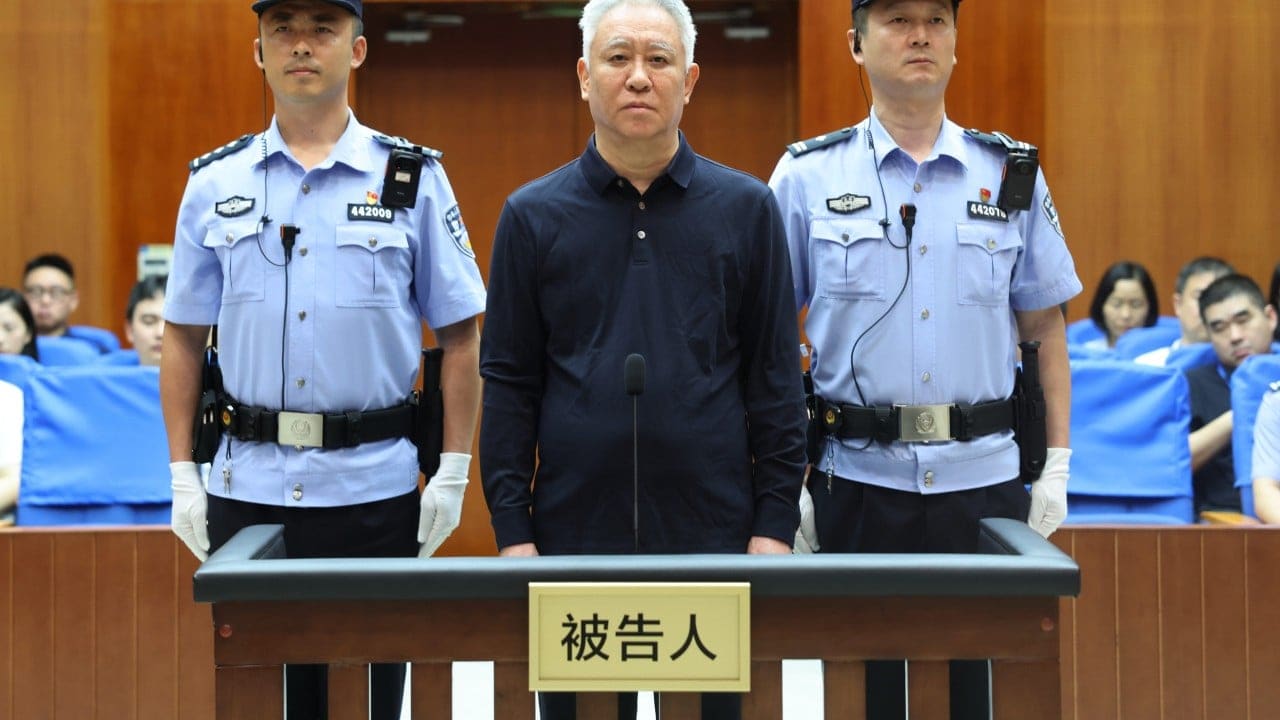
- ·Hui Ka-yan received life imprisonment alongside over 50 associates for financial crimes related to Evergrande's collapse, which left over 1.5 million apartments unfinished.
- ·The verdict reflects Beijing's shift from tolerating financial creativity to demanding transparency and accountability, particularly in sectors affecting household wealth and social stability.
- ·Foreign bondholders face minimal recovery as mainland courts prioritize domestic creditors, exposing the limits of cross-border enforcement in Chinese restructurings.
- ·The case warns Asia's entrepreneurs that business models relying on perpetual leverage and expansion cannot survive sustained downturns or tightening credit conditions.
The Fall of a Giant
Hui Ka-yan built China Evergrande Group into a colossus that spanned residential towers, theme parks, electric vehicles, and even a professional football club. At its peak, the conglomerate carried debt exceeding $300 billion, making it the most leveraged property developer on the planet. Today, Hui faces life imprisonment alongside more than 50 associates, convicted in a sweeping verdict that underscores Beijing's determination to impose accountability on an industry that long thrived on leverage, political connections, and opacity.
The sentence is not simply the conclusion of a corporate bankruptcy. It represents a fundamental recalibration of how Beijing views private enterprise, particularly in sectors deemed systemically important. For executives across Asia watching from Singapore boardrooms or Hong Kong trading floors, the message is unambiguous: the boundaries of acceptable risk have shifted, and the state's patience with financial recklessness has run out.
The Architecture of Collapse
Evergrande's implosion was years in the making. The company borrowed aggressively to fuel expansion, pre-selling apartments to finance new projects in a perpetual cycle that depended on ever-rising property prices and uninterrupted access to credit. When Beijing introduced the "three red lines" policy in 2020 to curb developer leverage, Evergrande found itself on the wrong side of all three thresholds: liability-to-asset ratio above 70 percent, net gearing above 100 percent, and cash-to-short-term-debt below 100 percent.
The policy was designed to cool an overheated market and prevent systemic risk. Instead, it accelerated the very crisis it sought to avoid. Developers unable to secure new financing defaulted on bonds, halted construction, and left millions of homebuyers holding contracts for unfinished apartments. Evergrande alone left more than 1.5 million units incomplete across hundreds of cities.
What distinguishes Hui's case from other high-profile failures is the scale of alleged malfeasance. Prosecutors detailed how funds meant for construction were diverted, how financial statements were manipulated to secure loans, and how offshore entities were used to siphon assets beyond the reach of domestic creditors. The life sentence reflects not just the magnitude of debt, but the deliberate erosion of fiduciary duty.
A Warning Beyond Real Estate
The Evergrande verdict arrives at a moment when China's private sector is navigating an increasingly complex regulatory landscape. The crackdown on tech platforms in 2021, the tightening of offshore capital flows, and the expansion of Communist Party committees within private firms have collectively signaled a shift in the implicit contract between entrepreneurs and the state.
For decades, that contract was straightforward: deliver growth, create jobs, and avoid overt political challenges, and the party would tolerate a degree of financial creativity. Hui's downfall suggests that tolerance has expired. The state now demands not only compliance but transparency, particularly in sectors with direct exposure to household wealth and social stability.
This recalibration has profound implications for capital allocation across Asia. Investors in Hong Kong, Tokyo, and Seoul who once viewed Chinese private firms as engines of outsized returns now weigh governance risk with greater scrutiny. The question is no longer whether a company can navigate regulatory complexity, but whether its business model depends on practices that may retroactively be deemed illegal.
The Creditor Calculus
Foreign bondholders, who poured capital into Chinese property developers in pursuit of high yields, face a sobering lesson. Evergrande's offshore bonds trade at a fraction of par, and recovery rates remain uncertain. The criminal convictions complicate restructuring negotiations, as assets are frozen and legal claims multiply across jurisdictions.
For regional banks and asset managers, the Evergrande case underscores the limitations of cross-border enforcement. Mainland courts prioritize domestic creditors and homebuyers, leaving offshore bondholders at the back of the queue. This hierarchy is not unique to China, but the scale of the losses and the political dimension of the proceedings amplify the challenge.
The verdict also raises questions about due diligence. How did international banks, ratings agencies, and institutional investors underestimate the fragility of Evergrande's balance sheet? Part of the answer lies in the opacity of Chinese corporate disclosure, but part lies in the willingness of global capital to overlook red flags in pursuit of yield. The reckoning is not confined to Shenzhen or Beijing; it extends to every portfolio manager who allocated to Chinese high-yield debt without fully understanding the legal and political risks.
Lessons for Asia's Entrepreneurs
Hui's trajectory from billionaire to prisoner offers a cautionary tale that resonates beyond China. Across Southeast Asia, where conglomerates often blend real estate, finance, and political patronage, the Evergrande case illustrates the danger of overextension and the perils of financial engineering divorced from operational fundamentals.
In Jakarta, Manila, and Mumbai, developers have watched China's property crisis with a mix of concern and calculation. Some have tightened leverage proactively, wary of triggering similar regulatory intervention. Others continue to rely on pre-sales and off-balance-sheet financing, betting that local conditions differ enough to avoid a similar fate.
The broader lesson is about the durability of business models built on continuous expansion. Evergrande's collapse was not the result of a single error but the cumulative effect of a strategy that required perpetual growth to remain solvent. When growth stalled, the entire structure unraveled. For private enterprises across Asia, the question is whether their own models can withstand a sustained downturn or tightening credit conditions.
What Comes Next
The Chinese property market remains in flux. Sales volumes have stabilized in some tier-one cities, but inventory levels remain elevated, and smaller developers continue to face liquidity pressures. Beijing has introduced measures to support demand, including lower mortgage rates and relaxed purchase restrictions, but the pace of recovery is uneven.
For the private sector more broadly, the Evergrande verdict reinforces the expectation that governance standards will tighten. Companies that thrived in an era of loose credit and implicit state backing must now demonstrate financial discipline, transparent reporting, and alignment with policy priorities. Those that fail to adapt risk not just bankruptcy but criminal liability.
The sentencing of Hui Ka-yan and his associates is a punctuation mark on an era. It signals that the state's tolerance for financial adventurism has narrowed, that accountability will be pursued aggressively, and that the cost of failure extends beyond shareholders to executives themselves. For Asia's business leaders, the message is clear: the rules have changed, and the stakes are higher than ever.
RELATED STORIES
Evergrande Founder's Life Sentence Adds New Layer to $57 Billion Debt Recovery
Cheng Wei-Lun · 3 min
Indonesian Investment Climbs as Trade War Reshapes Asian Capital Flows
Siti Nuraini · 5 min

Chinese Humanoid Robots Now Jump Higher and Run Faster Than Olympic Athletes
Cheng Wei-Lun · 4 min

China Orders Record Auto Recall Over Emergency Door Release Flaws
Cheng Wei-Lun · 3 min
Spot something wrong? Email editor@briefasia.com. We log every correction publicly.