Asia · Business
Lebanon's Economy Set to Shrink 6.4 Percent as War Halts Recovery
World Bank forecast reflects collapse in tourism, consumption, and supply chains following renewed conflict with Israel
KEY TAKEAWAYS
- ·The World Bank projects Lebanon's economy will contract 6.4 percent in 2026, reversing 4.2 percent growth recorded in 2025 before the latest conflict began.
- ·Tourism collapse, disrupted supply chains, and mass displacement have driven the contraction, while inflation is expected to reach 17.5 percent this year.
- ·Parliament passed bank resolution amendments last week, a reform the IMF called critical to unlocking reconstruction financing and restoring investor confidence.
War Reverses Fragile Growth
Lebanon's economy is now expected to shrink by 6.4 percent in 2026, according to World Bank projections released Friday, as renewed fighting between Israel and Hezbollah dismantled the country's tentative recovery from a deep financial crisis.
The contraction marks a sharp reversal from 2025, when the economy grew an estimated 4.2 percent - the strongest expansion since the 2019 financial collapse began. That brief recovery has been erased by the conflict that erupted in March, when Hezbollah launched attacks on Israel, drawing the Iran-backed group and Lebanon into the broader Middle East confrontation.
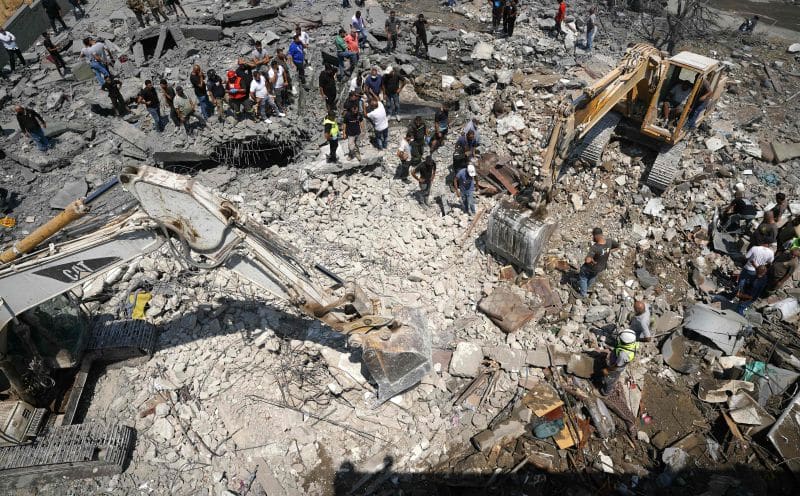
Israel's response included sustained air strikes and a ground offensive that Lebanese officials say have killed over 4,300 people. The humanitarian toll has been matched by economic devastation: tourism revenue has evaporated, consumer spending has plummeted, and supply chains across the country have fractured under the weight of insecurity and mass displacement.
Inflation Climbs as Stability Erodes
The World Bank report also projects inflation will accelerate to 17.5 percent this year, compounding the hardship for a population already struggling with currency depreciation and shortages of basic goods. The country's banking sector, which collapsed alongside the wider economy in 2019, remains in disarray despite legislative efforts to address the crisis.
Last week, Lebanon's parliament passed amendments to a bank resolution law intended to restructure failing institutions and stabilize the financial system. The International Monetary Fund welcomed the move, calling it "a very good step" that aligns Lebanese legislation with international best practices.
Reform Pressure Mounts
International lenders have long conditioned economic assistance on meaningful reforms, particularly in banking sector restructuring and fiscal management. Dahlia Khalifa, the World Bank's Middle East director, emphasized that advancing these reforms is essential to restoring investor confidence, protecting macroeconomic stability, and securing the financing needed for reconstruction once hostilities end.
The IMF, which has been in discussions with Lebanese authorities, announced it will resume meetings in Beirut next month. Those talks are expected to focus on unlocking financial support tied to reform commitments, though the ongoing conflict complicates any near-term implementation.
Regional Context and Recovery Prospects
Lebanon's economic trajectory illustrates the fragility of post-crisis recoveries in conflict zones. The country had been navigating one of the worst financial collapses in modern history - currency depreciation exceeding 90 percent, bank deposit haircuts, and the collapse of public services - when the 2024 Israel-Hezbollah war first erupted. The brief ceasefire that allowed 2025's growth has now given way to renewed violence, leaving reconstruction timelines uncertain.
For investors and regional policymakers, Lebanon's contraction underscores the compounding risks of political instability, militia influence, and delayed structural reform. The country's ability to attract reconstruction financing will depend not only on a durable ceasefire but also on demonstrable progress in overhauling its banking sector and public finances.
The World Bank's forecast suggests that without a swift end to hostilities and credible reform implementation, Lebanon's economy will continue to hemorrhage output, deepening the humanitarian crisis and further eroding the institutional capacity needed for any sustainable recovery.
RELATED STORIES
South Korea Extends Fuel Price Caps as Middle East Tensions Lift Oil Markets
Cheng Wei-Lun · 3 min
Vietnam Fuel Stations Raise Pump Prices as Mideast Tensions Push Crude Higher
Cheng Wei-Lun · 5 min
Shell Philippines Posts P2.7 Billion Loss as Mideast Oil Crisis Hits Margins
Priyanka V. Rao · 3 min
Philippine Fuel Prices Set to Surge by Up to ₱5.01 per Liter After Two Weeks of Declines
Priyanka V. Rao · 2 min
Spot something wrong? Email editor@briefasia.com. We log every correction publicly.