Asia · Business
Shell Philippines Posts P2.7 Billion Loss as Mideast Oil Crisis Hits Margins
The oil giant's first-half reversal reflects supply-chain pressures and margin compression from volatile crude markets tied to regional conflict.
KEY TAKEAWAYS
- ·Shell Pilipinas recorded a P2.7 billion net loss in the first half of 2026, reversing a P965.3 million profit from the prior year.
- ·Fuel marketing margins collapsed due to a timing lag between rising global crude costs and slower local retail price adjustments amid Middle East supply disruptions.
- ·The company aims to restore profitability in the second half through cost discipline, working capital management, and improved market conditions observed in May and June.
A Sharp Reversal
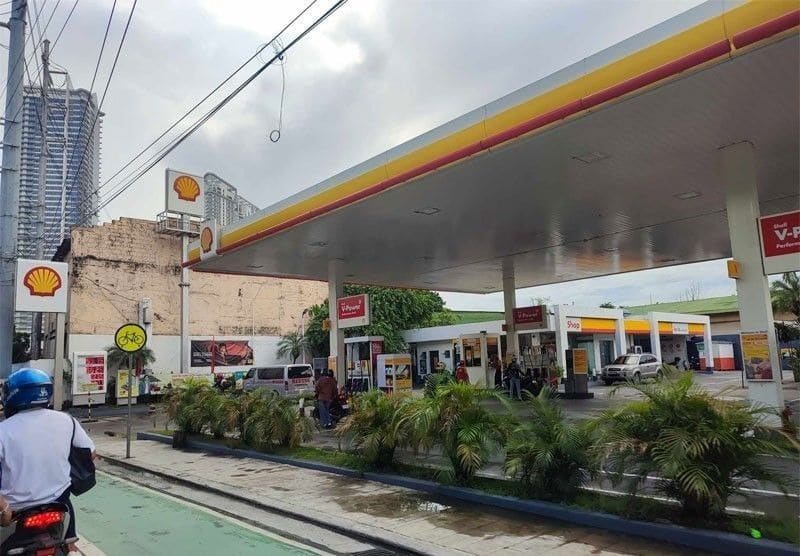
Shell Pilipinas Corp. recorded a net loss of P2.7 billion in the first half of 2026, a dramatic shift from the P965.3 million profit it posted in the same period a year earlier. The downturn reflects the impact of sustained oil price volatility driven by the ongoing conflict in the Middle East, which disrupted supply chains and compressed margins across the Philippine fuel market.
Core earnings also fell into negative territory, reaching a loss of P1.89 billion compared to a core profit of P1.98 billion in the first half of 2025. The company attributed the decline to a steep drop in fuel marketing margins, caused by a timing lag between surging global product costs and the slower adjustment of local retail prices.
Despite the losses, net sales climbed 28.8 percent to P146.97 billion from P114.14 billion, driven by elevated pump prices as the global oil crisis pushed crude benchmarks higher. However, the cost of sales rose even faster, jumping 36.1 percent to P140.46 billion from P103.23 billion, eroding profitability.
Supply-Chain Pressure
The Middle East conflict, which intensified in late 2025, has sent ripples through Asian energy markets. For importers like the Philippines, which relies heavily on refined petroleum products from the region, the disruption has meant both higher procurement costs and unpredictable delivery schedules.
Shell Pilipinas president and CEO Lorelie Quiambao Osial acknowledged the strain. The company prioritized maintaining fuel availability, supporting customers and trade partners, and keeping the Philippine economy supplied with energy during a period of acute supply-chain stress.
The margin squeeze was particularly acute in the fuel marketing segment, where retailers faced a mismatch between rapidly rising input costs and the slower pace at which consumer prices could be adjusted. This lag, common in regulated and semi-regulated markets, left Shell Pilipinas absorbing a significant portion of the cost spike.
Recovery Signals
Osial noted that conditions began to improve in May and June, with margins stabilizing as supply chains adjusted and regional crude prices moderated slightly. The company views these late-quarter trends as evidence of underlying business resilience, even as the broader environment remains volatile.
Looking ahead, Shell Pilipinas has outlined a recovery strategy centered on cost discipline, working capital optimization, and stronger margin management. The company aims to restore profitability in the second half of the year by tightening operational efficiency and leveraging improved market conditions.
Shell Pilipinas also plans to focus on cash generation and competitiveness, key levers in a market where price sensitivity remains high and smaller independent players continue to gain share. The firm's ability to manage inventory risk and secure reliable supply will be critical as geopolitical uncertainty persists.
Regional Context
The Philippines is not alone in facing fuel-market headwinds. Across Southeast Asia, oil importers have grappled with similar pressures as Middle East supply routes tightened and insurance and freight costs spiked. Indonesia, Thailand, and Vietnam have all reported margin compression in their downstream petroleum sectors, though the degree of impact has varied based on hedging strategies, refining capacity, and government subsidy policies.
For Shell Pilipinas, the challenge is compounded by the structure of the Philippine market, where pump prices are deregulated but subject to intense public scrutiny and competitive pressure. The company must balance the need to pass through cost increases with the risk of losing volume to rivals offering lower prices, even at razor-thin margins.
The first-half loss underscores the fragility of fuel-marketing economics in a period of extreme input volatility. As the second half unfolds, Shell Pilipinas will be testing whether operational adjustments and moderating crude prices can offset the damage done in the opening months of the year.
RELATED STORIES
Philippines Rice Tariff Revenue Climbs to $213 Million on Import Surge
Priyanka V. Rao · 2 min
Manila's Sovereign Fund Targets Year-End Close on $340 Million Grid Stake
Priyanka V. Rao · 3 min
Philippine Fuel Prices Set to Surge by Up to ₱5.01 per Liter After Two Weeks of Declines
Priyanka V. Rao · 2 min

Philippines Races to Launch $80 Million Food Hub in Clark by Late 2027
Mariel D. Santos · 3 min
Spot something wrong? Email editor@briefasia.com. We log every correction publicly.