Sustainability · Energy
Jakarta Launches 30 GW Solar Tender in Race to Close Southeast Asia's Renewables Gap
Indonesia opens bidding for utility-scale photovoltaic projects as installed solar capacity remains below 2 GW, signaling a major procurement shift for PLN and independent power producers.
KEY TAKEAWAYS
- ·Indonesia has opened tenders for 30 gigawatts of solar capacity, the first phase of a 100 GW program that could cut annual electricity costs by 73.9 trillion rupiah.
- ·The country's installed solar base remains near 1.6 GW, requiring a rapid scale-up in procurement, grid integration, and storage infrastructure.
- ·Tender details on pricing, timelines, and storage co-location have not been disclosed, leaving developers awaiting clarity on offtake terms and bankability.
The Tender Mechanics
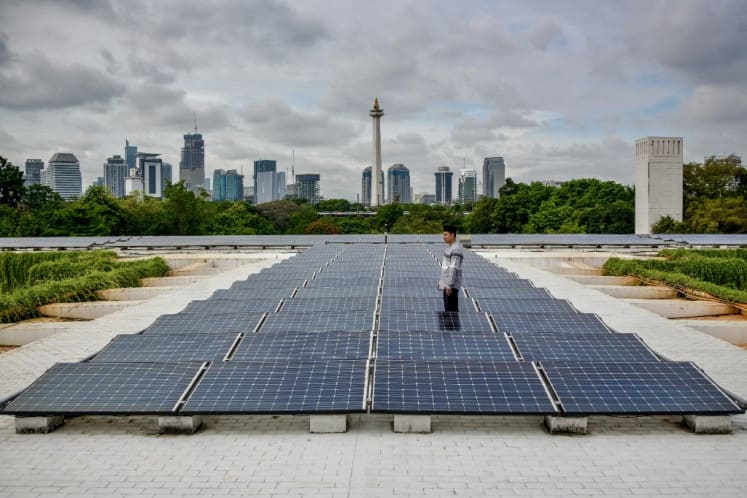
Indonesia's Energy and Mineral Resources Ministry has opened the tender process for 30 gigawatts of solar photovoltaic capacity, marking the first concrete procurement step in President Prabowo Subianto's pledge to add 100 GW of solar generation across the archipelago. Energy Minister Bahlil Lahadalia confirmed the launch at the Indonesia International Geothermal Convention and Exhibition, noting that state utility PLN has aligned the program with its electricity business plan.
The 30 GW tender represents the largest single renewable energy procurement exercise in Southeast Asia by nameplate capacity. For context, Indonesia's total installed solar capacity stood at approximately 1.6 GW as of April, underscoring the scale of the ramp-up required to meet the government's targets.
The Economics Behind the Push
President Prabowo introduced the 100 GW solar plan during his state budget address on August 14, framing it as a fiscal imperative as much as an energy transition measure. The government estimates the full buildout could reduce the basic cost of electricity production by up to 73.9 trillion rupiah annually, equivalent to roughly 4.14 billion US dollars at current exchange rates.
That figure reflects the cost differential between diesel-fired generation, still common on Indonesia's outer islands, and utility-scale solar with storage. Diesel fuel logistics add significant expense in an archipelago spanning three time zones, where many communities rely on shipments of refined product to keep the lights on.
Bahlil emphasized that the solar capacity target is embedded in PLN's regulatory roadmap, signaling that the procurement will proceed through standard independent power producer frameworks rather than ad hoc contracts. This structure matters for international developers and engineering, procurement, and construction firms evaluating entry into the Indonesian market.
Grid Integration and Village-Level Deployment
Prabowo has repeatedly positioned the solar program as a path to energy self-sufficiency at the village level, reducing reliance on centralized generation and long-distance transmission. Indonesia's geography, with more than 17,000 islands, makes distributed generation an operationally attractive model, particularly for communities that currently depend on small diesel gensets.
However, integrating 30 GW of intermittent solar capacity into PLN's grid will require parallel investment in storage, grid reinforcement, and dispatch software. The Ministry has not yet disclosed tender specifications for storage co-location or ancillary services, details that will shape project economics and bidder interest.
Indonesia's equatorial position provides relatively stable insolation year-round, with minimal seasonal variation compared to markets at higher latitudes. This reduces the need for over-capacity to compensate for winter lulls but also compresses the hours of peak generation, concentrating grid stress in the midday window.
What Comes Next
The tender timeline, pricing bands, and allocation methodology have not been made public. Industry participants will be watching whether PLN opts for reverse auctions, as used in India and parts of the Middle East, or negotiated tariffs based on benchmark levelized cost of energy figures.
The 30 GW procurement is explicitly labeled a first phase, implying follow-on tenders to reach the 100 GW target. The pace of subsequent rounds will depend on grid absorption capacity, PLN's balance sheet, and the government's willingness to allow merchant or corporate power purchase agreements outside the state utility framework.
For developers, the immediate question is bankability. Indonesia has a mixed record on tariff enforcement and foreign exchange risk allocation in power contracts. Clarity on offtake guarantees, currency hedging, and dispute resolution will be essential to attract the low-cost capital needed to deliver projects at competitive tariffs.
The tender also arrives as China continues to dominate global solar module supply chains, with significant cost advantages over competitors. Indonesia's domestic content requirements and trade policy will influence whether projects source locally or import, affecting final project costs and timelines.
RELATED STORIES
Private Sector to Build 250 of Indonesia's 315 Planned Hydropower Projects
Siti Nuraini · 4 min
Indonesia's Coal Plants Drive Respiratory Crisis Beyond Wildfire Zones
Siti Nuraini · 3 min

Private Capital Stalls at Indonesia's Industrial Coal Plants Despite Transition Pledges
Priyanka V. Rao · 3 min
Indonesia's Renewable Push Masks Growing Coal Dependence in Industrial Sector
Siti Nuraini · 3 min
Spot something wrong? Email editor@briefasia.com. We log every correction publicly.