Sustainability · Energy
Indonesia's Renewable Push Masks Growing Coal Dependence in Industrial Sector
Captive coal plants powering nickel smelters and battery production threaten to undermine climate progress as emissions climb despite renewable energy gains
KEY TAKEAWAYS
- ·Indonesia's renewable energy share reached 17.9 per cent in April 2026, exceeding the government's 16.4 per cent target, yet greenhouse gas emissions continue to rise.
- ·Captive coal plants serving nickel processing more than doubled in capacity between 2023 and 2025, with planned additions potentially tripling 2023 levels to over 31 GW.
- ·Manufacturing accounted for 37.6 per cent of Indonesia's 2024 emissions, the largest source, while coal's 61 per cent share of the energy mix has remained stable.
Grid Gains, Industrial Contradictions
Indonesia's renewable energy share reached 17.9 per cent of total power generation in April 2026, surpassing the government's full-year target of 16.4 per cent, according to official data. The figure marks steady improvement from 14.7 per cent in 2024 and 15.8 per cent in 2025. Yet the advance conceals a troubling reality: greenhouse gas emissions are climbing even as clean energy capacity expands.
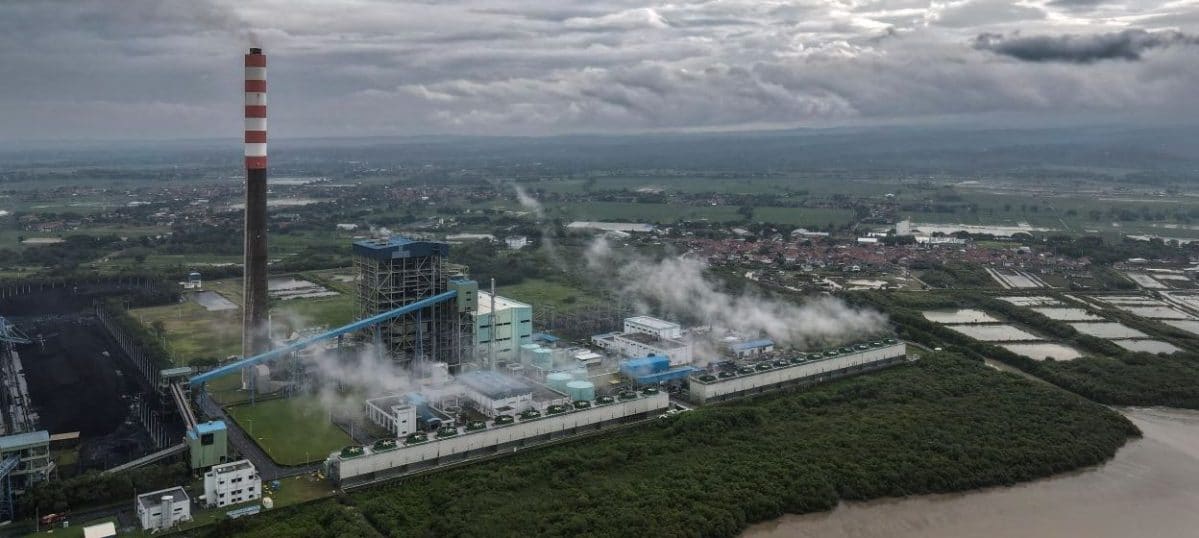
The disconnect stems from a surge in captive coal-fired power plants built exclusively to supply electricity for nickel processing facilities, which produce materials for electric vehicle batteries. These off-grid installations sit outside the main power network and are not drawing on the renewable sources being added to the national grid. Coal's share of Indonesia's energy mix has held steady at approximately 61 per cent in recent years, while renewables have primarily displaced oil and gas rather than coal itself.
Captive coal capacity serving nickel-processing operations more than doubled between 2023 and 2025. Estimates suggest that planned additions could triple the 2023 total to over 31 GW by 2025, concentrated in industrial zones dedicated to nickel smelting, high-pressure acid leaching processing, and stainless steel production. These facilities are central to Jakarta's ambitions to dominate the EV battery supply chain, yet they remain tethered to fossil fuel infrastructure.
Emissions Trajectory at Odds With Policy
Manufacturing accounted for 37.6 per cent of Indonesia's greenhouse gas emissions in 2024, the largest single source, followed by electricity and gas supply at 27.8 per cent, government figures show. The industrial sector's carbon footprint is expanding in tandem with downstream processing capacity, even as grid-connected renewable generation grows. The result is a bifurcated energy landscape: cleaner electricity on the grid coexists with carbon-intensive power feeding the country's flagship industrial projects.
Indonesia possesses more than 3,000 GW of renewable energy potential spread across solar, hydro, geothermal, and wind resources throughout the archipelago. Yet policy incentives and regulatory frameworks have not effectively steered industrial investment toward these sources. Exemptions for captive coal plants designated as "national strategic projects" have allowed developers to bypass grid integration and opt for dedicated fossil fuel generation.
Isolated Examples of Clean Integration
A handful of operators have demonstrated that industrial facilities can run on renewable power. PT Vale operates three hydroelectric plants with a combined capacity of 365 MW to supply its nickel processing operations. PT Amman Mineral Nusa Tenggara has integrated solar installations into its mining site in West Sumbawa. These cases remain exceptions rather than the norm, constrained by project-specific circumstances and limited policy mechanisms to replicate the model at scale.
Government plans to incentivize green transitions in industrial parks could help offset upfront costs, but implementation details and enforcement remain unclear. Without binding requirements or financial penalties for carbon-intensive choices, developers continue to favor captive coal for its lower capital cost and faster permitting timelines.
Policy Gaps and Structural Barriers
Current regulations do not mandate that new industrial parks locate near renewable energy sources or connect to transmission networks capable of handling industrial loads. Long-term corporate power purchase agreements that would allow smelters to buy electricity directly from renewable energy suppliers face legal and procedural obstacles. Wheeling rules governing the transmission of clean electricity across grids to industrial zones lack clarity, deterring private investment in cross-grid renewable supply chains.
Carbon capture and storage technologies could play a transitional role in decarbonizing existing heavy manufacturing clusters, particularly where switching to renewables is costly or technically complex. Japan's Chubu Electric Power, in partnership with BP, is developing an Enhanced Gas Recovery plant with carbon capture, utilization, and storage value chains in Tangguh, West Papua, expected to come online in 2028. The project will use Indonesia's depleted oil and gas fields to store carbon emissions under a cross-border framework linking Japan and Indonesia. Such initiatives remain nascent and require transboundary regulatory coordination and bilateral crediting agreements.
Trajectory Correction Needed
Indonesia's renewable energy expansion is real, but its impact on the carbon ledger is blunted by parallel growth in off-grid coal capacity. The country's industrialization strategy has prioritized speed and scale in downstream processing, with less attention to the energy sources powering that expansion. Closing the gap will require regulatory reforms that tighten exemptions for captive coal, clarify transmission and wheeling rules, and create enforceable linkages between industrial demand and renewable supply. Without course correction, the narrative of green industrialization risks remaining a grid-level story while the industrial base continues to run on coal.
RELATED STORIES
Indonesia's Nickel Boom Runs on Coal, Threatening Climate Goals
Siti Nuraini · 5 min

Indonesia Faces Emissions Pressure as Petrochemical Capacity Surges
Priyanka V. Rao · 4 min
Indonesia Launches Domestic Electric Motorcycle Push to Absorb Nickel Surplus
Siti Nuraini · 4 min
Indonesia to Restart Electric Motorcycle Subsidies Next Month
Siti Nuraini · 3 min
Spot something wrong? Email editor@briefasia.com. We log every correction publicly.