Sustainability · Energy
Tuas Power Wins Rights to Build Singapore's Newest Gas Turbine Plant
The 670 MW hydrogen-ready facility will supply power to 1.2 million households as the city-state prepares for surging electricity demand from semiconductors and data centers
KEY TAKEAWAYS
- ·Tuas Power will build a 670 MW combined cycle gas turbine plant in Singapore, operational by December 2031, capable of powering 1.2 million households.
- ·Singapore's electricity demand is projected to grow 2.4 to 4.8 percent annually over the next decade, driven by semiconductor fabs, data centers, and transport electrification.
- ·Peak demand is expected to reach between 9.6 and 11.4 gigawatts within five years, prompting the Energy Market Authority to secure new capacity through centralized tenders.
New Capacity for a Grid Under Pressure
Singapore has awarded Tuas Power the contract to develop a 670-megawatt combined cycle gas turbine generating unit, the latest move in the city-state's push to secure electricity supply as demand climbs faster than at any point in recent memory.
The Energy Market Authority announced the decision on Thursday, concluding a competitive tender process that began in April. The new plant is scheduled to begin commercial operations in December 2031 and will be capable of powering roughly 1.2 million four-room public housing flats annually. The unit is hydrogen-ready, allowing for fuel switching as the city-state explores cleaner energy pathways.
Puah Kok Keong, chief executive of the Energy Market Authority, framed the project as essential infrastructure planning. "As Singapore's electricity demand grows, planning ahead is critical," Puah said. "Tuas Power's new CCGT will provide the capacity we need for the growth of energy-intensive sectors."
Demand Growth Outpacing Supply
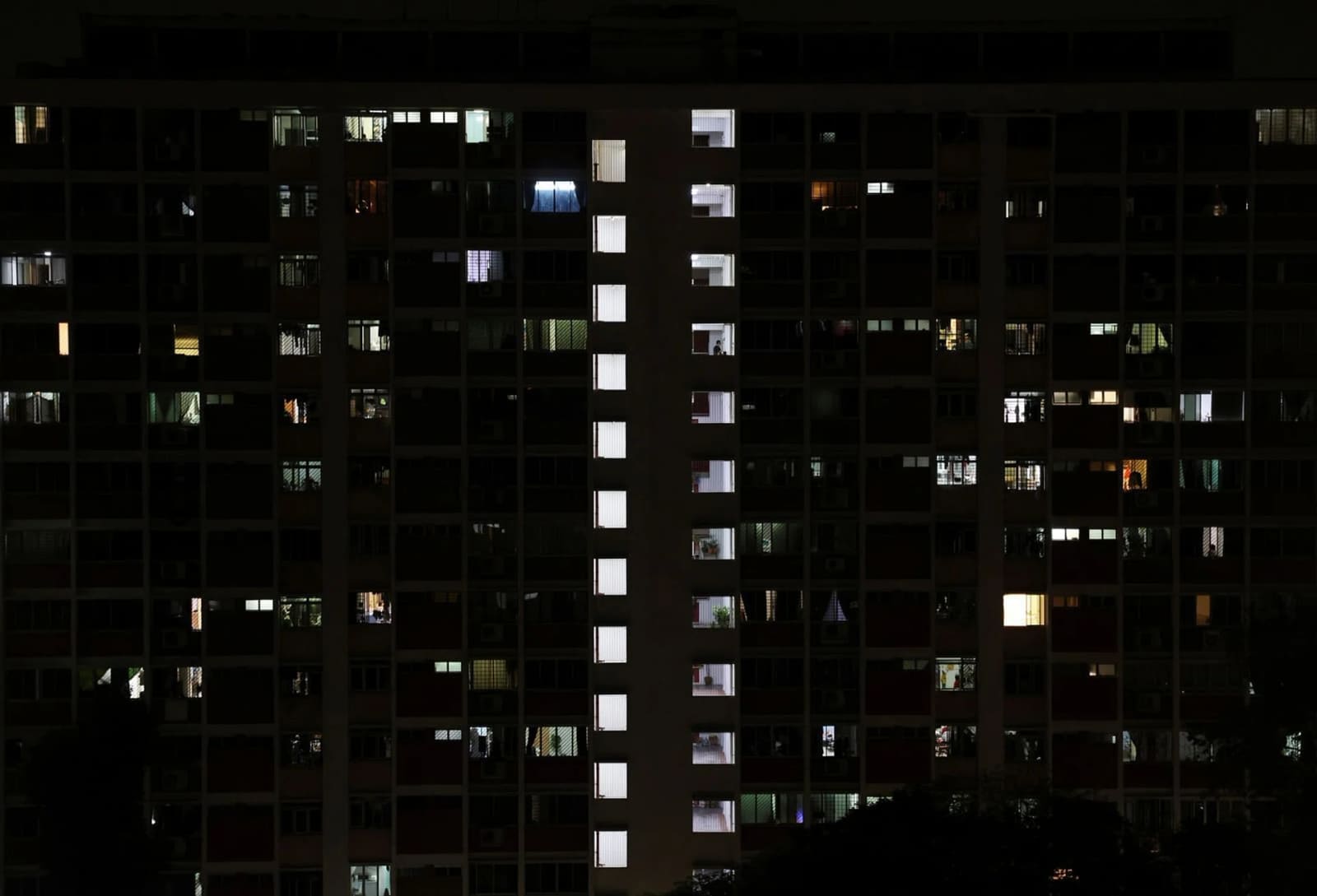
Singapore's electricity consumption is projected to expand between 2.4 and 4.8 percent annually over the next decade, according to the Energy Market Authority. That trajectory is being driven by three converging forces: robust economic growth, accelerating transport electrification, and the expansion of power-hungry industries including semiconductor fabrication and data center operations.
Peak demand is expected to hit between 9.6 and 11.4 gigawatts within five years, up from current levels. That projection has prompted the authority to initiate a series of capacity additions through a centralized procurement process designed to ensure reliability while maintaining competitive pricing.
The Tuas Power project is the third such tender in as many years. In 2023, the authority sought a minimum 600 MW plant for completion by end-2027. A second round in 2024 called for two additional units of at least 600 MW each, targeted for 2029 and 2030 respectively. The latest award extends that pipeline into the early 2030s.
Industrial Load and Strategic Timing
The urgency behind these capacity additions reflects Singapore's ambitions in advanced manufacturing and digital infrastructure. The city-state has attracted billions of dollars in semiconductor investment, with firms expanding wafer fabrication and packaging operations. Data centers, meanwhile, continue to cluster in Singapore despite land constraints and cooling challenges, drawn by connectivity, regulatory stability, and access to regional markets.
Both sectors consume electricity at scales that dwarf typical commercial or residential loads. A single leading-edge semiconductor fab can draw upwards of 100 MW continuously, while large data centers often require similar or greater capacity. The cumulative effect is a structural shift in Singapore's load profile, one that requires not just more generation but also more flexible and reliable baseload capacity.
Combined cycle gas turbines fit that requirement. They offer higher thermal efficiency than older open-cycle units, can ramp output relatively quickly, and serve as a bridge fuel option until large-scale renewable imports or hydrogen infrastructure become viable. Tuas Power's decision to build a hydrogen-ready unit reflects that longer-term optionality, even as natural gas remains the dominant fuel for the foreseeable future.
Asia's Capacity Challenge
Singapore's capacity crunch is not unique. Across Asia, grids are being stretched by the same forces: industrialization, urbanization, and the digitization of economies. Tokyo, Seoul, and Taipei have all grappled with summer peak demand records in recent years. Mumbai and Jakarta are adding gigawatts of capacity annually just to keep pace with baseline growth.
What distinguishes Singapore is the pace and concentration of demand growth in a geographically constrained system. The city-state has limited options for large-scale domestic renewables and relies heavily on imported natural gas via pipeline and liquefied natural gas terminals. That makes supply planning a high-stakes exercise, with little margin for error.
The centralized procurement model adopted by the Energy Market Authority is designed to mitigate risk. By tendering capacity well in advance and awarding contracts through competitive processes, the authority aims to secure supply at predictable costs while avoiding over-building. The approach contrasts with merchant generation models common in liberalized markets, where developers build on spec and recover costs through wholesale prices.
What Comes Next
Tuas Power will now move into engineering and permitting phases, with construction expected to begin in the coming years. The company has not disclosed the capital cost of the project, but similar-scale CCGT plants in the region typically run into the hundreds of millions of dollars.
The 2031 commissioning date positions the new unit to come online just as earlier capacity additions from the 2023 and 2024 tenders reach maturity. That staggered timeline is intentional, allowing the authority to adjust capacity planning as demand forecasts are refined and as regional energy trade options, including potential electricity imports from neighboring countries, develop further.
For now, the focus remains on ensuring the grid can support Singapore's economic ambitions. The Tuas Power plant is a bet on continued growth, and on the enduring role of gas-fired generation in a region still navigating the energy transition.
RELATED STORIES

Energy Infrastructure Deals Climb in Southeast Asia Amid AI Demand and Security Concerns
Cheng Wei-Lun · 4 min
Singapore's GDP Surge Masks a Widening Productivity Divide
Lim Hui Ying · 3 min
Singapore Mobile Operators Face Earnings Squeeze Amid Intensifying Competition
Cheng Wei-Lun · 3 min
Singapore Car Permit Premiums Set to Climb Further as Supply Tightens
Lim Hui Ying · 3 min
Spot something wrong? Email editor@briefasia.com. We log every correction publicly.