Technology · Products
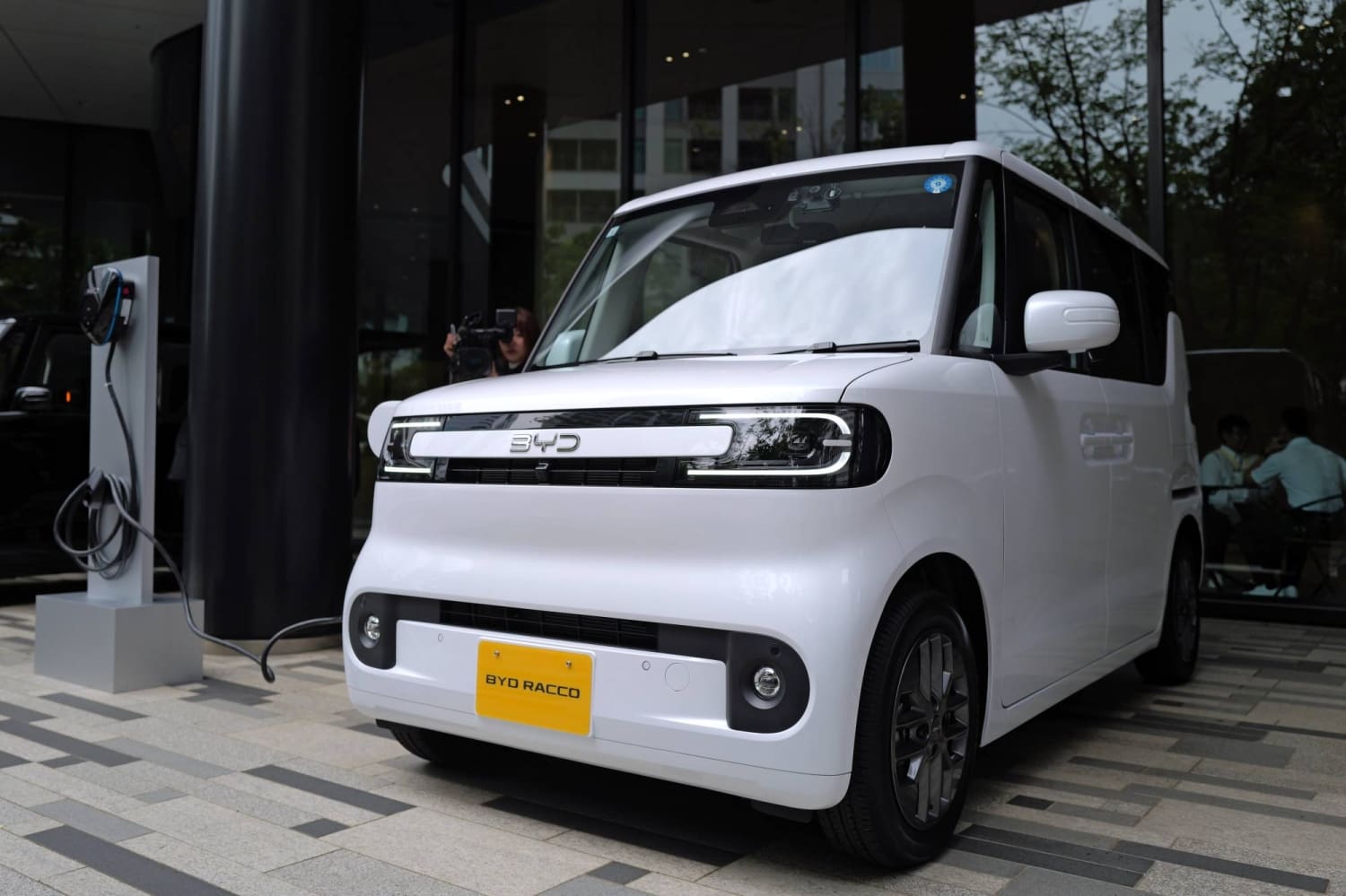
BYD Takes Another Shot at Japan's Minicar Market
Chinese EV giant introduces Racco minicar to crack a segment where foreign automakers have historically struggled to gain traction
KEY TAKEAWAYS
- ·BYD launched the Racco electric minicar targeting Japan's kei-car segment, which represents 40 percent of domestic new car sales but remains over 90 percent controlled by local brands.
- ·Foreign automakers have historically failed in Japan's minicar market due to tight margins, stringent engineering requirements, and strong customer loyalty to established domestic players.
- ·Success will depend on BYD's ability to offer competitive pricing, build a credible service network, and sustain investment during a prolonged market-entry phase in a country where EV adoption remains below 4 percent.
A Calculated Entry
BYD has unveiled the Racco, a compact electric vehicle designed specifically for Japan's kei-car segment. The Chinese automaker is attempting what numerous foreign manufacturers have failed to achieve: establishing a meaningful presence in a category that accounts for roughly 40 percent of new car sales in Japan but remains dominated by domestic brands.
The kei-car class, defined by strict dimensional and engine displacement limits, enjoys preferential tax treatment and lower insurance costs in Japan. These vehicles typically measure no more than 3.4 meters in length and 1.48 meters in width, with engine displacement capped at 660cc for combustion models. Electric variants must meet the same size constraints.
Why Foreign Brands Struggle
Japan's minicar market has historically resisted foreign entry. Suzuki, Daihatsu, Honda, and Nissan command over 90 percent of the segment, leveraging decades of refinement in packaging efficiency, dealer networks tailored to rural and suburban buyers, and deep understanding of local preferences around storage space and maneuverability.
Previous attempts by international automakers to crack this market have largely faltered. The segment's tight margins, stringent engineering requirements, and customer loyalty to established domestic players have deterred sustained investment from brands accustomed to higher transaction values elsewhere in Asia.
BYD's entry comes at a moment when Japan's EV adoption rate remains among the lowest in major developed markets, sitting below 4 percent of new vehicle sales. Infrastructure build-out has lagged, and consumer preference still tilts heavily toward hybrids, a category where Toyota and Honda maintain technological leadership.
BYD's Regional Push
The Racco represents part of a broader Southeast and East Asian expansion for BYD. The Shenzhen-based company has opened assembly plants in Thailand and announced partnerships in Indonesia, positioning itself as a volume player in markets where price sensitivity and government EV incentives create openings for new entrants.
Japan, however, presents a distinct challenge. The market is mature, quality expectations are exacting, and brand switching inertia is high. BYD's existing sedan and SUV lineup has gained limited traction since entering Japan in 2023, with sales remaining in the low thousands annually.
The Racco's design prioritizes interior space optimization and urban maneuverability, two attributes that define successful kei-cars. BYD has not disclosed pricing, but analysts expect the company to undercut incumbent electric kei-car offerings, which currently start above ¥1.8 million.
Market Dynamics and Timing
Japan's minicar buyers skew older and are concentrated in regions with limited public transportation. Range anxiety remains a significant barrier to EV adoption in this demographic, particularly in rural prefectures where charging infrastructure is sparse.
BYD's battery technology, which emphasizes cost efficiency and safety through lithium iron phosphate chemistry, may offer a price advantage. However, the company will need to establish service networks and demonstrate long-term reliability to overcome skepticism toward Chinese automotive brands in Japan.
The broader competitive landscape is also shifting. Nissan and Mitsubishi have announced plans to expand their electric kei-car lineups, and Suzuki is developing new EV platforms with Toyota's backing. These incumbent players benefit from established dealer relationships and financing arrangements that BYD will need years to replicate.
What Comes Next
BYD's success with the Racco will hinge on execution in three areas: competitive pricing that offsets brand unfamiliarity, a credible after-sales service network, and targeted incentives in municipalities pushing electrification. The company has indicated it will initially focus on urban centers where charging access is more developed.
The Japanese market has a history of rewarding patience and localization. Whether BYD can sustain investment through an extended market-building phase, while managing profitability pressures elsewhere in Asia, will determine if the Racco becomes more than a footnote in the list of foreign minicar attempts.
RELATED STORIES
WeRide Eyes Regional Push Across Australia and Asia-Pacific Markets
Cheng Wei-Lun · 2 min
Xiaomi Shifts Weight to AI and EVs as Memory Costs Squeeze Smartphone Revenue
Cheng Wei-Lun · 3 min

China's EV Makers Ship One Out of Every Three Cars Overseas as Domestic Demand Cools
Cheng Wei-Lun · 3 min
Chinese Battery Makers Face Margin Pressure as Lithium Prices Drop and Tax Burden Climbs
Cheng Wei-Lun · 3 min
Spot something wrong? Email editor@briefasia.com. We log every correction publicly.