Technology · Products
Chinese Battery Makers Face Margin Pressure as Lithium Prices Drop and Tax Burden Climbs
Falling raw material costs fail to deliver relief as regulatory changes and supply uncertainty force manufacturers to recalibrate pricing strategies across the lithium-ion value chain.
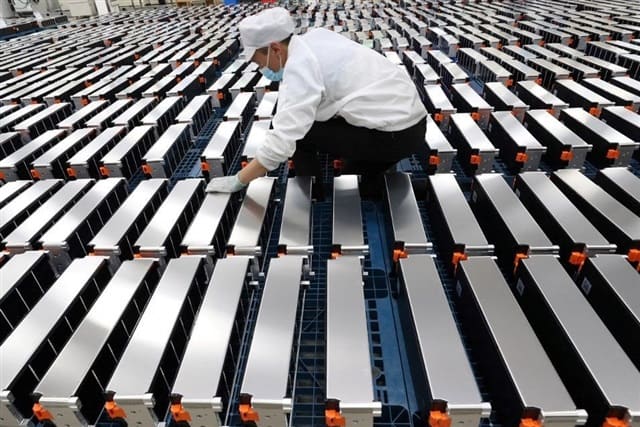
KEY TAKEAWAYS
- ·China's lithium battery manufacturers face margin pressure as falling lithium carbonate prices are offset by higher taxes and supply uncertainty.
- ·Beijing's tax increases aim to consolidate the sector and shift focus from volume growth to technology leadership and profitability.
- ·Mid-tier producers struggle most with the cost squeeze, while larger firms like CATL and BYD leverage scale and vertical integration to absorb shocks.
Cost Equation Shifts for China's Battery Sector
China's lithium battery manufacturers are recalibrating their cost structures as a combination of declining lithium carbonate prices, heightened tax obligations, and supply chain uncertainty creates a fresh set of margin pressures. The sector, which supplies the backbone of global electric vehicle production, is entering what industry observers describe as a new phase of financial discipline.
Lithium carbonate, the key raw material in lithium-ion batteries, has seen prices retreat from recent peaks. While cheaper inputs would typically improve profitability, the benefit is being offset by other factors. Chinese authorities have implemented higher tax rates on battery production, part of a broader effort to consolidate the industry and push smaller, less efficient players toward consolidation or exit.
The tax adjustments come as Beijing seeks to rationalize capacity across the battery supply chain. China dominates global lithium-ion production, accounting for more than 70 percent of manufacturing capacity. The government has signaled that it wants to move the industry away from a volume-driven model toward one that prioritizes technology leadership and profitability.
Supply Volatility Adds Complexity
Beyond tax policy, manufacturers are contending with less predictable supply conditions for lithium and other battery materials. Although lithium prices have softened, the availability of high-quality feedstock remains uneven. Producers in provinces such as Jiangxi and Sichuan, which host significant lithium processing operations, report that logistics bottlenecks and environmental compliance requirements have introduced new friction into procurement.
This uncertainty complicates long-term contract negotiations with automakers and energy storage developers, both of whom are pressing for lower battery prices. Several manufacturers have begun renegotiating supply agreements to include pricing floors that reflect the new cost realities, according to industry sources.
The margin squeeze is particularly acute for mid-tier producers that lack the scale or vertical integration of industry leaders such as CATL and BYD. These companies are exploring cost-reduction measures including workforce adjustments, production line upgrades, and tighter inventory management.
Implications for the EV Supply Chain
The cost restructuring underway in China's battery sector carries implications for the broader electric vehicle market. Automakers in Europe, North America, and Southeast Asia rely heavily on Chinese battery imports. Any sustained pressure on battery margins could slow the pace of price reductions for EVs, a key variable in mass-market adoption.
At the same time, the tax increases and regulatory tightening may accelerate industry consolidation. Smaller battery makers with limited cash reserves face a difficult operating environment, while larger firms with diversified product lines and established customer relationships are better positioned to absorb cost shocks.
China's battery industry has grown rapidly over the past decade, fueled by government subsidies, cheap capital, and aggressive capacity expansion. The current phase represents a shift toward maturity, where cost discipline and operational efficiency become more important than sheer volume growth.
Regional Competitors Watch Closely
Battery manufacturers in South Korea and Japan are monitoring developments in China with interest. Companies such as LG Energy Solution, Samsung SDI, and Panasonic have invested heavily in expanding their own production capacity, betting that supply chain diversification will become a priority for automakers wary of over-reliance on Chinese suppliers.
The cost pressures facing Chinese producers could create an opening for these competitors, particularly in premium segments where performance and reliability command higher margins. However, Chinese manufacturers retain significant advantages in scale, raw material access, and proximity to the world's largest EV market.
For now, the industry is adjusting to a new equilibrium. Lower lithium prices offer some relief, but the combination of higher taxes and supply uncertainty means that battery makers cannot simply pass savings downstream. Instead, they are reworking internal cost structures, a process that will likely reshape the competitive landscape over the next several quarters.
RELATED STORIES
China's Electric Truck Exports Surge as Fuel Costs Rise Across Asia
Cheng Wei-Lun · 3 min
Nokia Closes Hangzhou R&D Center, Cuts 1,600 Jobs in China Exit
Cheng Wei-Lun · 3 min
Wingtech Swings to Loss After Nexperia Control Fractures
Cheng Wei-Lun · 4 min

Apple Weighs Memory Options as Washington Signals Concern Over Chinese Suppliers
Cheng Wei-Lun · 3 min
Spot something wrong? Email editor@briefasia.com. We log every correction publicly.