Sustainability · Energy
Private Sector to Build 250 of Indonesia's 315 Planned Hydropower Projects
State utility PLN will construct just 27 facilities while focusing on grid infrastructure, as independent power producers take the lead on 9.4 GW of conventional capacity and 214 mini-hydro plants through 2034.
KEY TAKEAWAYS
- ·Independent power producers will develop 48 conventional hydropower plants totaling 9,441 MW and 214 mini-hydro projects adding 1,110 MW through 2034, while PLN constructs just 27 facilities with 412 MW combined capacity.
- ·PLN is repositioning as an infrastructure enabler, prioritizing transmission line construction to evacuate power from remote generation sites rather than building plants directly.
- ·Execution depends on private developers securing favorable power purchase agreements and PLN delivering grid upgrades on schedule to prevent newly completed plants from sitting idle.
Shift in Development Strategy
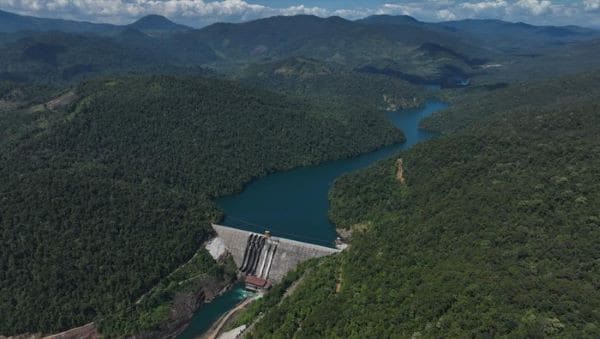
Indonesia is handing the majority of its hydropower expansion to private developers, marking a fundamental shift in how the archipelago plans to meet renewable energy targets over the next decade. Independent power producers will construct more than 250 of the 315 hydropower facilities outlined in the country's 2025-2034 electricity roadmap, according to PLN.
The split is stark. Private developers will build 48 conventional hydropower plants totaling 9,441 megawatts, alongside 214 mini-hydropower installations contributing 1,110 MW. Combined, these projects represent 10.55 gigawatts of the 11.7 GW hydropower capacity planned through 2034.
PLN's direct construction portfolio, by contrast, includes just seven conventional plants at 361 MW and 20 mini or micro-hydro projects adding 51 MW. That puts the state utility's share at roughly 3.5 percent of total planned capacity.
Suroso Isnandar, who leads renewable project management at PLN, framed the division as deliberate. The utility is repositioning itself as an enabler rather than a primary builder, he explained during a briefing in Jakarta. The company intends to concentrate resources on transmission infrastructure needed to evacuate power from remote generation sites, many of which sit in mountainous terrain far from Java's industrial centers.
Grid Before Generation
The emphasis on transmission reflects a lesson learned from earlier renewable pushes. Indonesia has seen multiple hydropower and geothermal projects delayed not by construction problems but by the absence of high-voltage lines capable of moving electricity to demand centers. PLN's strategy now prioritizes solving that bottleneck before new generation comes online.
Mini-hydropower projects, defined as facilities under 30 MW, make up the bulk of the private pipeline by unit count. These smaller installations typically face lower regulatory hurdles and shorter construction timelines than large dams, making them attractive to independent developers willing to navigate Indonesia's complex permitting environment.
The 48 large-scale hydropower projects in private hands will require significant upfront capital and multi-year development cycles. Most are expected to involve foreign engineering firms and multilateral financing, particularly from Asian development banks that have prioritized renewable energy in Southeast Asia.
Pumped Storage on the Horizon
PLN is also advancing pumped-storage hydropower, a technology that functions as a large-scale battery. Water is pumped to an upper reservoir during periods of low electricity demand, then released through turbines to generate power during peak hours. The approach addresses one of the grid's most persistent challenges: balancing intermittent solar and wind generation with baseload reliability.
The utility has not disclosed specific sites or capacity targets for pumped storage in the current plan, but the technology is seen as critical to integrating higher shares of variable renewables. Indonesia's mountainous topography in Sumatra, Sulawesi, and parts of Kalimantan offers natural advantages for such projects, though land acquisition and community resettlement remain politically sensitive.
Regional Context
Indonesia's pivot mirrors broader trends across Southeast Asia, where governments are leaning on private capital to close infrastructure gaps. Vietnam has attracted billions in independent power investment over the past five years, though grid congestion and power purchase agreement disputes have slowed some projects. The Philippines recently reopened bidding for several large hydropower concessions after state agencies struggled to secure financing.
For Jakarta, the calculus is straightforward: the national budget cannot fund the energy transition alone. The 2025-2034 plan envisions adding more than 70 GW of new capacity, much of it renewable. Mobilizing private developers for hydropower frees state resources for grid upgrades and coal plant retirements, both of which fall squarely on PLN's balance sheet.
Execution Risk
The success of this model hinges on whether independent producers can navigate Indonesia's regulatory environment and secure long-term power purchase agreements on terms that pencil out. PLN remains the sole buyer of electricity in most regions, giving it significant leverage in pricing negotiations. Developers have historically complained that tariffs fail to reflect project risk, particularly for sites in remote provinces with weak infrastructure.
Environmental and social safeguards add another layer of complexity. Large hydropower projects often face opposition from communities concerned about displacement, changes to river flow, and impacts on downstream agriculture. Indonesia's track record on resettlement compensation is uneven, and several projects have stalled amid land disputes.
Grid readiness will be the other test. If transmission lines lag behind generation schedules, newly completed plants could sit idle, eroding investor confidence and complicating future financing rounds. PLN has committed to prioritizing evacuation infrastructure, but the utility's capital expenditure plans will need to align with private developers' construction timelines.
The 11.7 GW of hydropower capacity planned through 2034 represents a meaningful step toward Indonesia's renewable energy goals, but only if the private sector can deliver at scale and PLN can build the grid to match.
RELATED STORIES
Indonesia's 100 GW Solar Target Faces Industrial Capacity Constraints
Siti Nuraini · 3 min
Indonesia Tests Biodiversity Credits Amid Warnings of Market-Driven Conservation Risks
Siti Nuraini · 4 min
Coal Mine Closures Push South Sumatra Communities Into Economic Uncertainty
Siti Nuraini · 3 min

Electric Vehicle Prices Fall Below Hybrids in Global Markets
Cheng Wei-Lun · 5 min
Spot something wrong? Email editor@briefasia.com. We log every correction publicly.