Sustainability · Energy
Indonesia's 100 GW Solar Target Faces Industrial Capacity Constraints
Three-year timeline risks flooding the market with imports while local manufacturing and construction firms remain unprepared to execute projects at scale
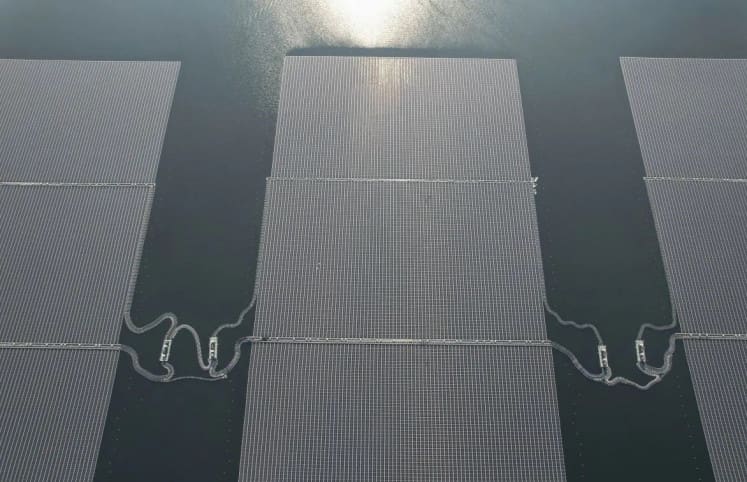
KEY TAKEAWAYS
- ·Indonesia aims to install 100 GW of solar capacity in three years, but domestic engineering and construction firms can sustainably handle only about 5 GW per year.
- ·The compressed timeline would force heavy reliance on imported solar components, channeling project financing and economic benefits abroad rather than building local industry.
- ·Industry leaders recommend a phased approach with annual targets aligned to Indonesia's actual industrial capacity, allowing time for workforce training and supply chain development.
The Ambition and the Reality
Indonesia's pledge to install 100 gigawatts of solar power capacity within three years has drawn skepticism from industry leaders who warn the timeline defies physical and economic constraints. The gap between political ambition and industrial readiness now threatens to undermine the very domestic industries the energy transition was meant to strengthen.
Herman Darnel, chairman of the expert council at the Indonesian Solar Energy Association, stated flatly that the target cannot be achieved within the proposed timeframe. Speaking at a briefing hosted by the Institute for Essential Services Reform, Darnel characterized the deadline as physically impossible without sacrificing Indonesia's industrial interests.
The central problem is not aspiration but execution capacity. Darnel assessed that national engineering, procurement, and construction firms can sustainably handle roughly 5 GW of solar installation per year. That figure sits twenty times below what the three-year target would require.
Import Dependence and Capital Flight
Pressing forward with the accelerated schedule carries a predictable consequence: massive reliance on imported solar components. Rather than building domestic manufacturing capability, the rushed timeline would channel project financing and economic benefits to suppliers outside Indonesia.
This outcome contradicts the strategic logic behind the solar push. A renewable energy transition executed through imports creates jobs and value abroad while leaving Indonesia dependent on foreign supply chains for critical infrastructure. The pattern mirrors mistakes made in other sectors where speed took precedence over industrial development.
The supply chain constraints extend beyond solar panels themselves. Darnel identified weaknesses across the entire project implementation ecosystem, from module procurement to grid integration. Domestic firms lack the scale, technical depth, and workforce to execute utility-scale solar projects at the pace the government envisions.
Workforce and Technical Gaps
Industrial capacity is not merely a question of factory output. It encompasses the availability of trained engineers, certified installers, project managers familiar with renewable energy finance, and contractors experienced in grid-scale solar deployment. Indonesia's current pool of qualified professionals remains thin relative to the scale of ambition.
Accelerating deployment without addressing these human capital gaps invites quality problems, project delays, and cost overruns. International experience shows that solar projects executed by inexperienced contractors often underperform on output, suffer early equipment failures, and require expensive remediation.
The compressed timeline also leaves little room for learning curves. Domestic firms need time to build expertise, refine processes, and establish supply relationships. Rushing past this phase risks creating a two-tier market where foreign engineering firms dominate large projects while local players are sidelined.
Strategic Signal or Feasible Plan
Darnel acknowledged that the 100 GW target serves a purpose as a strategic signal, demonstrating government commitment to renewable energy. Targets can mobilize investment, focus bureaucratic attention, and shift market expectations. But signals become problematic when mistaken for operational plans.
The risk is that an unachievable deadline erodes credibility, discourages serious investors who recognize the mismatch, and ultimately delays progress. A more realistic timeline aligned with industrial capacity would allow for coordinated investment in manufacturing, workforce training, and supply chain development.
Southeast Asia's renewable energy transition will unfold over decades, not years. Indonesia's geography, grid infrastructure, and industrial base differ fundamentally from countries that have achieved rapid solar deployment. Ignoring these realities in pursuit of headline targets substitutes optics for strategy.
The Path Forward
A credible solar expansion requires synchronizing multiple workstreams: domestic module manufacturing, workforce certification programs, grid modernization, land use planning, and financing mechanisms tailored to Indonesia's capital markets. Each of these takes time to mature.
Industry observers suggest a phased approach that sets annual capacity targets within the range of what domestic firms can realistically execute, gradually increasing as capabilities grow. This method builds expertise, retains capital within Indonesia, and creates sustainable employment rather than a temporary construction boom powered by imports.
The energy transition is not a sprint. Indonesia's 100 GW solar ambition reflects genuine urgency around climate and energy security. But translating that urgency into durable industrial capacity demands patience, coordination, and a timeline that matches the nation's actual readiness to build at scale.
RELATED STORIES
Coal Mine Closures Push South Sumatra Communities Into Economic Uncertainty
Siti Nuraini · 3 min
Private Sector to Build 250 of Indonesia's 315 Planned Hydropower Projects
Siti Nuraini · 4 min

Indonesia Car Sales Jump 34% as Electric Vehicles Reshape Southeast Asia's Auto Market
Siti Nuraini · 3 min

Indonesia's Education Bill Revision Could Reopen Funding Door for Free Meals Program
Siti Nuraini · 3 min
Spot something wrong? Email editor@briefasia.com. We log every correction publicly.