Sustainability · Energy
Coal Mine Closures Push South Sumatra Communities Into Economic Uncertainty
Residents in Muara Enim regency face livelihood challenges and environmental damage as Indonesia's energy transition accelerates mine shutdowns
KEY TAKEAWAYS
- ·Coal mine closures in Muara Enim regency have eliminated primary income sources for communities built around South Sumatra's mining sector.
- ·Residents face both immediate economic hardship and long-term environmental damage accumulated over decades of coal extraction activities.
- ·The gap between Indonesia's national energy transition targets and local support mechanisms leaves workers without retraining or alternative employment pathways.
A Region Built on Coal Faces Reckoning
Muara Enim regency has spent decades as the economic engine of South Sumatra's coal sector, with mining operations providing employment and revenue streams that shaped entire communities. Now, as Indonesia pushes forward with energy transition policies, the closure of coal operations has created an abrupt economic vacuum that local residents are struggling to fill.
The shift comes as Jakarta accelerates commitments to reduce carbon emissions and pivot toward renewable energy sources. While the national agenda focuses on climate targets and clean energy infrastructure, the ground-level impact in coal-dependent regions reveals a different story: one of unemployment, vanishing income sources, and communities left to navigate an uncertain future without comprehensive transition support.
Environmental Legacy Compounds Economic Pain
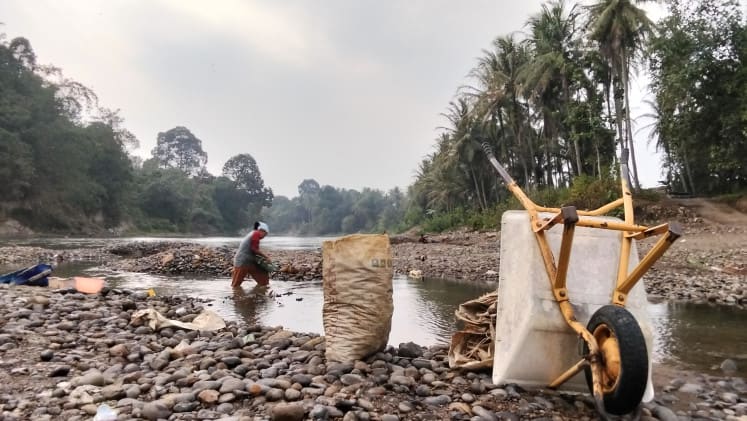
The mining closures have not erased the industry's footprint. Residents continue to contend with environmental damage accumulated over decades of extraction activities. Degraded land, water quality concerns, and altered landscapes remain visible reminders of the coal era, complicating efforts to rebuild local economies around alternative industries such as agriculture or small-scale manufacturing.
For communities that relied almost exclusively on mining-related employment, from pit operations to logistics and support services, the sudden loss of these jobs has created financial strain. Many families that once enjoyed stable incomes now face the challenge of retraining for sectors with limited local opportunities or migrating to urban centers in search of work.
Policy Gap Between Transition Goals and Local Reality
Indonesia's energy transition framework emphasizes macro-level targets: increasing renewable capacity, phasing out coal-fired power plants, and attracting green investment. Yet the mechanisms to support workers and communities through this shift remain underdeveloped. Muara Enim's experience highlights the gap between national policy ambitions and the practical needs of regions where coal has been the primary economic driver.
Retraining programs, if available, often lack alignment with the actual job market in rural areas. Infrastructure for new industries remains limited, and access to capital for small business ventures is constrained. The result is a population caught between a declining industry and an emerging economy that has not yet materialized locally.
Broader Implications for Southeast Asia's Coal Belt
South Sumatra's challenges mirror those facing other coal-producing regions across Southeast Asia. As governments in Vietnam, the Philippines, and parts of China pursue similar energy transitions, the risk of creating stranded communities grows. The speed of policy change frequently outpaces the development of social safety nets, leaving workers and families to absorb the immediate costs of a shift designed to benefit future generations.
For Indonesia, the stakes are particularly high. The country remains one of the world's largest coal exporters, and the domestic coal sector employs hundreds of thousands. How the government manages the transition in places like Muara Enim will set precedents for other mining regions and influence public support for climate policies.
What Comes Next for Mining Communities
The path forward requires more than closure timelines and renewable energy targets. Effective transition strategies must include direct economic support for affected workers, investment in alternative industries suited to local conditions, and environmental remediation efforts that restore land for productive use.
Without these elements, the energy transition risks deepening inequality, concentrating benefits in urban centers and industrial hubs while leaving rural, resource-dependent communities further behind. Muara Enim's struggle is a test case for whether Indonesia can execute a just transition or whether climate progress will come at the expense of its most vulnerable populations.
RELATED STORIES

Indonesia's 100 GW Solar Target Faces Industrial Capacity Constraints
Siti Nuraini · 3 min

Electric Vehicle Prices Fall Below Hybrids in Global Markets
Cheng Wei-Lun · 5 min

Indonesia Tests Biodiversity Credits Amid Warnings of Market-Driven Conservation Risks
Siti Nuraini · 4 min

Indonesia's Growth Numbers Hide Shrinking Savings and Rising Household Debt
Priyanka V. Rao · 4 min
Spot something wrong? Email editor@briefasia.com. We log every correction publicly.