Sustainability · Mobility
Electric Vehicle Prices Fall Below Hybrids in Global Markets
Lower battery costs and Chinese production scale push EVs into price leadership, accelerating adoption across emerging economies
KEY TAKEAWAYS
- ·Average electric vehicle prices fell below hybrid models globally last year, driven by declining battery costs and Chinese production scale in emerging markets.
- ·Battery pack costs have decreased approximately 60 percent since 2020, making electric drivetrains cost-competitive with hybrid systems that require dual propulsion complexity.
- ·Chinese automakers leveraging vertical integration and domestic battery supply chains are gaining market share across Southeast Asia, Latin America, and Africa with models priced between $15,000 and $25,000.
A Pricing Milestone
Electric vehicles crossed a significant threshold last year, with average global prices falling below those of hybrid models for the first time. The shift marks a turning point in automotive economics, driven by two converging forces: rapidly declining battery costs and Chinese manufacturers leveraging production scale to compete aggressively in price-sensitive markets.
The price inversion challenges long-held assumptions about EV affordability. For years, the industry narrative positioned hybrids as the accessible middle ground between combustion engines and full electrification. That calculus has now reversed in aggregate terms, particularly in markets outside North America and Europe.
Battery Economics Reshape the Equation
Battery pack costs have declined sharply over the past three years, falling below critical thresholds that make electric drivetrains cost-competitive with hybrid systems. Hybrid vehicles require both an internal combustion engine and electric components, creating dual manufacturing complexity. As battery costs drop, the economic advantage of that dual-system approach erodes.
Lithium-ion cell prices have decreased approximately 60 percent since 2020, according to industry data. That decline has accelerated as cathode chemistry improvements and manufacturing efficiency gains compound. Chinese battery producers, led by firms like CATL, have achieved scale that allows them to offer cells at price points unmatched by competitors in other regions.
The cost structure favors pure electric architecture in ways that become more pronounced as battery prices continue their downward trajectory. Hybrids carry the weight of maintaining two propulsion systems, each with distinct supply chains and engineering requirements. Electric vehicles, by contrast, benefit from simpler drivetrains with fewer moving parts.
Chinese Automakers Drive Market Penetration
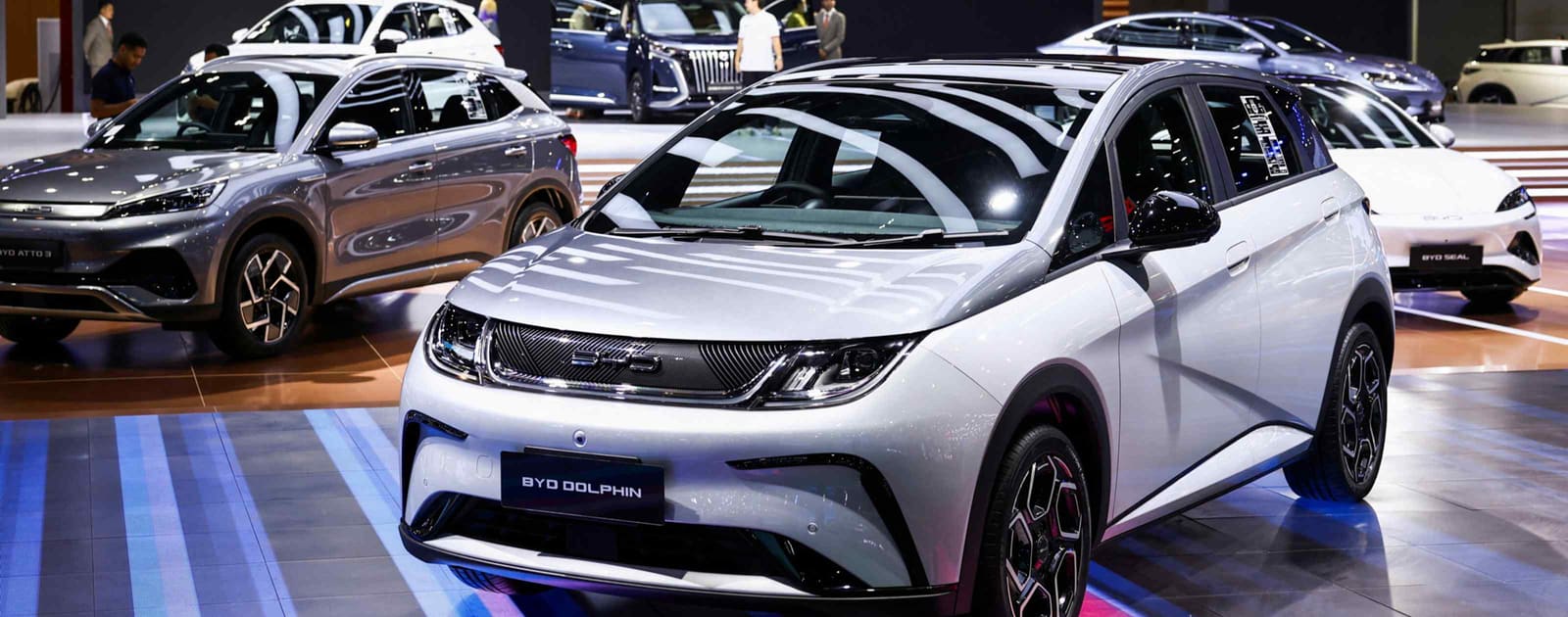
Chinese manufacturers have capitalized on domestic battery supply chains and government support to produce electric vehicles at price points that undercut both hybrid and conventional models in emerging markets. BYD, Geely, and other mainland producers have expanded aggressively across Southeast Asia, Latin America, and parts of Africa.
These automakers benefit from vertical integration that extends from raw material processing through final assembly. Many maintain close relationships with battery suppliers or produce cells in-house, eliminating margin stacking that inflates costs for competitors reliant on external suppliers. The result is a landed cost structure that allows competitive pricing even after tariffs and shipping.
In markets like Thailand, Indonesia, and the Philippines, Chinese EVs have gained substantial market share over the past 18 months. Local governments in these countries have introduced incentives that favor electric vehicles, but the fundamental driver remains price. Models priced between $15,000 and $25,000 have found ready buyers among middle-income consumers previously limited to entry-level combustion vehicles.
Emerging Markets Lead Adoption
The pricing shift has had its most visible impact in emerging economies, where cost sensitivity determines purchase decisions more directly than in developed markets. In Indonesia, EV sales surged 34 percent in the second quarter compared to the previous year, fueled by affordable Chinese models and government subsidies for manufacturing investment.
Thailand has become a regional hub for EV production, with both Chinese manufacturers and established Japanese automakers expanding electric vehicle capacity. The Philippine government announced a $1 billion subsidy program for EV manufacturing, signaling intent to build domestic production rather than rely solely on imports.
These markets represent a different adoption curve than developed economies. Rather than premium EVs serving as technology showcases before prices gradually decline, emerging markets are experiencing mass-market electrification from the outset. The vehicles entering these markets prioritize affordability and practicality over performance or luxury features.
Implications for Established Automakers
Traditional automakers face mounting pressure to respond. Japanese manufacturers, dominant in hybrid technology, must now defend market share in regions where they have historically held strong positions. Toyota, Honda, and Nissan have built reputations and dealer networks across Asia on the strength of reliable, fuel-efficient hybrids. That franchise is now under direct assault from lower-priced electric alternatives.
Some established players are adapting. Suzuki announced plans to export electric minicars to Europe as soon as 2027, leveraging its expertise in small, efficient vehicles. Toyota has maintained focus on hybrid production, targeting 10.5 million units of global output in 2027, but faces questions about whether that strategy remains viable as EV price parity spreads.
The competitive dynamic has shifted from technology demonstration to cost competition. Chinese automakers have proven capable of delivering acceptable quality at price points that undercut incumbents. For legacy manufacturers, the challenge is not whether to build EVs, but whether they can do so profitably at prices that match Chinese competitors.
Regional Variations Persist
While the global average shows EVs priced below hybrids, significant regional variation remains. In Japan, hybrid vehicles continue to dominate due to infrastructure constraints and consumer preferences shaped by decades of hybrid availability. North American and European markets still see price premiums for many EV models, particularly in segments above compact cars.
The global average reflects volume-weighted pricing across all markets, meaning the surge in low-cost EV sales in Asia and other emerging regions has pulled the overall figure down. In markets where Chinese automakers have limited presence, hybrids often retain price advantages.
This fragmentation presents both opportunity and risk. Automakers with global operations must navigate divergent market conditions, balancing investment in electric platforms against continued demand for hybrids in specific regions. The risk lies in misallocating capital to technologies that lose relevance faster than expected in key markets.
The Road Ahead
The price crossover between EVs and hybrids represents more than a statistical milestone. It signals a fundamental shift in automotive economics that will accelerate electrification in the world's fastest-growing vehicle markets. As battery costs continue declining and Chinese manufacturers expand production, the price gap is likely to widen rather than narrow.
For consumers in emerging markets, the shift means access to modern electric vehicles without premium pricing. For automakers, it means adapting to a competitive landscape where cost leadership matters as much as technology leadership. The transition is no longer a question of when electric vehicles will achieve price parity, but how quickly legacy manufacturers can respond to a market that has already moved.
RELATED STORIES

Asian Tech Stocks Surge as Weak US Jobs Data Dims Rate Hike Outlook
Cheng Wei-Lun · 4 min

Manila Eyes Nickel Processing to Escape China's Price Control
Priyanka V. Rao · 4 min
Shein Retreats From Vietnam Warehouse Bet as China Manufacturing Proves Irreplaceable
Cheng Wei-Lun · 4 min

Shein Scales Back Vietnam Expansion, Reinforces China Manufacturing Base
Cheng Wei-Lun · 3 min
Spot something wrong? Email editor@briefasia.com. We log every correction publicly.