Technology · Products
Innometry Delivers Inspection Tools for 46-Series EV Battery Production
Korean equipment maker secures position in next-generation cylindrical battery supply chain with shipment to major manufacturer
KEY TAKEAWAYS
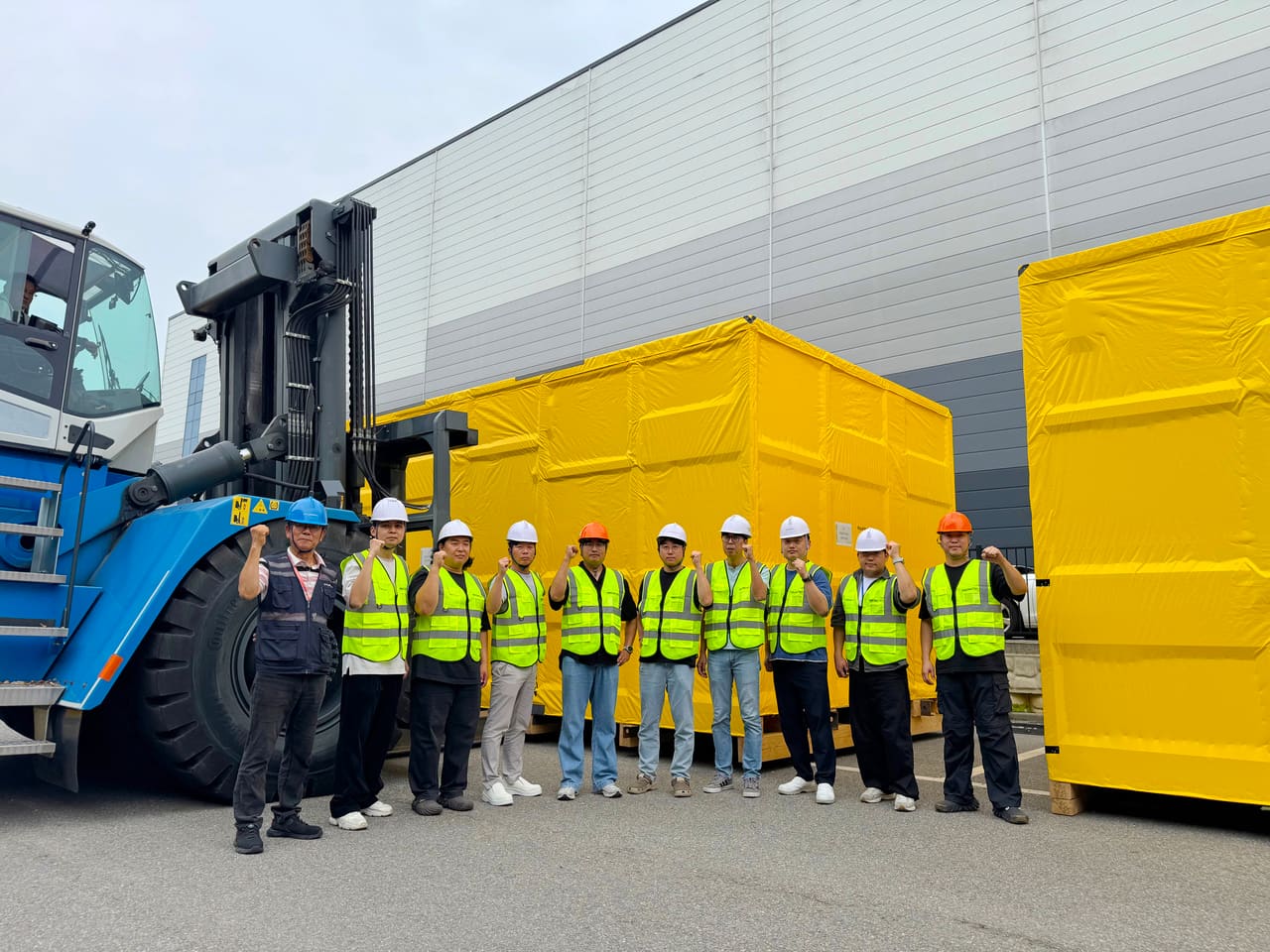
- ·Innometry delivered CT and X-ray inspection equipment to a major battery maker's 46-series cylindrical cell production line following a February supply contract.
- ·The 46-millimeter format offers five times the capacity of older cells and has been adopted by Tesla, BMW, and Hyundai for vehicles launching through 2027.
- ·Securing a position on mass-production lines provides recurring revenue and process data that can lock in early suppliers as manufacturing scales.
Korean Toolmaker Enters High-Stakes Battery Race
Innometry announced it has delivered specialized inspection equipment to a major battery manufacturer's production line for 46-series cylindrical cells, according to the company. The shipment follows a supply agreement finalized in February and positions the Korean firm inside the manufacturing infrastructure for a battery format that several automakers now regard as central to their next wave of electric vehicles.
The equipment package comprises CT inspection units that assess electrode alignment within the cells and X-ray systems built to identify foreign materials during assembly. Both technologies address quality-control bottlenecks that have slowed the ramp of cylindrical formats, which pack more active material into a smaller footprint than pouch or prismatic designs but demand tighter tolerances on winding and stacking.
The 46-Series Bet
Cylindrical batteries measuring 46 millimeters in diameter have emerged as a focal point for automakers chasing range and cost targets. Tesla introduced the format in 2020 for its Model Y and Cybertruck programs, arguing that the larger cell reduces the number of welds per pack and improves thermal management. BMW, Hyundai Motor, and several Chinese manufacturers have since announced plans to adopt 46-series cells in vehicles launching between 2025 and 2027.
The format's appeal rests on energy density and manufacturing efficiency. A single 46-series cell holds roughly five times the capacity of the older 2170 format, cutting the cell count per pack and simplifying assembly. Yet the larger diameter also raises the risk of defects during electrode winding, a step in which misalignment or contamination can trigger thermal runaway once the cell enters service.
Inspection as Competitive Moat
Non-destructive inspection has become a gate-keeping technology as battery makers scale production. CT systems use computed tomography to map the internal geometry of a cell without disassembly, catching winding errors or voids in the jellyroll before electrolyte filling. X-ray tools scan for metal particles, dust, or polymer fragments that might puncture the separator under mechanical stress or thermal cycling.
Innometry's entry into this segment puts it alongside established players such as Chroma ATE and Marposs, both of which supply inline inspection systems to Asian and European cell makers. The Korean company has not disclosed the identity of its customer, though South Korea's three largest battery manufacturers operate pilot or full-scale 46-series lines.
Securing a position on a mass-production line offers Innometry recurring revenue from consumables, software updates, and capacity expansions. It also provides process data that can inform the next generation of inspection algorithms, a feedback loop that tends to lock in early suppliers as lines mature.
Asia's Battery Tooling Ecosystem
The shipment underscores the deepening specialization within Asia's battery supply chain. While cell chemistry and pack integration capture headlines, the tooling and metrology layer has quietly consolidated around a handful of firms in South Korea, Japan, and Taiwan. These companies supply the coating machines, slitting equipment, formation cyclers, and inspection rigs that determine yield and throughput on gigafactory floors.
Korea's battery equipment sector has grown in tandem with the country's cell makers, which together command roughly 30 percent of global EV battery capacity. Domestic tooling firms benefit from geographic proximity, shorter lead times, and engineering teams embedded in customer facilities during line commissioning.
As 46-series production scales, the companies that control inspection and metrology stand to capture a disproportionate share of capital expenditure. Every gigawatt-hour of new capacity requires dozens of inspection stations, each representing a seven-figure line item in a manufacturer's budget.
What Comes Next
Innometry has not disclosed shipment volumes or the timeline for line commissioning. Industry practice suggests that equipment delivered in August will undergo installation and calibration through the fourth quarter, with commercial production starting in early 2027.
The company's ability to secure follow-on orders will depend on defect detection rates and false-positive performance during the ramp. Battery makers typically evaluate multiple suppliers in parallel, awarding long-term contracts only after six to twelve months of line data.
For now, the shipment marks a tangible entry into a market where incumbency matters and switching costs are high. Whether Innometry can convert early access into sustained market share will become clear as 46-series lines move from pilot scale to the multi-gigawatt-hour volumes that automakers have promised.
RELATED STORIES
Battery Defects Hit 210,000 Chinese EVs as CALB Quality Crisis Undermines Diversification Push
Cheng Wei-Lun · 3 min
Korean Memory Giants Accelerate Equipment Orders as Fab Boom Doubles Lead Times
Cheng Wei-Lun · 3 min
Samsung Workers Plan Protest Over Pay Gap Between Chip and Device Units
Jun-ho Seo · 3 min

LG Display Turns Profitable as LCD Exit Cuts Production Costs
Cheng Wei-Lun · 3 min
Spot something wrong? Email editor@briefasia.com. We log every correction publicly.