Sustainability · Climate
Indonesia Deploys Emergency Teams as Wildfire Smoke Blankets Sumatra Cities
Air quality deteriorates across South Sumatra as authorities mobilize to suppress spreading blazes threatening regional stability
KEY TAKEAWAYS
- ·Wildfires in South Sumatra have blanketed Palembang and surrounding areas in thick smoke, prompting Indonesian authorities to deploy firefighting teams and water-bombing aircraft.
- ·The fires threaten to trigger regional haze affecting Malaysia and Singapore, similar to 2015 and 2019 events that disrupted air travel and forced school closures.
- ·Fires are occurring earlier than typical seasonal patterns, raising concerns about extended dry conditions linked to warmer Pacific ocean temperatures.
Emergency Response Escalates
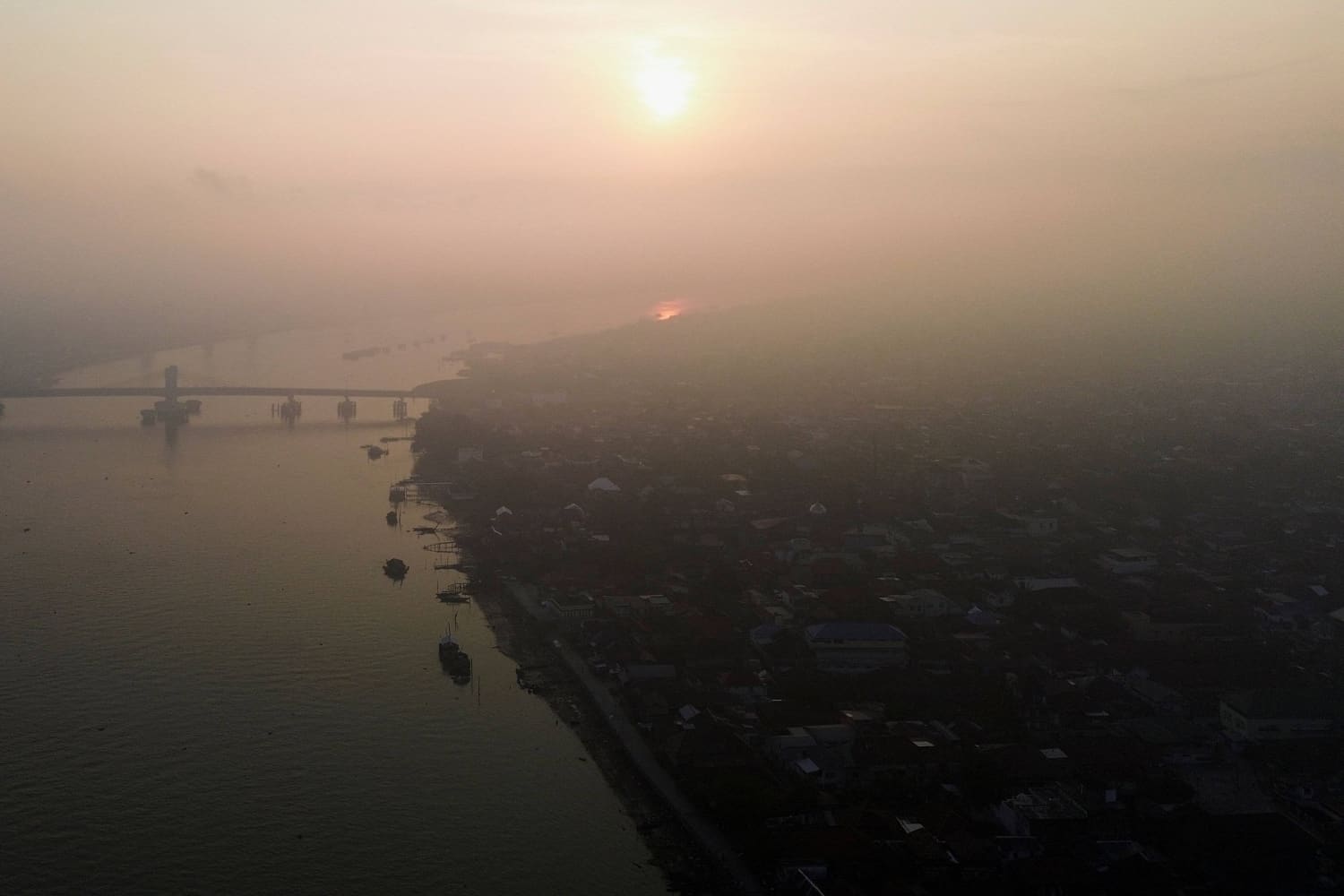
Thick haze has descended over residential neighborhoods in Palembang, the capital of South Sumatra province, as wildfires continue to burn across the region. Aerial footage captured this week shows the Musi River corridor shrouded in smoke, with visibility reduced to dangerous levels in densely populated areas.
Indonesian authorities have escalated emergency response operations, deploying firefighting teams and water-bombing aircraft to contain the blazes. The fires, which have intensified in recent days, threaten to trigger a regional environmental crisis reminiscent of the 2015 haze disaster that affected millions across Southeast Asia.
South Sumatra's peatland-rich terrain makes the province particularly vulnerable to fires during dry conditions. Once ignited, peat fires burn underground for weeks, releasing enormous volumes of smoke that drift across provincial and international boundaries. The current outbreak follows weeks of below-average rainfall across the Indonesian archipelago.
Regional Air Quality Threat
The immediate concern extends beyond Indonesia's borders. Malaysia and Singapore have historically borne the brunt of Indonesian fire smoke, which disrupts air travel, closes schools, and forces residents indoors for days or weeks at a time. In 2019, similar fires pushed air quality in Malaysian cities to hazardous levels and prompted diplomatic tensions over Jakarta's containment efforts.
Indonesia's disaster management agency has established coordination centers in affected provinces to manage the response. Local governments have been instructed to enforce fire bans and monitor hotspot areas using satellite data. Companies operating plantations in fire-prone zones face increased scrutiny, as slash-and-burn land clearance remains a persistent ignition source despite legal prohibitions.
The economic stakes are substantial. Indonesia's palm oil and pulp industries, concentrated in Sumatra and Kalimantan, have faced international pressure to adopt zero-burn policies. Prolonged fire seasons damage the country's reputation among export markets increasingly focused on supply chain sustainability.
Pattern of Recurrence
This year's fires arrive earlier than typical seasonal patterns, raising concerns among environmental agencies tracking climate trends in the region. Warmer ocean temperatures in the Pacific have been linked to prolonged dry spells across Indonesia, creating conditions that extend fire risk beyond traditional August-October windows.
Provincial authorities in South Sumatra have activated health protocols for vulnerable populations, including children and elderly residents. Hospitals in Palembang report increased respiratory cases as particulate matter concentrations spike. Schools in several districts have shifted to remote learning to limit outdoor exposure.
The Indonesian government has invested in early warning systems and firefighting capacity since the catastrophic 2015 season, which burned more than 2.6 million hectares and generated economic losses estimated at $16 billion. However, enforcement remains uneven across provinces, and smallholder farmers often lack alternatives to fire-based land preparation.
Water-bombing helicopters have been dispatched from Jakarta to support ground crews working in remote peatland areas. The military has also been mobilized to assist with firebreak construction and evacuation operations in communities directly threatened by advancing flames.
Diplomatic Implications
Southeast Asian neighbors are monitoring the situation closely. ASEAN's sub-regional haze monitoring system has been activated, and meteorological agencies across the region are issuing air quality advisories. Singapore's National Environment Agency has advised residents to prepare for potential smoke impact in coming days, depending on wind patterns.
Indonesia's ability to contain the fires quickly will serve as a test of its improved disaster response infrastructure and its commitment to the ASEAN Agreement on Transboundary Haze Pollution. The 2002 accord, ratified by Indonesia in 2014, obligates member states to prevent and monitor land and forest fires.
As containment efforts continue, the focus remains on preventing the fires from spreading into larger commercial plantation areas, where fuel loads could sustain burns for months. Rainfall forecasts offer limited relief, with meteorologists predicting continued dry conditions across Sumatra through the end of August.
RELATED STORIES
Indonesia's 100 GW Solar Target Faces Industrial Capacity Constraints
Siti Nuraini · 3 min
South Sumatra Police Uncover 1.4 Million Liters in Fuel Diversion Scheme
Siti Nuraini · 3 min

Indonesia Begins Domestic Construction of Scorpene Submarines in Regional First
Siti Nuraini · 3 min
Private Sector to Build 250 of Indonesia's 315 Planned Hydropower Projects
Siti Nuraini · 4 min
Spot something wrong? Email editor@briefasia.com. We log every correction publicly.