Perspectives · Analysis
Indonesia's Graduate Unemployment Crisis Signals Broken Promise of Education
As more than one million degree holders remain jobless, Southeast Asia's largest economy confronts a widening gap between credentials and opportunity
KEY TAKEAWAYS
- ·More than one million Indonesian university graduates are currently unemployed, despite official figures showing declining headline unemployment rates.
- ·Rapid expansion of higher education occurred without alignment to labor market needs, creating oversupply in generalist degrees while growth sectors report skill shortages.
- ·The failure to generate quality jobs for degree holders strains the social compact that positioned education as the primary vehicle for upward mobility in Indonesia.
- ·Policy responses remain inadequate, with training programs lacking employer input and vocational education still carrying stigma despite chronic skills gaps.
The Credential Trap
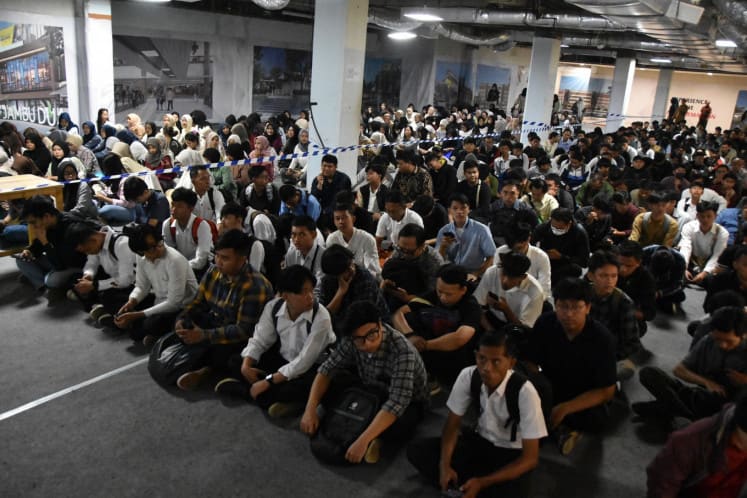
Walk through any Jakarta job center and the scene repeats: young professionals clutching bachelor's degrees, often from respectable institutions, filling out applications for positions that existed in smaller numbers than candidates five years ago. The paradox is sharp. Indonesia's official unemployment rate has declined, a statistic that policymakers cite as evidence of recovery. Yet beneath that aggregate number sits a more uncomfortable truth: more than one million university graduates are unemployed, and the figure continues to climb.
This is not a story about lazy youth or unrealistic expectations. It is a structural mismatch playing out across Southeast Asia's largest economy, one that raises fundamental questions about what education promises and what labor markets actually deliver. The social contract that drove millions of Indonesian families to invest in higher education, often at significant financial sacrifice, assumed a simple equation: credentials equal jobs. That equation no longer holds.
Expansion Without Alignment
Indonesia's higher education sector expanded rapidly over the past two decades, driven by rising incomes, government policy, and genuine belief in education as social mobility. University enrollment surged. Thousands of new private institutions opened. Degrees in business administration, communications, and social sciences proliferated, mirroring patterns seen across developing Asia.
The problem is that this expansion occurred largely disconnected from labor market signals. Curriculum design lagged behind employer needs. Technical and vocational training carried stigma, seen as fallback options rather than viable career paths. Universities optimized for enrollment numbers, not employment outcomes. The result is an oversupply of generalist degrees in fields where entry-level positions have stagnated or disappeared, automated or outsourced.
Meanwhile, sectors experiencing genuine growth struggle to find qualified talent. Digital infrastructure, advanced manufacturing, green energy, logistics technology: these areas report skill shortages even as graduate unemployment rises. The mismatch is not abstract. It represents wasted human capital, individual frustration, and a drag on productivity growth.
The Quality Job Deficit
Headline unemployment figures capture only part of the picture. Indonesia's labor market has long been characterized by high informality, underemployment, and low productivity work. Many who are technically employed work in roles far below their qualification level, a phenomenon economists call underemployment. A commerce graduate driving for a ride-hailing platform or a communications major working retail shifts appears employed in official statistics but represents a failure of the system to generate returns on educational investment.
Quality jobs, defined as formal employment with benefits, security, and career progression, remain scarce relative to the number of degree holders entering the market each year. The private sector has not expanded white-collar employment fast enough to absorb the flow. Government hiring is constrained by budget realities. Startups and tech firms, often cited as the future, employ relatively small numbers and concentrate in Jakarta and a handful of urban centers.
This creates a bottleneck. Graduates cluster in cities, competing for the same narrow set of positions. Those without connections or elite credentials find themselves locked out. The result is a growing cohort of educated unemployed, financially strained, frustrated, and uncertain about their futures.
Regional Patterns and Policy Failures
Indonesia is not alone. Across Asia, from India to the Philippines, graduate unemployment has emerged as a defining labor market challenge. Rapid educational expansion outpaced job creation in knowledge-intensive sectors. Credential inflation set in: positions that once required a high school diploma now demand a bachelor's degree, not because the work changed but because supply allows employers to be selective.
Policy responses have been inadequate. Training programs often lack employer input and fail to teach relevant skills. Apprenticeship models remain underdeveloped. Career counseling in universities is minimal. Entrepreneurship is promoted as a solution, but starting a business requires capital, networks, and risk tolerance that most graduates lack, especially in economies where access to credit is limited and failure carries heavy social costs.
The disconnect also reflects deeper economic structure. Indonesia's growth has been driven by commodities, low-cost manufacturing, and domestic consumption. These sectors generate employment, but not necessarily the kind that absorbs university graduates. The transition to a knowledge economy, often invoked in development plans, has been slower and more uneven than anticipated.
The Social Compact Under Strain
The implications extend beyond labor economics. Education has been the primary vehicle for social mobility in Indonesia, a way for families to escape poverty and secure middle-class stability. When that pathway closes, faith in institutions erodes. Political frustration rises. Brain drain accelerates as those who can seek opportunities abroad.
There is also a generational dimension. Older Indonesians who entered the workforce in earlier decades often secured stable employment with modest credentials. They encouraged their children to pursue higher education, confident it would lead to better outcomes. For many of today's graduates, the opposite has occurred: they carry student debt or family financial strain, and face worse job prospects than their less-educated parents did at the same age.
This inversion of expectations has psychological and social costs. It breeds cynicism about meritocracy and effort. It delays household formation, depresses consumption, and reduces risk-taking. A generation stuck in precarious employment or unemployment represents not just a present loss but a constraint on future growth.
What Needs to Change
Addressing graduate unemployment requires more than incremental adjustments. It demands rethinking how education, industry, and government interact. Universities must shift from enrollment-driven models to outcome-focused ones, partnering with employers to design curricula, embedding internships, teaching applied skills alongside theory. Accreditation standards should emphasize employment rates and graduate earnings, not just input metrics.
Vocational and technical education needs rehabilitation. Countries like Germany and Singapore demonstrate that high-quality technical training can lead to well-paid, respected careers. Indonesia has the institutional infrastructure but lacks the cultural shift and employer buy-in to make it effective. Changing perceptions requires visible success stories and wage parity.
Labor market policy must also evolve. Regulations that discourage formal hiring, such as rigid dismissal rules or high non-wage costs, limit job creation. At the same time, social protection needs strengthening so that flexibility does not translate into exploitation. The goal is a system that encourages firms to hire and invest in workers, while providing safety nets for those in transition.
Industrial policy has a role. Attracting and supporting sectors that generate knowledge-intensive jobs, whether in technology, advanced services, or manufacturing, can create demand for educated labor. This requires infrastructure, regulatory clarity, and workforce development aligned with investor needs.
A Test of Development Strategy
Indonesia's graduate unemployment crisis is a test case for middle-income countries navigating the transition from labor-intensive growth to productivity-driven development. The old model, where abundant low-cost labor powered export manufacturing and raw materials funded government budgets, no longer suffices. The new model requires human capital: skilled, adaptable workers who can drive innovation and efficiency.
But human capital does not materialize simply by expanding universities. It requires alignment, quality, and market signals. When those elements are missing, you get what Indonesia has now: impressive enrollment figures, declining headline unemployment, and a million degree holders with nowhere to go.
The polished façade is cracking. Whether policymakers, educators, and business leaders respond with the structural reforms needed, or continue to paper over the gaps with optimistic statistics, will shape not just labor market outcomes but the trajectory of Indonesian development for decades to come. The promise of education as a path to prosperity is not obsolete, but it is conditional. Right now, for too many, the conditions are not being met.
RELATED STORIES

Indonesia Faces Tension Between Petrochemical Growth and Plastic Reduction Goals
Siti Nuraini · 4 min

Indonesia's Instant Noodle Consumption Falls for First Time in Five Years
Priyanka V. Rao · 3 min

Indonesia Cuts State Funding for Nusantara as Private Investors Take Lead
Siti Nuraini · 3 min

Indonesia Plans to Restrict Subsidized Fuel by Vehicle Type
Siti Nuraini · 3 min
Spot something wrong? Email editor@briefasia.com. We log every correction publicly.