Asia · Business
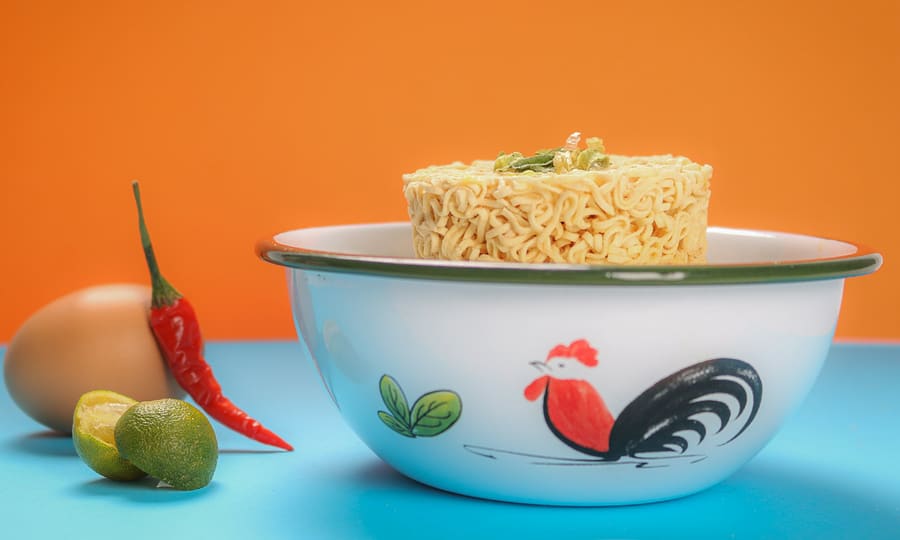
Indonesia's Instant Noodle Consumption Falls for First Time in Five Years
The world's second-largest market saw demand slip to 14.54 billion servings in 2025, pressured by currency weakness and rising input costs across Southeast Asia.
KEY TAKEAWAYS
- ·Indonesia's instant noodle consumption fell nearly 1% to 14.54 billion servings in 2025, the first decline in five years, driven by currency depreciation and rising raw material costs.
- ·Global instant noodle demand reached 124 billion servings in 2025, up 0.7%, with China and Hong Kong consuming 43.27 billion servings to retain the top market position.
- ·Cost pressures from geopolitical tensions and commodity price volatility are expected to persist through 2026, influencing manufacturer procurement and pricing strategies across Asia.
Demand Contracts Across the Archipelago
Indonesia's instant noodle consumption declined nearly 1% to 14.54 billion servings in 2025, according to the World Instant Noodles Association, ending a five-year growth streak in the world's second-largest market for the category. The contraction comes as households across the archipelago pulled back spending in response to currency depreciation and climbing raw material costs that pushed retail prices higher.
The drop underscores broader shifts in consumer behavior across Southeast Asia's largest economy, where instant noodles have long served as an affordable staple. Purchasing power erosion forced many households to make more selective buying decisions, even for low-ticket items that typically prove resilient during economic stress.
Despite the headline decline, cup-format noodles continued to gain traction in Indonesia, suggesting premiumization within the category remains viable even as overall volumes slip. The association expects the market to resume growth as manufacturers deploy demand-stimulation strategies, including deeper distribution into regional cities, expanded e-commerce presence, and new product introductions targeting specific taste preferences and convenience needs.
China Retains Top Spot Amid Modest Growth
China and Hong Kong together consumed 43.27 billion servings in 2025, up 1.2% from the prior year, maintaining their position as the world's largest instant noodle market by a wide margin. The modest increase reflects what the association characterized as heightened frugality and more selective spending patterns among consumers navigating deflationary pressures in several product categories.
Even under these conditions, the association anticipates mid- to high-priced bag-type noodles and cup formats will regain momentum through targeted initiatives. Manufacturers are focusing on penetrating lower-tier cities where brand awareness remains underdeveloped, while simultaneously expanding online sales channels to capture younger, digitally native consumers.
Global instant noodle consumption reached just over 124 billion servings in 2025, a 0.7% increase from 2024. The top five markets are China and Hong Kong, Indonesia, India, Vietnam, and Japan. The United States ranks sixth, followed by the Philippines, Thailand, South Korea, and Nigeria.
Cost Pressures Build Across Supply Chains
The instant noodle industry faced a more challenging cost environment throughout 2025, according to the association. Shifts in U.S. trade policy and escalating tensions in the Middle East drew heightened attention to raw material procurement and product pricing, while Asian markets experienced weaker export performance tied to geopolitical risks and rising input costs.
Currency volatility in several Southeast Asian markets compounded the pressure, particularly in Indonesia, where the rupiah's depreciation against the dollar increased the cost of imported wheat and palm oil. These dynamics forced manufacturers to either absorb margin compression or pass costs through to consumers already adjusting to tighter household budgets.
The association expects these pressures to persist through 2026, likely influencing procurement strategies and pricing decisions across the industry. Manufacturers are exploring alternative sourcing arrangements and ingredient substitutions to mitigate exposure to commodity price swings, while also investing in automation to offset rising labor costs in key production hubs.
Outlook Remains Cautiously Optimistic
Despite near-term headwinds, the association maintains a cautiously optimistic outlook for instant noodle demand across Asia. Population growth, urbanization, and evolving lifestyles continue to support structural demand for convenient, affordable meal solutions, particularly in emerging markets where retail infrastructure is expanding rapidly.
In Indonesia specifically, the association sees opportunity for renewed growth as manufacturers refine their product portfolios to match shifting consumer preferences. Premium cup formats and region-specific flavors are expected to drive incremental volume, even if overall market growth remains modest compared to the previous decade.
The broader challenge for the industry will be navigating cost inflation without sacrificing affordability, the core value proposition that has made instant noodles a staple across income segments. How manufacturers balance pricing, product innovation, and distribution expansion over the next 12 to 18 months will likely determine whether markets like Indonesia return to sustained growth or face prolonged stagnation.
RELATED STORIES
China's $1.2 Trillion Trade Surplus Threatens Indonesian Rupiah and Industry
Rajesh K. Iyer · 3 min
Indonesian Investment Climbs as Trade War Reshapes Asian Capital Flows
Siti Nuraini · 5 min

Indonesia Cuts State Funding for Nusantara as Private Investors Take Lead
Siti Nuraini · 3 min

Indonesia Plans to Restrict Subsidized Fuel by Vehicle Type
Siti Nuraini · 3 min
Spot something wrong? Email editor@briefasia.com. We log every correction publicly.