Finance · Deals
Singapore Turns to Talent Anchoring to Win Asia's Hedge Fund Race
As tax incentives converge across regional hubs, the city-state seeks to retain decision-makers who control capital allocation rather than just attract assets.
KEY TAKEAWAYS
- ·Singapore is shifting its asset management strategy from tax incentives to anchoring senior investment professionals who bring teams and create demand for specialized roles.
- ·The city-state aims to cultivate local hedge fund managers alongside established firms to build deeper institutional expertise and reduce reliance on imported brands.
- ·Competition with Hong Kong and other regional centers intensifies as tax and regulatory gaps narrow, making talent availability and ecosystem depth the new differentiators.
The New Battleground
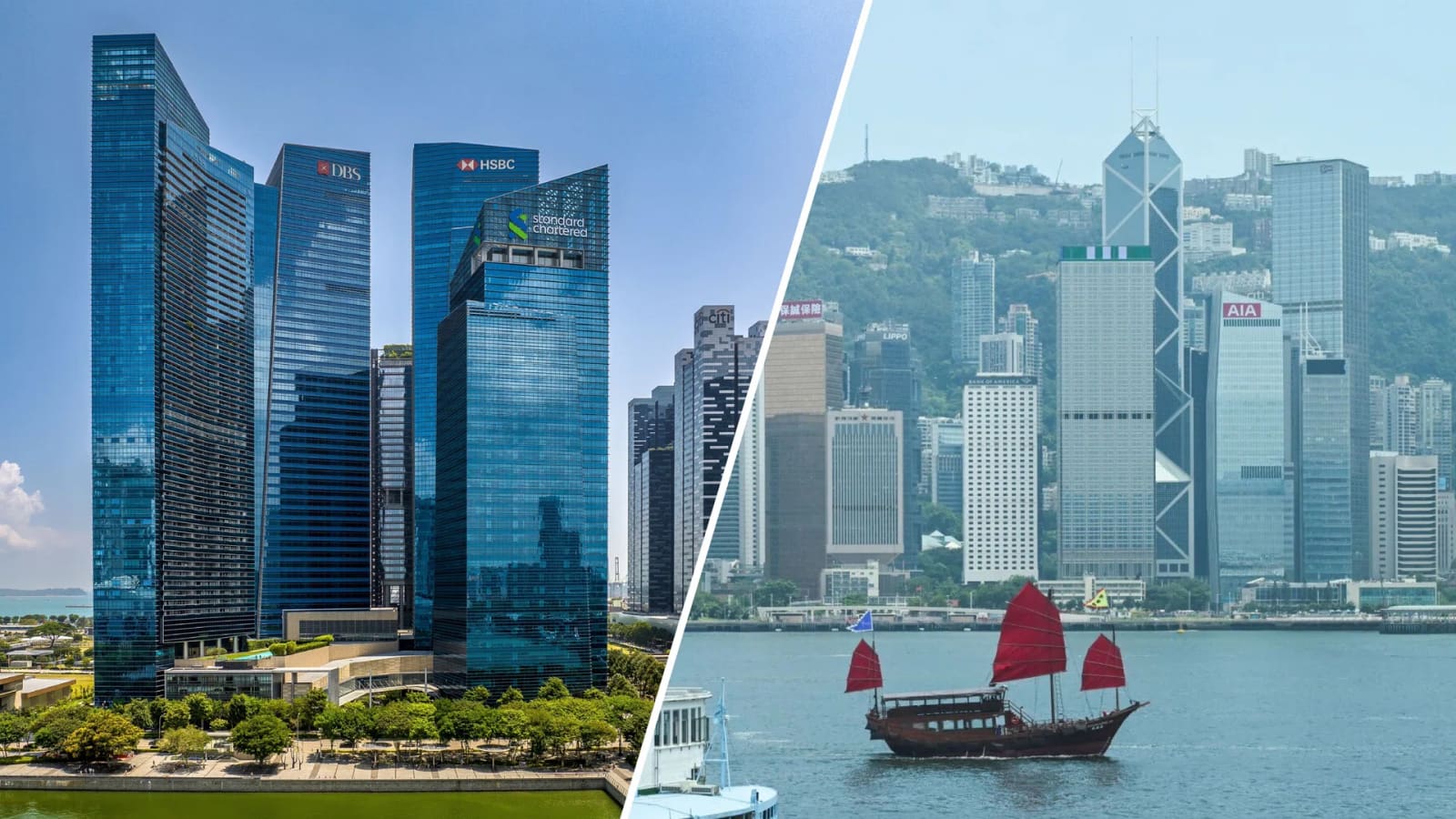
Singapore's push to dominate Asia's asset management landscape is entering a different phase. With tax advantages eroding across competing financial centers, industry participants say the city-state must now focus on keeping the people who make investment decisions on the ground, not just the capital they oversee.
Hedge fund executives and industry observers point to a straightforward logic: senior investment professionals bring entire teams with them. Those teams require research analysts, technologists, risk officers, legal advisors, and compliance specialists. The result is a multiplier effect that transforms headline assets under management into high-value employment and accumulated expertise.
The shift reflects a broader recalibration across Asian finance hubs. Hong Kong, Tokyo, and emerging centers have steadily closed the gap on tax treatment and regulatory frameworks that once gave Singapore a clear edge. What remains contestable is human capital, the portfolio managers and chief investment officers whose location decisions determine where trading desks operate, where analyst teams sit, and where capital flows get directed.
Anchoring Versus Attracting
The distinction matters. Attracting assets can mean hosting a booking center where capital is domiciled for regulatory or tax purposes but managed remotely. Anchoring decision-makers means embedding the operational core of a fund in Singapore, with daily portfolio construction, risk monitoring, and client interaction happening locally.
Industry participants describe this as the difference between shallow and deep integration. Shallow integration delivers fee income and regulatory filing activity. Deep integration creates demand for specialized talent, strengthens linkages to regional markets, and builds institutional knowledge that compounds over time.
Singapore's Monetary Authority has signaled interest in this deeper model, though specific policy measures remain under discussion. The emphasis is on cultivating local fund managers alongside efforts to retain established names, a dual-track approach designed to broaden the ecosystem rather than rely solely on imported brands.
The Local Manager Question
Nurturing homegrown hedge funds presents its own challenges. Local managers typically lack the track record and brand recognition that attract institutional allocators, particularly the pension funds and endowments that anchor long-term capital. They also face higher hurdles in accessing prime brokerage credit, seed capital, and distribution networks dominated by global players.
Yet observers argue that a mature financial center requires a base of domestically rooted managers. These firms tend to have stronger commitments to local talent development, deeper engagement with regional markets, and less risk of relocating when global headquarters shift priorities. They also provide career pathways for analysts and traders who might otherwise leave for New York, London, or Hong Kong.
The talent war extends beyond portfolio managers. Middle and back-office roles, technology infrastructure, and compliance functions all require skilled professionals. As funds grow more complex, the demand for specialists in derivatives, quantitative research, and regulatory reporting intensifies. A hub that can supply those skills locally gains a structural advantage over one that forces firms to split operations across geographies.
Regional Competition Intensifies
Hong Kong remains the most direct competitor, with its own efforts to rebuild asset management activity after recent volatility. Tokyo has attracted attention for its market depth and investor base, though language and regulatory idiosyncrasies limit its appeal to international managers. Newer contenders, including select cities in mainland China and Southeast Asia, are testing whether they can carve out niches in specific strategies or asset classes.
The competition is not zero-sum, but neither is it infinite. A senior portfolio manager choosing where to base a fund weighs factors including talent availability, market access, quality of life, and ease of travel across the region. Small differences in any of those dimensions can tip decisions, particularly when tax and regulatory gaps narrow.
Singapore's pitch increasingly rests on ecosystem depth. The presence of established funds creates a talent pool that newer entrants can tap. Proximity to listed companies in Southeast Asia offers research advantages. Time zone alignment with major regional markets supports real-time trading and client engagement. These factors accumulate into what participants describe as network effects, where each additional manager makes the location more attractive to the next.
What Comes Next
The outcome will shape not just where hedge funds are registered, but where investment decisions are made, where trading expertise resides, and where the next generation of fund managers is trained. For Singapore, the stakes extend beyond fee income or headline assets. They encompass the city-state's long-term position as a node in global capital flows and its ability to generate high-value employment in a sector where intellectual property and human expertise drive competitive advantage.
Industry observers expect further policy refinements in the coming months, though the broad direction is clear. Singapore is moving from a model centered on attracting capital through incentives to one focused on anchoring the people and institutions that control where that capital goes. Whether that shift can offset the competitive pressures from Hong Kong and other regional centers will depend on execution, not just strategy.
RELATED STORIES

Shein Targets $27 Billion Valuation in Hong Kong Listing
Cheng Wei-Lun · 3 min

Shein Targets $2.3 Billion in Hong Kong Debut After Years of Setbacks
Cheng Wei-Lun · 3 min

Singapore Iron Ore Trader Radiant World Faces Multi-Jurisdiction Probe
Priyanka V. Rao · 4 min

Singapore's Azalea Secures $1 Billion Across New Private Equity Vehicles
Priyanka V. Rao · 4 min
Spot something wrong? Email editor@briefasia.com. We log every correction publicly.