Sustainability · Energy
Indonesia Targets 100 GW Solar Rollout With Only 1,000 Village Cooperatives Operational
President Prabowo's renewed push for decentralized solar power faces a steep institutional challenge as delivery infrastructure lags far behind ambition
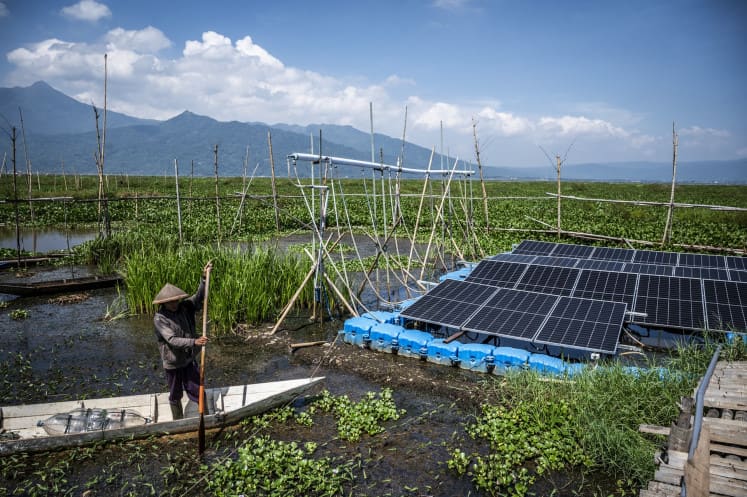
KEY TAKEAWAYS
- ·Indonesia aims to deploy 100 GW of solar power in two to three years, with 80 GW decentralized across 80,000 village cooperatives and 20 GW from utility-scale projects.
- ·Fewer than 1,000 of the planned 80,000 village cooperatives are currently operational, and none have installed solar capacity yet.
- ·India's National Solar Mission succeeded by building a dedicated agency that maintained policy continuity and standardized procurement, attracting long-term investment.
The Numbers Behind the Ambition
Indonesia has reaffirmed a 100 gigawatt solar power target, aiming to deliver it within two to three years. The program divides capacity into two streams: 80 GW of decentralized generation spread across 80,000 villages at 1 MW each, paired with 4 MWh battery storage systems, and 20 GW from centralized utility-scale projects.
The plan was reintroduced during the Strait of Hormuz crisis and positions solar as a tool for energy security, economic decentralization, and climate goals in a single framework. By replacing diesel with solar and storage, the government aims to reduce fuel imports, create provincial jobs, and extend electricity access beyond Java.
Yet out of the 80,000 village cooperatives envisioned, only around 1,000 are currently operational. None have installed solar capacity. That gap between ambition and execution is now the central question facing Jakarta.
Why Implementation Lags Technology
The technology required for the rollout is straightforward. Solar panels are commodity products, battery storage systems are proven at scale, and installation protocols are well established. The real friction lies in coordination.
The program spans multiple ministries, investors, manufacturers, financiers, and lenders. It must be implemented across more than 500 regencies and cities in 38 provinces, each with distinct grid conditions, land tenure arrangements, and local governance structures. State utility PLN's electricity supply business plan already commits to roughly 17 GW of solar, but that figure is dwarfed by the 100 GW goal.
Without a centralized program management office at the national level and capable delivery teams in each province, the risk is fragmentation. Projects stall, procurement becomes inconsistent, financing structures vary by region, and policy shifts with each ministerial reshuffle.
India's Institutional Playbook
India launched its National Solar Mission in 2010 with a 100 GW target that was widely dismissed as unrealistic. A decade later, the country became one of the world's largest solar markets, not because of superior sunlight or cheaper hardware, but because it built durable institutions.
A single dedicated agency managed the project pipeline, standardized procurement, and maintained policy continuity across election cycles. That consistency attracted vendors, developers, and financiers who could plan multi-year investments without fear of regulatory reversal. The ecosystem grew because the rules stayed stable.
Indonesia's challenge is similar but more complex. Village cooperatives must function as both energy distributors and local economic anchors. They need technical capacity, financial literacy, and connections to national financing channels. Building that capability in 80,000 locations requires replicable training programs, transparent procurement standards, and accountability mechanisms that work at the regency level.
The Provincial Delivery Question
Provinces understand their own resource endowments, demand patterns, and community structures in ways that central ministries cannot. A village in East Nusa Tenggara has different solar insolation, grid connectivity, and economic drivers than one in North Sumatra. Effective implementation requires provincial teams with authority to plan, procure, and execute within national standards.
That means equipping 38 provincial governments with technical staff, budget control, and clear performance metrics. It also means aligning incentives so that provincial leaders see solar rollout as a political and economic win, not just a compliance exercise.
The cooperatives themselves are not a new concept in Indonesia. The question is whether the current iteration can avoid the pitfalls of earlier programs, where cooperatives existed on paper but lacked capital, governance, or purpose. Ensuring that each cooperative has a viable business model, access to credit, and ongoing technical support will determine whether the 100 GW target is a milestone or a mirage.
What Comes Next
The gap between 1,000 operational cooperatives and 80,000 planned ones is not just a logistics problem. It reflects the absence of the institutional scaffolding needed to deliver decentralized energy at scale. Technology can be procured. Institutions take longer to build, but they are what make ambitious targets achievable.
Indonesia's solar push is being framed as a convergence of energy security, economic development, and climate action. If the country can match that ambition with execution capacity, it has the potential to reshape its energy landscape and demonstrate a replicable model for other emerging economies in the region. The next two years will show whether the institutions can catch up to the rhetoric.
RELATED STORIES
Indonesia's Renewable Energy Capacity Faces AI Data Centre Test
Tran Quoc Bao · 3 min
Indonesia Seeks 100GW Solar Build From China, But Not Chinese Ownership
Priyanka V. Rao · 3 min

Southeast Asian Firms Race to Raise Green Debt as Region Falls Behind on Renewables
Priyanka V. Rao · 3 min

Indonesia's Palm Oil Zones Account for Bulk of Fire-Ravaged Land This Year
Siti Nuraini · 4 min
Spot something wrong? Email editor@briefasia.com. We log every correction publicly.