Asia · Business
India Receives 20 Bids to Build Rare Earth Magnet Production Capacity
Government scheme targets independence from Chinese imports in critical material for electric vehicles and industrial motors
KEY TAKEAWAYS
- ·India's Ministry of Heavy Industries received 20 bids from domestic and international companies to manufacture sintered rare earth permanent magnets under a new production-linked incentive scheme.
- ·India currently imports nearly all rare earth magnets from China, which controls roughly 90 percent of global rare earth refining and processing capacity.
- ·The government will announce shortlisted bidders and capacity allocations in the coming quarter, with successful applicants required to reach commercial production within three years.
Twenty Companies Compete for Magnet Manufacturing
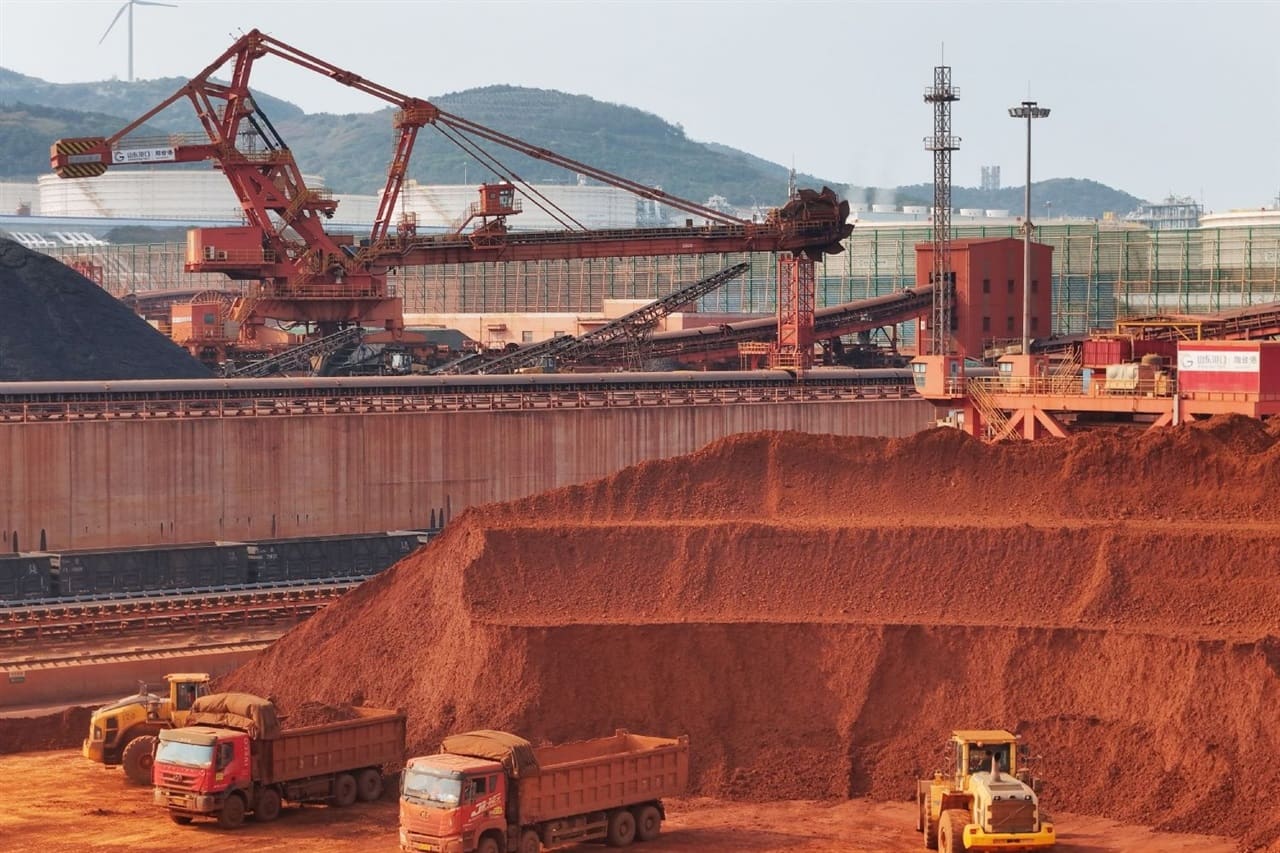
India's Ministry of Heavy Industries has drawn 20 expressions of interest from domestic and international firms under a new scheme promoting production of sintered rare earth permanent magnets, according to the ministry. The initiative marks a concrete step in New Delhi's broader strategy to reduce dependence on Chinese suppliers for a material that underpins electric vehicle motors, wind turbines, and industrial automation.
The bids represent a mix of Indian conglomerates and foreign partners, though the ministry has not disclosed company names or proposed investment values. The government scheme offers production-linked incentives for firms willing to establish integrated manufacturing facilities on Indian soil.
India currently imports nearly all of its rare earth permanent magnets from China, which controls roughly 90 percent of global refining and processing capacity for rare earth elements. The magnets are essential components in traction motors for electric two-wheelers, passenger vehicles, and commercial fleets, as well as in servo motors used in robotics and precision machinery.
Strategic Timing and Industrial Stakes
The tender comes as several Southeast and South Asian economies accelerate efforts to diversify supply chains for critical minerals. Vietnam, Indonesia, and Malaysia have each announced extraction or processing partnerships over the past eighteen months, while Japan and South Korea have signed memoranda of understanding with Australian miners to secure feedstock outside Chinese refining networks.
Rare earth permanent magnets deliver higher energy density and thermal stability than ferrite or alnico alternatives, making them the preferred choice for applications where weight and efficiency are paramount. Sintered neodymium-iron-boron magnets, the most common variant, are manufactured by compacting powdered alloys under high pressure and heat, a process that requires precise control of oxygen levels and grain structure.
Establishing domestic magnet production will require India to solve several technical and commercial challenges. The country has modest reserves of rare earth ores in coastal monazite sands and scattered hard-rock deposits, but lacks large-scale separation and refining infrastructure. Indian Rare Earths Limited, a state-owned enterprise, operates small-scale facilities in Kerala and Odisha, yet output remains a fraction of what a scaled magnet industry would consume.
Supply Chain Implications
Building a complete value chain from ore to finished magnet typically takes five to seven years and requires sustained capital investment in metallurgy, environmental controls, and worker training. China achieved its dominant position through decades of state support, lenient environmental enforcement in earlier years, and vertical integration across mining, refining, and manufacturing.
India's production-linked incentive model offers financial support tied to output milestones, a structure the government has used in sectors ranging from semiconductors to solar cells. The scheme for rare earth magnets will likely include tariff protection, preferential procurement by state-owned enterprises, and co-investment in shared infrastructure such as waste treatment and recycling facilities.
Demand for these magnets in India is projected to grow sharply as the country targets 30 percent electric vehicle penetration by 2030 and expands wind power capacity. Domestic automotive suppliers have told government officials that a local magnet supply would reduce lead times and currency risk, though price competitiveness with Chinese imports remains uncertain.
The Ministry of Heavy Industries is expected to announce shortlisted bidders and allocate production capacity tranches in the coming quarter. Successful applicants will be required to demonstrate technical capability, financial backing, and a clear path to commercial production within three years of contract signing.
For investors and supply chain managers watching Asia's critical mineral landscape, India's magnet tender represents a test case. If the scheme delivers operational factories and price-competitive output, it may offer a template for other countries seeking to reduce reliance on a single dominant supplier. If execution falters, it will underscore the formidable barriers that have kept rare earth processing concentrated in Chinese hands for more than two decades.
RELATED STORIES

Eureka Forbes Launches Probe After Child Labor Found at New Delhi Supplier
Priyanka V. Rao · 2 min
Modi Targets 50 Indian Companies in Fortune 500 With Seven-Pillar Growth Plan
Rajesh K. Iyer · 3 min

Indian Students Shift From Overseas Universities to Domestic Campuses
Priyanka V. Rao · 3 min
Modi Unveils Free Exam Prep and AI Skills Push After Education Protests
Priyanka V. Rao · 4 min
Spot something wrong? Email editor@briefasia.com. We log every correction publicly.