Asia · Trending
Indian Students Shift From Overseas Universities to Domestic Campuses
Stricter visa policies and rising costs in traditional destinations drive a rethink of foreign study plans across the subcontinent
KEY TAKEAWAYS
- ·Indian students are increasingly choosing domestic universities over the U.S., U.K., Canada, and Australia due to stricter visa rules and rising costs.
- ·Post-graduation work authorization has become less reliable in traditional destinations, reducing the financial appeal of foreign degrees.
- ·Indian institutions are expanding capacity and improving quality, narrowing the gap with mid-tier overseas programs.
A Reversal in Study Patterns
Indian students are reconsidering the decades-old path to overseas universities, with recent data pointing to a marked shift toward domestic higher education. The change follows a tightening of student and work visa regulations in the United States, United Kingdom, Canada, and Australia, the four nations that have historically absorbed the largest share of Indian international students.
Official surveys and private research indicate that cost concerns, coupled with uncertainty about post-graduation employment prospects abroad, are accelerating the trend. For families accustomed to viewing foreign degrees as a gateway to better careers and immigration opportunities, the calculus is shifting.
The Big Four Close Doors
The quartet of English-speaking destinations has introduced a wave of policy changes that make studying abroad less attractive. Student visa pathways have narrowed, and work authorization after graduation has become harder to secure. Processing times have lengthened, and requirements have multiplied.
The U.K. tightened dependent visa rules and raised income thresholds for post-study work permits. Canada introduced caps on international student intake and restricted off-campus work hours. Australia raised financial proof requirements and scrutinized visa applications more closely. The U.S., while still a top destination, has seen policy volatility that leaves prospective students uncertain about their ability to remain after completing degrees.
For Indian families who often finance overseas education through savings, loans, and asset sales, the return on investment now appears less certain. Tuition fees have climbed in dollar and pound terms, while currency depreciation has made those increases steeper in rupee terms.
Domestic Institutions Gain Ground
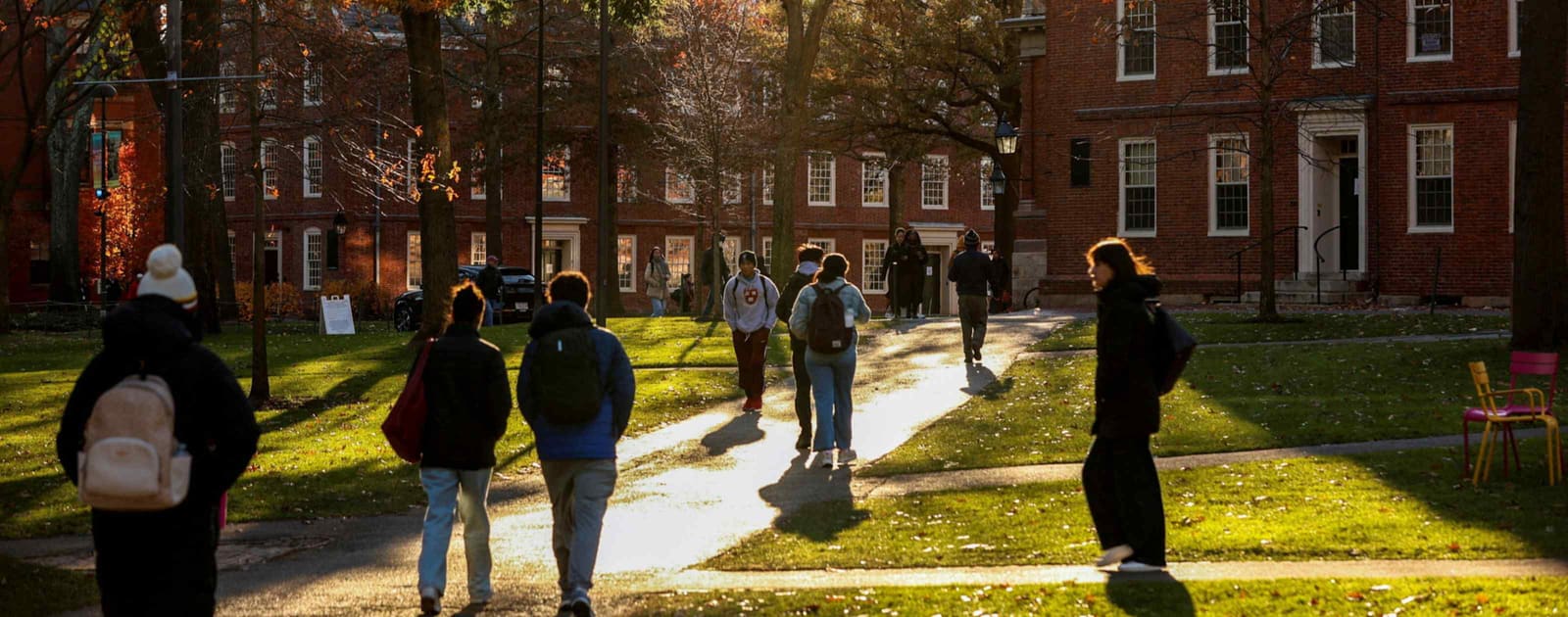
Indian universities and private colleges are seeing enrollment upticks as students who might once have pursued undergraduate or master's degrees abroad now stay home. The Indian Institutes of Technology, the Indian Institutes of Management, and a growing roster of private universities are expanding capacity and improving infrastructure to meet demand.
The shift is most pronounced at the undergraduate level, where families are more sensitive to cost and where the perceived gap in quality between Indian and foreign institutions has narrowed. Graduate programs in business, engineering, and computer science at top-tier Indian schools now compete on placement rates and starting salaries with mid-tier programs abroad.
Some students are also opting for hybrid models: completing undergraduate degrees in India and pursuing graduate work overseas, or enrolling in Indian campuses of foreign universities. The strategy allows them to defer the expense and visa uncertainty until they have more work experience or clearer immigration pathways.
Employment Uncertainty Weighs Heavy
Post-graduation work authorization was long a key draw of studying in the Big Four. Students could gain international work experience, earn in hard currency, and in many cases transition to permanent residency. That pathway has become far less reliable.
Employers in the U.S. and U.K. have reduced sponsorship for entry-level roles, and visa lottery systems add an element of chance that risk-averse families find unpalatable. Canada's recent pivot toward limiting temporary residents has left students who arrived in 2023 and 2024 scrambling for options. Australia's labor market, while robust, has tightened visa conversion routes.
Indian companies, meanwhile, have raised starting salaries for graduates of elite domestic institutions, narrowing the wage gap that once made foreign degrees financially compelling. Technology firms, consulting houses, and multinational corporations recruit actively on Indian campuses, and the rise of remote work has made geography less of a constraint for ambitious graduates.
Regional Implications
The trend carries implications beyond individual decisions. India's domestic higher education sector stands to gain significant revenue and talent, potentially accelerating improvements in research output and teaching quality. The country produced 1.5 million engineering graduates in 2025, and keeping more high-performers at home could strengthen the pipeline for domestic startups and R&D centers.
For the Big Four, the loss of Indian students represents both a financial and soft-power setback. Indian nationals have been among the most numerous and highest-paying international students, and their tuition fees subsidize domestic students and research programs. Universities in the U.K. and Australia, in particular, have built budget models that assume steady inflows of full-fee-paying international students.
The shift also signals a broader recalibration in global education flows. As visa policies tighten in traditional destinations, students from across Asia are exploring regional alternatives, including Singapore, Malaysia, and the United Arab Emirates, or staying closer to home. India's pivot inward may be the leading edge of a wider pattern.
RELATED STORIES
Eureka Forbes Launches Probe After Child Labor Found at New Delhi Supplier
Priyanka V. Rao · 2 min
Modi Unveils Free Exam Prep and AI Skills Push After Education Protests
Priyanka V. Rao · 4 min
Modi Targets 50 Indian Companies in Fortune 500 With Seven-Pillar Growth Plan
Rajesh K. Iyer · 3 min

Seoul and New Delhi Strengthen Customs Cooperation to Ease Trade Friction
Cheng Wei-Lun · 3 min
Spot something wrong? Email editor@briefasia.com. We log every correction publicly.