Technology · Products
Dreame Targets Korea as Premium Smart-Home Hub Beyond Robot Vacuums
Chinese appliance maker unveils expansion strategy positioning Seoul as springboard for AI-powered household devices across personal care and kitchen categories
KEY TAKEAWAYS
- ·Dreame Technology plans to expand its South Korea presence beyond robot vacuums into personal care and kitchen appliances using AI integration as a differentiator.
- ·The company positions Korea as a strategic hub rather than a sales market, targeting tech-savvy consumers and mature IoT infrastructure for broader product rollout.
- ·Success depends on overcoming brand loyalty to domestic players like Samsung and LG while navigating supply-chain risks and uneven consumer spending recovery.
Strategic Pivot Beyond Entry Category
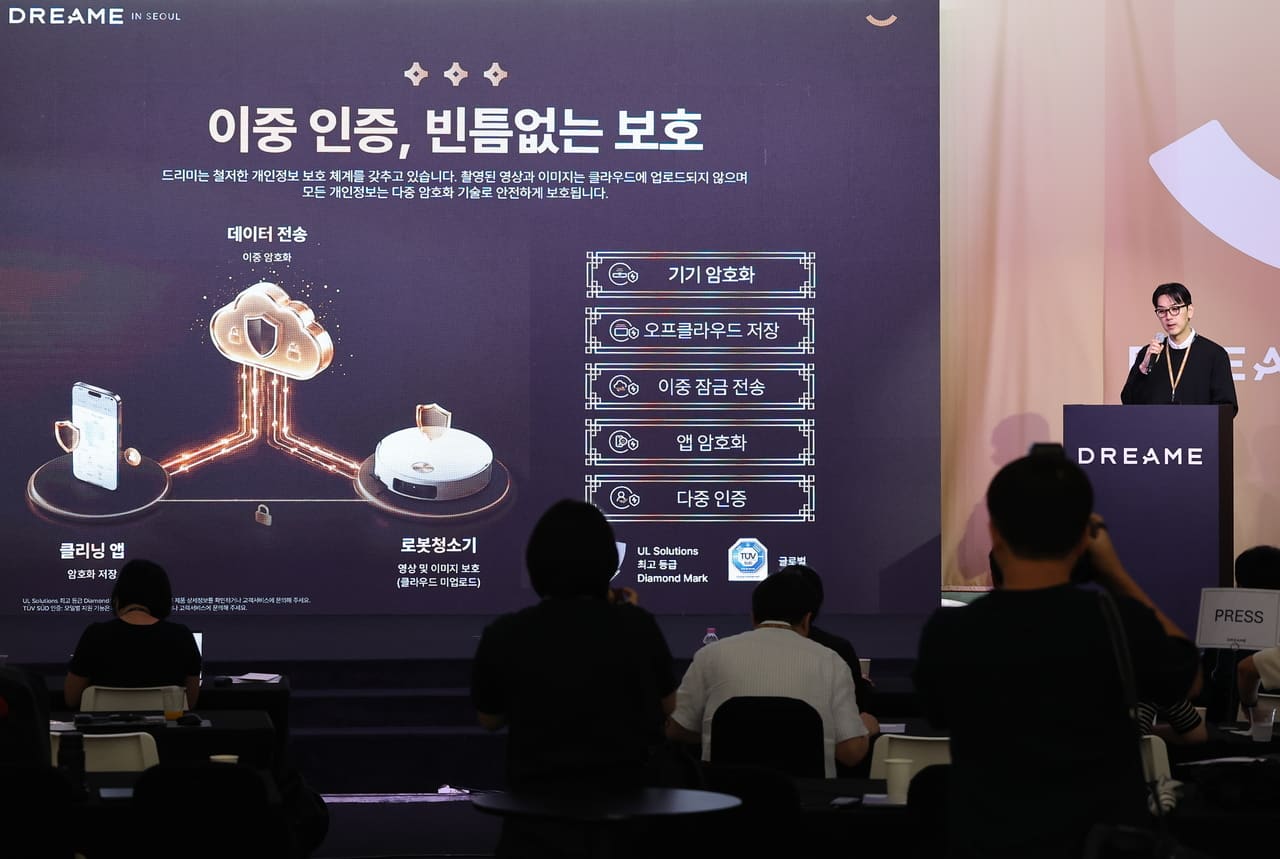
Dreame Technology is repositioning South Korea from a sales territory into a strategic hub for its premium small-appliance portfolio, the Chinese manufacturer announced at a Seoul brand event Friday. The company intends to leverage its robot vacuum foothold to introduce a broader ecosystem of AI-enabled household products spanning personal care, kitchen, and living categories.
Mun Duck-geun, managing director for the Korea operation, framed the expansion as more than a revenue play. The company views Korea's tech-savvy consumer base and high smartphone penetration as fertile ground for devices that integrate with broader smart-home platforms, according to Dreame.
Premium Positioning in Competitive Landscape
The move comes as Chinese home-appliance brands navigate increasingly crowded Asian markets. Dreame's stated emphasis on "localized product ecosystems" suggests the company will tailor feature sets and pricing to Korean preferences rather than import global SKUs unchanged.
Korea's small-appliance segment has seen steady premiumization over the past three years, with consumers willing to pay for convenience features and app connectivity. Dreame's robot vacuums already compete against established players including Samsung, LG, and Roborock in the Korean market, where household penetration of robotic cleaning devices exceeds regional averages.
AI Integration as Differentiator
Dreame's expansion blueprint hinges on artificial intelligence as a unifying thread across product lines. The company has invested in machine learning algorithms that optimize cleaning patterns, battery management, and obstacle avoidance in its vacuum models. Extending similar AI capabilities to kitchen and personal-care appliances would align with broader industry trends toward predictive maintenance, usage analytics, and voice-assistant integration.
South Korea's regulatory environment for smart devices is relatively mature, with established certification pathways for wireless connectivity and data privacy. That infrastructure reduces time-to-market friction for new product categories compared to markets with less-developed IoT frameworks.
Distribution and Retail Strategy
Dreame has not disclosed whether it will pursue direct-to-consumer channels, partner with Korean electronics retailers, or adopt a hybrid model. The company's existing vacuum distribution in Korea includes both online marketplaces and select brick-and-mortar chains, a structure that could extend to adjacent categories.
Korea's e-commerce logistics networks rank among the fastest in Asia, enabling rapid delivery and reverse logistics for returns. That capability is critical for brands entering premium tiers, where customer service expectations are higher and product cycles shorter.
Broader Regional Ambitions
Positioning Korea as a "key market" rather than simply another territory signals Dreame's intent to use the country as a testing ground for products destined for Japan, Taiwan, and Singapore. These markets share similar demographic profiles, high urbanization rates, and openness to Chinese tech brands that have proven quality and after-sales support.
The timing coincides with a broader push by Chinese appliance makers to move upmarket and escape commoditization at home. Brands including Midea, Haier, and Xiaomi have pursued similar strategies in Southeast Asia and Europe, with mixed results depending on brand perception and local competition.
Execution Risks
Dreame's success in Korea will depend on its ability to differentiate beyond price. Korean consumers have demonstrated loyalty to domestic brands in categories where local players offer strong design and service. Breaking that inertia requires either superior technology, compelling use cases, or aggressive channel incentives.
The company must also navigate potential supply-chain and geopolitical headwinds. Trade tensions and shifting tariff regimes in the region can compress margins for hardware exporters, particularly those reliant on cross-border component sourcing.
Dreame's announcement arrives as consumer spending in Korea shows uneven recovery from pandemic-era volatility. Discretionary purchases of premium appliances are sensitive to interest rates and household debt levels, both of which remain elevated compared to pre-2020 benchmarks.
The company's ability to build brand equity in personal care and kitchen segments, where it lacks the installed base it enjoys in floor care, will determine whether Korea becomes a genuine strategic hub or remains a secondary sales channel. Early product launches and marketing investment over the next twelve months will offer clearer signals of Dreame's commitment and resource allocation.
RELATED STORIES
Nvidia's Madison Huang Tours Asia Robotics Hubs in Seoul and Beijing
Cheng Wei-Lun · 3 min
US-Blacklisted Chinese Nuclear Firm Operates Five Power Plants in South Korea
Cheng Wei-Lun · 3 min
Honor Ships Gimbal-Equipped Smartphone to Market After Concept Phase
Cheng Wei-Lun · 4 min

South Korea's Chip Concentration Carries Lower Risk Than Taiwan's, Financial Analysis Shows
Cheng Wei-Lun · 3 min
Spot something wrong? Email editor@briefasia.com. We log every correction publicly.