Technology · Products
Honor Ships Gimbal-Equipped Smartphone to Market After Concept Phase
The Robot Phone marks a rare leap from prototype to production in a category where most foldable and experimental devices remain vaporware
KEY TAKEAWAYS
- ·Honor launched its Robot Phone with a built-in mechanical gimbal stabilizer, moving the device from prototype to mass production in a market where most experimental designs never ship.
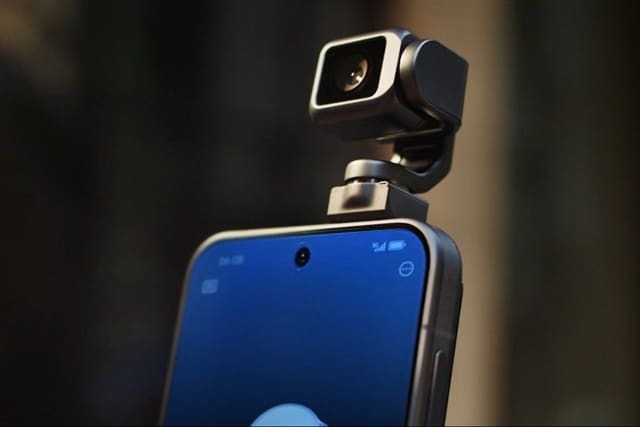
- ·The gimbal physically pivots the camera sensor and lens assembly for stabilization, paired with AI models that automate framing and subject tracking during video capture.
- ·Early sales and durability data will determine whether gimbal-equipped smartphones become a product category or remain a short-lived experiment in hardware differentiation.
From Trade Show Curiosity to Store Shelf
Honor has moved its Robot Phone from concept showcase to mass production, making it one of the few experimental smartphone designs to reach consumers in recent memory. The device integrates a mechanically stabilized gimbal directly into the phone body, a feature that has drawn attention from industry observers watching Chinese manufacturers push beyond the incremental updates that have defined the smartphone sector for the past half-decade.
The transition matters because most radical smartphone prototypes shown at trade events never make it to market. Rollable displays, dual-hinge folds, and holographic projectors have cycled through tech conferences for years without commercial follow-through. Honor's ability to manufacture and distribute a gimbal-equipped phone at scale suggests its supply chain and engineering teams solved problems that have kept similar projects in the lab.
Engineering a Mechanical Camera System
The Robot Phone houses a multi-axis gimbal inside its chassis, allowing the camera module to self-stabilize independently of how the user holds the device. This approach differs from optical image stabilization, which relies on lens elements shifting within a fixed module, or electronic stabilization, which crops and processes footage in software. A mechanical gimbal physically pivots the entire camera sensor and lens assembly, the same technology used in standalone camera rigs and drones.
Fitting that hardware into a phone required miniaturizing motors, bearings, and control circuits while maintaining enough structural rigidity to survive drops and daily handling. Honor has not disclosed the exact dimensions of the gimbal mechanism, but the device's thickness and weight suggest trade-offs were made in battery capacity or internal volume allocated to other components.
The gimbal enables the phone to capture video and photos with reduced motion blur and shake, particularly in low light or while the user is walking. It also allows the camera to track subjects automatically by rotating the sensor assembly rather than relying solely on software to crop and follow movement within the frame.
AI Integration as a Design Anchor
Honor positions the Robot Phone as a platform for AI-driven imaging and interaction, using the gimbal as a hardware foundation for computational photography features. The device can autonomously adjust framing during video calls, pan to follow a speaker during presentations, or execute time-lapse sequences with programmed camera movements.
These capabilities lean on AI models that interpret scene composition, identify subjects, and predict motion paths. The gimbal then translates those software decisions into physical camera adjustments. This combination of mechanical actuation and machine learning represents a design direction that several Chinese smartphone makers are exploring as they search for differentiation in a mature market.
The phone also serves as a testing ground for future products. If the gimbal proves reliable in consumer hands and the AI features gain traction, Honor and its competitors are likely to iterate on the concept in subsequent device generations. If the added complexity leads to durability issues or the features go unused, the industry will have data to guide whether this category of hardware-augmented AI belongs in mass-market phones or remains niche.
China's Experimental Device Pipeline
Honor's launch reflects a broader trend among Chinese manufacturers willing to commercialize experimental designs faster than their counterparts in South Korea, the United States, or Japan. Brands including Xiaomi, Oppo, and Vivo have released foldable phones, under-display camera models, and ultra-fast charging systems within months of unveiling prototypes, a cadence that often leaves Western and East Asian competitors trailing by product cycles.
This velocity stems from vertically integrated supply chains in Guangdong and adjacent provinces, where component suppliers, assembly plants, and design studios operate in close geographic and contractual proximity. Engineers can iterate on mechanical modules and source custom parts without the lead times that slow development elsewhere. The domestic Chinese market also provides a large, price-sensitive customer base willing to adopt first-generation hardware if the feature set justifies the cost.
Honor's Robot Phone will test whether that appetite extends to gimbal-equipped devices. Early sales data and user feedback will determine if the category expands or remains a footnote in the catalog of smartphone experiments that briefly captured attention before fading.
What Comes Next
The Robot Phone's arrival in stores shifts the conversation from whether such a device can be built to whether consumers will find the gimbal useful enough to justify any premium or compromise in other specs. Durability will be scrutinized; moving parts introduce mechanical failure modes that solid-state components avoid. Software support will also matter; if Honor's AI features stagnate or the gimbal's use cases remain narrow, the hardware advantage diminishes.
For the broader smartphone industry, Honor's execution provides a reference point. Other manufacturers now have a commercial product to benchmark against, and component suppliers have proof that gimbal modules can be produced at volume. Whether that leads to a wave of similar devices or a cautionary tale will depend on how the Robot Phone performs in the field over the next twelve months.
RELATED STORIES

Xiaomi's Q2 Revenue Slides 6% as Smartphone Sales Weaken Despite EV Gains
Cheng Wei-Lun · 3 min
Dreame Targets Korea as Premium Smart-Home Hub Beyond Robot Vacuums
Cheng Wei-Lun · 3 min

China's Largest Power Utility Courts Huawei for AI Infrastructure Partnership
Cheng Wei-Lun · 3 min
Cambricon Pushes Sixth-Generation AI Chip to Challenge Training Bottlenecks
Cheng Wei-Lun · 4 min
Spot something wrong? Email editor@briefasia.com. We log every correction publicly.