Technology · AI
Cambricon Pushes Sixth-Generation AI Chip to Challenge Training Bottlenecks
China's AI silicon maker targets large-model workloads with next-generation processor architecture as domestic compute demand intensifies
KEY TAKEAWAYS
- ·Cambricon is developing its sixth-generation AI processor with expanded support for DeepSeek, Qwen, and GLM models, targeting large-model training and inference workloads.
- ·The platform prioritizes power efficiency, chip area, and programmability to lower data center operating costs and shorten iteration cycles for AI researchers.
- ·Cambricon's roadmap reflects China's push for domestic AI compute capacity amid US export restrictions on advanced GPUs, with implications for Asia-Pacific supply chain resilience.
Racing Toward Next-Generation Silicon
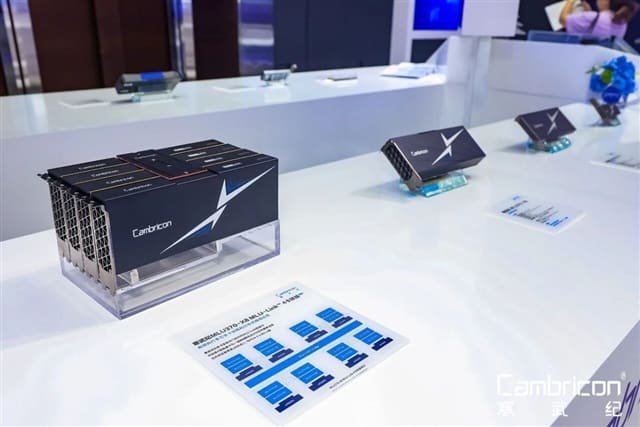
Cambricon Technologies is advancing work on its sixth-generation AI processor, a platform designed to handle large-model training and inference workloads that have become central to China's artificial intelligence ambitions. Chairman and president Chen Tianshi outlined the development trajectory, emphasizing improvements in programmability, ease of use, performance, power efficiency, and chip area as the company refines both its processor architecture and instruction set.
The new platform broadens compatibility with leading Chinese language models, including DeepSeek, Qwen, and GLM, a strategic move as domestic AI labs race to build competitive alternatives to Western foundation models. Cambricon's focus on these frameworks reflects the growing compute demands of training runs that now routinely consume thousands of accelerators and span weeks or months.
Training Economics Drive Architecture Choices
Training large language models remains capital-intensive and energy-hungry. A single training run for a frontier model can cost tens of millions of dollars and draw megawatts of power. Cambricon's sixth-generation design prioritizes power efficiency and chip area, two factors that directly influence data center operating costs and the number of accelerators that can fit into a single rack or cluster.
Improving programmability and ease of use addresses a different constraint. AI researchers and engineers often spend weeks optimizing kernels and memory layouts to extract maximum performance from specialized accelerators. A more intuitive instruction set and software stack can shorten iteration cycles, allowing teams to experiment with model architectures and hyperparameters more freely.
The emphasis on inference performance is equally strategic. Once a model is trained, inference workloads dominate operational costs, running continuously across millions of user queries. Accelerators that deliver high throughput per watt for inference can materially lower the total cost of ownership for AI services, a competitive edge in markets where margins on cloud AI are tightening.
The Asia Compute Landscape
Cambricon's roadmap unfolds against the backdrop of Asia's accelerating investment in AI infrastructure. Chinese technology firms and research institutes have committed billions to building domestic compute capacity, driven in part by export restrictions on advanced GPUs from the United States. This regulatory environment has created both urgency and opportunity for local semiconductor companies capable of delivering training-grade performance.
Beijing, Shanghai, and Shenzhen host clusters of AI startups and labs that rely on indigenous chip architectures. Cambricon's installed base includes partnerships with cloud providers and enterprise customers who need alternatives to Nvidia's H100 and A100 accelerators. The sixth-generation processor will compete not only on raw performance but also on software maturity, a domain where Nvidia's CUDA ecosystem has historically held an advantage.
Outside China, Singapore, Tokyo, and Seoul are also scaling AI compute investments, though most remain dependent on US and European chip suppliers. Cambricon's progress signals that the Asia-Pacific region is building parallel supply chains and technical ecosystems, a shift with implications for global AI competitiveness and supply chain resilience.
Instruction Set as Competitive Moat
Cambricon is co-developing its instruction set architecture alongside the sixth-generation processor, a deliberate strategy to differentiate from rivals. A well-designed instruction set can expose hardware capabilities more efficiently, enabling compilers and runtime libraries to generate faster code with less manual tuning.
The company has invested in its own software stack, including compilers, profiling tools, and framework integrations for PyTorch and other popular machine learning libraries. Expanding support for DeepSeek, Qwen, and GLM suggests close collaboration with the teams behind those models, potentially including co-optimization of kernels and memory management routines.
This vertical integration mirrors the approach taken by other AI chip companies, from Google's TPU to Amazon's Trainium. Controlling both hardware and software layers allows Cambricon to iterate faster and capture performance gains that would be difficult to realize with off-the-shelf components alone.
What Comes Next
Cambricon has not disclosed a timeline for volume production or commercial availability of the sixth-generation processor. Industry observers expect the company to sample early silicon to select partners before a broader rollout, a common pattern for specialized AI accelerators that require extensive validation and software tuning.
The broader question is whether Cambricon can close the performance gap with leading Western accelerators while maintaining cost and power advantages. Training and inference benchmarks will ultimately determine adoption, particularly among cloud providers who evaluate chips on metrics like throughput per dollar and throughput per watt.
As China's AI sector continues to scale, the demand for domestically produced, training-capable silicon will only grow. Cambricon's sixth-generation platform represents a bet that architectural innovation and software co-design can offset the challenges of trailing-edge process nodes and constrained access to advanced lithography tools. Whether that bet pays off will shape the competitive dynamics of Asia's AI infrastructure for years to come.
RELATED STORIES

Cambricon Revenue Doubles as Chinese AI Chip Demand Outpaces Capacity
Cheng Wei-Lun · 3 min

Honor Ships Gimbal-Equipped Smartphone to Market After Concept Phase
Cheng Wei-Lun · 4 min
Xiaomi's Xring O3 Clears Fabrication Milestone on TSMC's 3nm Node
Cheng Wei-Lun · 4 min

China's Largest Power Utility Courts Huawei for AI Infrastructure Partnership
Cheng Wei-Lun · 3 min
Spot something wrong? Email editor@briefasia.com. We log every correction publicly.