Technology · Dev
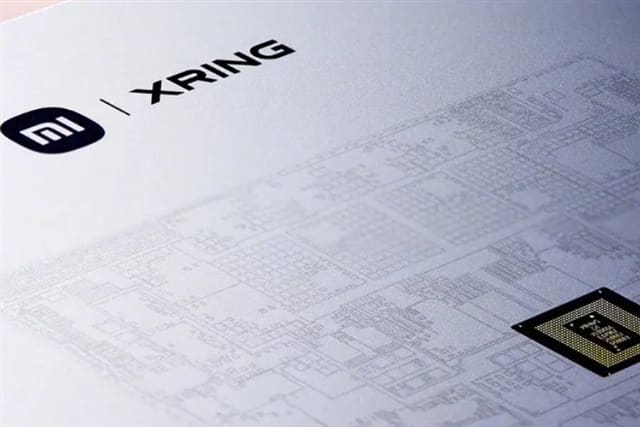
Xiaomi's Xring O3 Clears Fabrication Milestone on TSMC's 3nm Node
The Chinese smartphone maker's next-generation in-house silicon has completed initial testing and entered device integration, marking its deepest push into advanced chipmaking.
KEY TAKEAWAYS
- ·Xiaomi's Xring O3 chip has completed fabrication on TSMC's N3P node and passed initial power-on testing, now entering device integration.
- ·The chip positions Xiaomi alongside Apple in adopting TSMC's second-generation 3-nanometer process, signaling a push into premium smartphone silicon.
- ·Commercial launch is expected in the first half of 2027, with implications for Qualcomm and MediaTek's share of the Chinese handset market.
From Fabrication to Integration
Xiaomi's ambitions to control more of its smartphone silicon stack have reached a new technical milestone. The company's next-generation Xring chip has returned from fabrication, cleared initial power-on validation and is now being integrated into prototype devices, according to supply-chain sources familiar with the project. Chairman and founder Lei Jun confirmed publicly that a new iteration of the Xring platform is under development, though he stopped short of disclosing a commercial launch window.
The chip, internally designated Xring O3, is being manufactured on TSMC's N3P node - the Taiwanese foundry's second-generation 3-nanometer process. That positions Xiaomi alongside Apple and a handful of other tier-one clients capable of securing advanced-node capacity at scale. For a smartphone brand that has historically leaned on Qualcomm's Snapdragon and MediaTek's Dimensity lines, the move represents a calculated bet on vertical integration in an era of tightening supply chains and rising component costs.
The Economics of Going In-House
Bringing chip design in-house is neither cheap nor straightforward. Tape-out costs on leading-edge nodes now exceed tens of millions of dollars per iteration, and that figure does not include the salaries of the engineering teams required to architect, verify and debug complex system-on-chip designs. For Xiaomi, the rationale hinges on volume and margin. The company shipped more than 145 million smartphones in 2025, making it the world's third-largest vendor by unit sales. Even a modest per-unit cost saving - or a performance edge that lifts average selling price - can translate into hundreds of millions of dollars at that scale.
The Xring family is not Xiaomi's first foray into silicon. The company has shipped imaging signal processors, power-management ICs and connectivity chips in previous generations. But the O3 marks a step up in complexity and ambition. While details remain scarce, the chip is expected to handle application processing, graphics and possibly integrated 5G modem functions - territory currently dominated by Qualcomm's flagship Snapdragon 8-series and MediaTek's Dimensity 9000 line.
TSMC's N3P and the Asian Chipmaking Landscape
TSMC's N3P process, which entered volume production in the second quarter of 2026, offers a roughly 10 percent performance improvement and 15 percent power reduction over the foundry's first-generation N3 node. Xiaomi's decision to adopt N3P places it in a small cohort of clients willing to pay the premium for cutting-edge transistor density. Apple's A20 and M5 chips are also slated for N3P production, as are select server processors from AMD and Nvidia's next-generation AI accelerators.
For Xiaomi, access to N3P capacity signals a deepening relationship with TSMC at a time when the foundry is expanding its footprint across Asia. The company has committed to new fabrication facilities in Japan and is exploring additional investments in India and Indonesia, driven in part by demand from regional brands seeking to localize supply chains. Xiaomi's willingness to absorb the cost and risk of advanced-node development positions it as a strategic customer for TSMC's Asian expansion roadmap.
What Device Integration Means
The transition from power-on testing to device integration is a critical inflection point in chip development. Power-on validation confirms that the silicon can boot, execute basic instructions and communicate with external memory and peripherals. Device integration, by contrast, involves embedding the chip into a complete smartphone platform - tuning thermal performance, validating radio-frequency coexistence, optimizing battery life and ensuring compatibility with Android's hardware abstraction layers.
This phase typically takes several months and often uncovers issues that require firmware updates, board redesigns or even silicon respins. The fact that Xiaomi has reached this stage suggests the company is on track for a commercial launch in the first half of 2027, though industry timelines remain fluid.
Competitive Implications
If Xiaomi succeeds in bringing Xring O3 to market at competitive performance and cost, the implications ripple across Asia's smartphone supply chain. Qualcomm and MediaTek derive a significant share of their revenue from Chinese handset makers, and any erosion of that base pressures their pricing power and R&D budgets. For component suppliers - memory makers, RF front-end vendors, display manufacturers - a new chip platform introduces both opportunity and uncertainty, as Xiaomi may seek to renegotiate terms or shift sourcing to partners aligned with its silicon strategy.
More broadly, Xiaomi's move reflects a pattern visible across Asia's tech ecosystem: a shift from horizontal specialization toward vertical integration. Samsung has long designed its own Exynos processors; Huawei developed the Kirin line before U.S. export controls curtailed its access to advanced foundry nodes; and Oppo and Vivo have explored custom imaging and power-management chips. As geopolitical tensions reshape semiconductor supply chains, control over core silicon is increasingly viewed as a strategic asset, not just an engineering optimization.
Xiaomi has not disclosed a launch date or target device for the Xring O3, and Lei Jun's public comments have been characteristically measured. But the chip's progress through fabrication and testing suggests the company is serious about competing at the high end - and willing to invest the capital and engineering talent required to make that ambition real.
RELATED STORIES
China's Largest Power Utility Courts Huawei for AI Infrastructure Partnership
Cheng Wei-Lun · 3 min
Cambricon Pushes Sixth-Generation AI Chip to Challenge Training Bottlenecks
Cheng Wei-Lun · 4 min
Goertek Posts Revenue and Profit Growth in First Half of 2026
Cheng Wei-Lun · 2 min
China's Smart Vehicle Makers Hit by Component Shortage as AI Demand Surges
Cheng Wei-Lun · 3 min
Spot something wrong? Email editor@briefasia.com. We log every correction publicly.