Technology · Dev
China's Smart Vehicle Makers Hit by Component Shortage as AI Demand Surges
Global shortage of printed circuit boards and ceramic capacitors threatens automakers' push into intelligent vehicles, with supply constraints expected to last at least a year
KEY TAKEAWAYS
- ·Chinese automakers face critical shortages of printed circuit boards and multilayer ceramic capacitors needed for intelligent vehicle features, with supply constraints expected to last at least twelve months.
- ·AI infrastructure demand is absorbing production capacity and driving up raw material costs for copper and rare earth elements used in automotive electronic components.
- ·Automakers are redesigning electrical systems and securing premium long-term supply contracts to maintain production of software-defined vehicles amid the component crunch.
Component Crisis Threatens Smart Vehicle Push
Chinese automakers racing to dominate the intelligent vehicle market are running into an unexpected bottleneck: the same components powering the artificial intelligence revolution are now in critically short supply for the automotive sector.
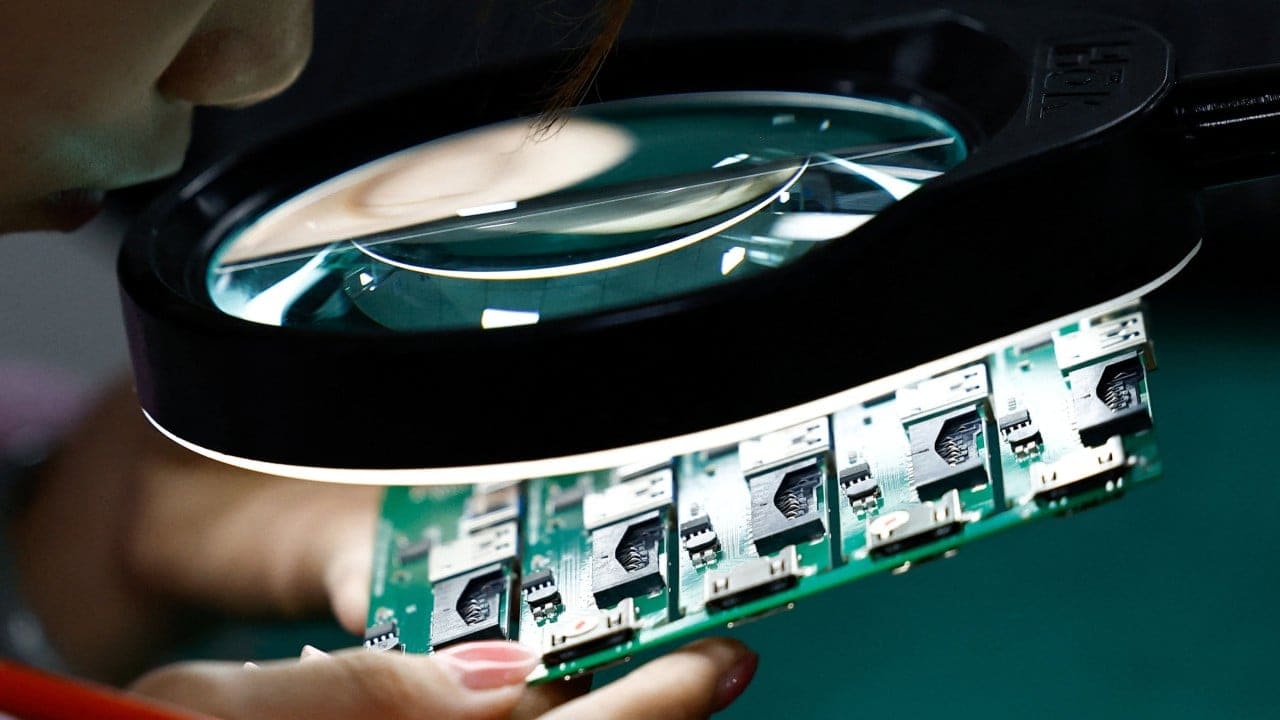
The crunch centers on two seemingly modest but essential parts. Printed circuit boards and multilayer ceramic capacitors form the backbone of the digital architecture that transforms conventional vehicles into intelligent machines capable of processing sensor data, managing battery systems, and running advanced driver assistance features. Without adequate supplies of these components, automakers cannot deliver the smart features that increasingly define competitiveness in Asia's largest car market.
Industry officials warn that global production capacity will need at least twelve months to catch up with demand. That timeline puts immediate pressure on Chinese manufacturers who have built their competitive advantage around software-defined vehicles packed with digital features that require exponentially more electronic components than traditional automobiles.
AI Boom Reshapes Supply Priorities
The shortage reflects a broader reallocation of manufacturing capacity toward artificial intelligence infrastructure. Data center operators, cloud computing providers, and AI chip manufacturers are absorbing available production of high-specification PCBs and MLCCs, components that also serve as critical building blocks for neural network processors and high-performance computing systems.
Raw material costs have climbed in parallel. Copper, used extensively in circuit boards, and rare earth elements required for ceramic capacitors have seen price increases as AI hardware demand accelerates. This dual squeeze of constrained supply and elevated input costs is forcing automakers to compete for components against technology companies with deeper margins and greater pricing flexibility.
The timing compounds existing challenges for China's vehicle manufacturers. Many brands have already committed to product roadmaps featuring increasingly sophisticated autonomous driving capabilities, augmented reality dashboards, and over-the-air software update systems. These features demand dense electronic architectures with component counts that can reach several times those found in conventional vehicles.
Production Bottlenecks Across the Supply Chain
The path to supply relief remains uncertain. Expanding production capacity for high-reliability automotive-grade PCBs requires substantial capital investment and technical validation processes that extend beyond typical electronics manufacturing timelines. Automotive components must meet durability and safety standards far exceeding consumer electronics specifications, including resistance to temperature extremes, vibration, and decades-long operational lifespans.
Ceramic capacitor production faces similar constraints. The manufacturing process for automotive-grade MLCCs involves precise layering of ceramic materials and electrodes, with quality control requirements that limit how quickly existing facilities can increase output. New production lines require specialized equipment and skilled operators, resources currently stretched thin across the electronics sector.
Several Chinese automakers have begun adjusting their strategies. Some are redesigning electrical architectures to use fewer but more powerful computing modules, consolidating functions that previously required separate circuit boards. Others are securing long-term supply agreements with component manufacturers, locking in capacity at premium prices to ensure production continuity.
Regional Implications
The component shortage highlights Asia's complex position in global electronics supply chains. While the region dominates PCB and MLCC production, with facilities concentrated in Taiwan, South Korea, and mainland China, local automakers still face allocation challenges when competing against international demand from AI infrastructure projects.
Japanese and Korean automotive suppliers are reportedly prioritizing their home-market customers, tightening availability for Chinese brands. This dynamic mirrors broader patterns in semiconductor supply chains, where geopolitical considerations increasingly influence allocation decisions alongside commercial factors.
The constraint may slow the pace of intelligent feature deployment across vehicle lineups, potentially affecting the competitive positioning of Chinese brands in Southeast Asian markets where advanced driver assistance and connectivity features have become key selling points. Automakers that secured component supplies early or maintained diverse supplier relationships will likely gain temporary advantages in product launches and feature availability.
Industry observers expect the supply-demand imbalance to persist through the next product cycle. Automakers with the financial resources to invest in supply chain partnerships or the engineering flexibility to optimize component usage will be better positioned to navigate the shortage. Those relying on spot market purchases or rigid hardware architectures may face production delays or feature compromises as the intelligent vehicle transition accelerates across Asia's automotive sector.
RELATED STORIES
Chinese Manufacturers Command Over 70% of Global LCD TV Panel Market
Cheng Wei-Lun · 2 min
China's EV Market Faces Deluge of Launches in Single Day
Cheng Wei-Lun · 3 min

Xiaomi's Q2 Revenue Slides 6% as Smartphone Sales Weaken Despite EV Gains
Cheng Wei-Lun · 3 min

Unitree Robotics IPO Lifts Founder's Net Worth to $16 Billion on First Trading Day
Cheng Wei-Lun · 3 min
Spot something wrong? Email editor@briefasia.com. We log every correction publicly.