Technology · Products
Unitree Robotics IPO Lifts Founder's Net Worth to $16 Billion on First Trading Day
Wang Xingxing's wealth surged as shares of the Hangzhou-based humanoid robot manufacturer jumped 629 percent, valuing the company at $66 billion amid investor enthusiasm for China's robotics sector.
KEY TAKEAWAYS
- ·Unitree Robotics shares jumped 629 percent on Wednesday, pushing the company's market cap to $66 billion and CEO Wang Xingxing's net worth to $16 billion.
- ·The Hangzhou-based firm is the world's largest humanoid robot maker by sales, with revenue up 300 percent year-on-year to 1.7 billion yuan and net profit nearly tripling.
- ·U.S. export controls announced in July ban new Chinese humanoid imports, affecting Unitree's access to a market that accounted for over 10 percent of its revenue last year.
A 36-Year-Old Robotics Executive Joins the Billionaire Ranks
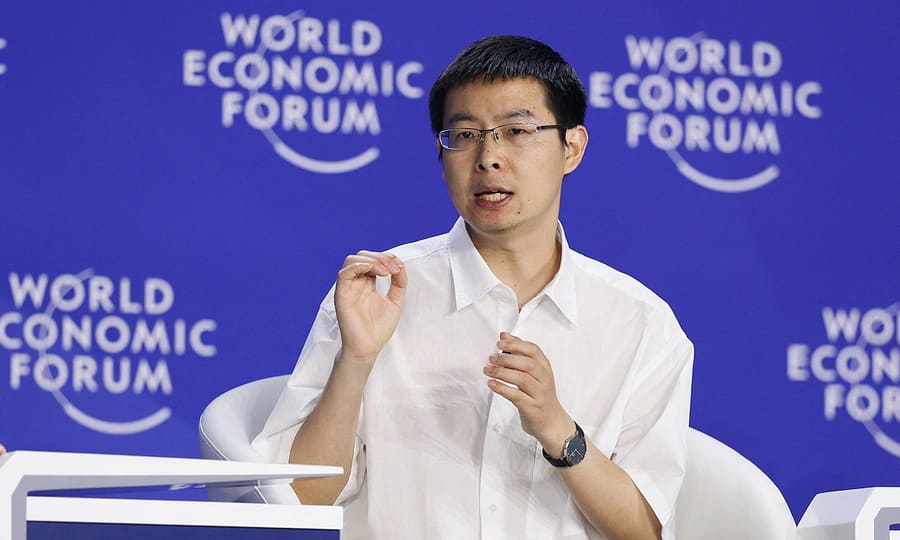
Wang Xingxing, the 36-year-old chairman and CEO of Unitree Robotics, watched his net worth climb to $16 billion following his company's market debut on Wednesday. The Hangzhou-based manufacturer saw its shares surge 629 percent in initial trading, pushing the company's market capitalization to 445 billion yuan, or roughly $66 billion.
The scale of the rally reflects a broader trend across Asian capital markets: investors are placing aggressive bets on companies positioned at the intersection of artificial intelligence, hardware manufacturing, and government industrial policy. Wang had entered the billionaire category only weeks earlier in early August, when his stake was valued at $2.4 billion.
Unitree holds the distinction of being the world's largest humanoid robot maker by sales volume, though Shanghai-based AgiBot leads in unit shipments. The company's revenue climbed more than 300 percent year-on-year to 1.7 billion yuan in the most recent fiscal year, while net profit nearly tripled to 278.2 million yuan. The average selling price for its humanoid robots stands at 166,400 yuan per unit.
Beijing's Industrial Strategy Fuels Market Enthusiasm
Shen Meng, managing director at Beijing-based boutique investment bank Chanson & Co., attributed the first-day surge to investor confidence in companies aligned with China's strategic priorities. The central government has channeled significant resources into advanced manufacturing sectors, including robotics, semiconductors, and AI-enabled systems.
"A 629 percent surge is within expectations," Shen noted, though he acknowledged that Unitree's humanoid platforms are currently deployed primarily for research, educational institutions, and stage performances rather than commercial production environments.
The company's own prospectus acknowledges the early-stage nature of the humanoid robotics industry. In the near term, Unitree's machines will continue to serve R&D labs and entertainment venues. The longer-term vision involves deployment in factory settings and household assistance roles as component costs decline and machine learning capabilities mature.
A $37 Billion Market by 2030
The addressable market opportunity remains substantial. An April report from BofA Global Research projects global humanoid robot shipments will expand from 20,000 units in 2025 to 1.2 million units by 2030, creating a $37 billion market. China and the United States are expected to account for the majority of that growth.
The research notes that as hardware reliability and AI-driven decision-making improve, adoption in industrial and commercial scenarios should accelerate over the next three to four years. The trajectory mirrors earlier waves of automation in manufacturing, where initial applications focused on narrow, controlled environments before expanding into more complex tasks.
Unitree has built public recognition through high-profile demonstrations. The company's dancing robots appeared at China's Spring Festival galas in both 2025 and 2026, and earlier this year it unveiled the GD01, a 3-meter-tall transformable robot with a cockpit for a human operator, priced starting at $650,000. Shortly before the IPO, Unitree introduced a high-speed model called "Superman," capable of jumping two meters and reaching speeds of 12.66 meters per second.
Geopolitical Headwinds and Export Controls
The company faces material risks tied to cross-border trade policy. In July, the Trump administration announced a ban on imports of new Chinese humanoid robots and quadruped robot platforms. Unitree generated more than 10 percent of its revenue from the United States last year.
According to the prospectus, the ban does not apply to products already sold in the American market, but the company requires U.S. government approval to introduce newer models. That regulatory uncertainty adds a layer of complexity to Unitree's expansion strategy, particularly as it seeks to capture share in one of the world's largest robotics markets.
The trade restrictions are part of a broader pattern of export controls and investment screening measures targeting dual-use technologies. Similar measures have affected Chinese semiconductor manufacturers, drone makers, and AI hardware companies over the past three years.
What Comes Next for Unitree
Unitree's valuation now places it among the most highly capitalized robotics companies globally, though the sustainability of that premium will depend on the company's ability to transition from research and demonstration applications to scaled commercial deployments. Investors are effectively pricing in a scenario where humanoid robots achieve meaningful penetration in both industrial and consumer settings within the current decade.
The company's revenue growth trajectory and gross margin profile will be closely monitored as it navigates the shift from early-adopter customers to broader enterprise buyers. The interplay between hardware cost reduction, AI capability improvement, and regulatory clarity in key export markets will shape the company's performance over the next several quarters.
For now, Wang's fortune underscores the scale of capital flowing into China's robotics sector, even as geopolitical friction complicates the path to global market leadership.
RELATED STORIES
Unitree's Shanghai Listing Shifts China's Humanoid Robot Race to Manufacturing Economics
Cheng Wei-Lun · 3 min

Xiaomi's Q2 Revenue Slides 6% as Smartphone Sales Weaken Despite EV Gains
Cheng Wei-Lun · 3 min
Nvidia's Madison Huang Tours Asia Robotics Hubs in Seoul and Beijing
Cheng Wei-Lun · 3 min
Early Unitree Backer Sees Consolidation Ahead in China Robotics
Cheng Wei-Lun · 4 min
Spot something wrong? Email editor@briefasia.com. We log every correction publicly.