Asia · Business
Li Ka-shing's CK Hutchison Demands $1.5 Billion From Panama Over Port Seizure
The Hong Kong conglomerate invokes treaty protection after Panama's government took control of two strategic canal ports earlier this year
KEY TAKEAWAYS
- ·CK Hutchison filed treaty-based arbitration seeking $1.5 billion after Panama took control of Balboa and Cristóbal ports in February.
- ·The claim is separate from a $2 billion contractual dispute filed by subsidiary Panama Ports Company over the same takeover.
- ·The dispute follows a Supreme Court ruling that declared the port concession unconstitutional, raising investor risk concerns across Latin America.
Treaty Claim Escalates Port Dispute
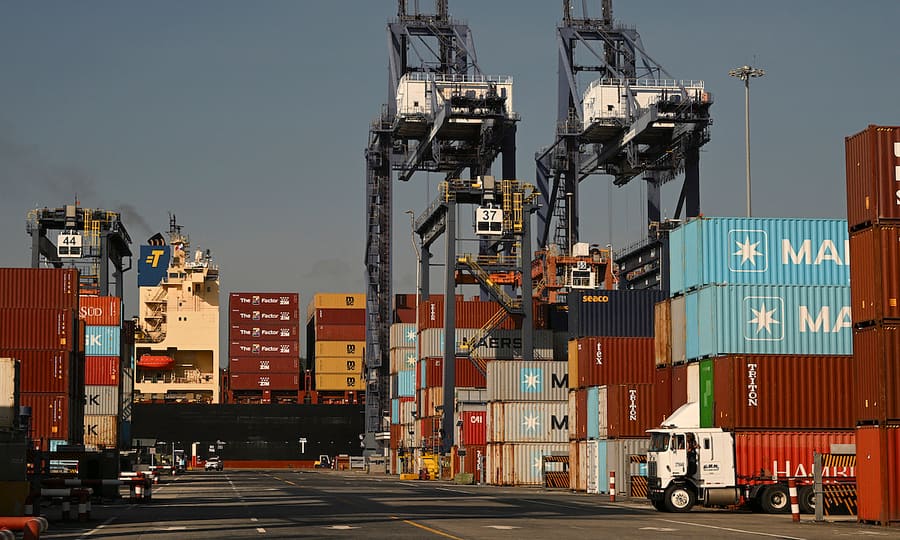
CK Hutchison Holdings, the flagship investment vehicle controlled by Li Ka-shing's family, filed arbitration proceedings against Panama this week seeking more than HKD 11.7 billion ($1.5 billion) in damages. The claim centers on Panama's takeover of operations at two critical ports flanking the Panama Canal, Balboa on the Pacific side and Cristóbal on the Atlantic.
According to CK Hutchison, Panama violated an investment protection treaty through a series of government actions over the past two years that destroyed the concession contract and resulted in seizure of the port terminals. The conglomerate notified Panama of the treaty dispute on February 4, but attempts to negotiate a settlement broke down.
The government takeover followed a January ruling by Panama's Supreme Court declaring the concession held by CK Hutchison's subsidiary, Panama Ports Company (PPC), unconstitutional. Panamanian authorities assumed control of the terminals on February 23, a move CK Hutchison described as confiscation of property, equipment, technology, documents and other assets.
Dual Legal Strategy
This treaty-based claim runs parallel to separate contractual arbitration initiated by PPC, which is seeking at least HKD 15.6 billion in damages for what it characterizes as an illegal takeover. The dual-track legal strategy reflects the complexity of unwinding a decades-long port concession that sits at a geopolitical chokepoint.
Sandra Marco Colino, an associate professor at the Chinese University of Hong Kong's law school and adviser to the International Competition Network, noted that the treaty claim elevates the dispute beyond a commercial contract fight. An investor-state dispute settlement under public international law transforms the matter into one of state liability and international diplomacy, potentially drawing in other governments and treaty signatories.
CK Hutchison's statement accused Panama of disregarding the rule of law, corporate structure, the scope of contractual parties and arbitration agreements, as well as treaty rights. The language signals the conglomerate's intention to frame the takeover as a sovereign risk event that undermines investor confidence across Latin America.
Strategic Asset at Stake
The two ports handle cargo moving through the Panama Canal, one of the world's busiest maritime corridors. CK Hutchison disclosed last week that the forced termination of operations cut the group's overall port throughput by one percent in the first half of this year, even as its broader portfolio of terminals performed better year-on-year.
The dispute erupted against the backdrop of a larger portfolio sale. Last year, CK Hutchison attempted to divest 43 ports across 23 countries in a $22.8 billion transaction, triggering a geopolitical standoff between Washington and Beijing over control of global trade infrastructure. The Panama ports were part of that sprawling network, and their sudden removal from CK Hutchison's hands complicates any future sale or restructuring.
Li Ka-shing's Global Footprint
Li Ka-shing, consistently ranked Hong Kong's wealthiest individual, commands a net worth approaching $50 billion. His empire spans ports, retail, infrastructure, telecommunications and property through two publicly listed vehicles, CK Hutchison Holdings and CK Asset Holdings. The Panama dispute is the most visible legal battle the group has faced in recent years, testing the resilience of cross-border investment treaties in an era of rising economic nationalism.
Panama's actions also raise questions about the durability of long-term concessions in emerging markets, particularly for infrastructure assets with strategic or political significance. For institutional investors and sovereign wealth funds that have poured capital into ports, toll roads and utilities across Latin America and Asia, the outcome of CK Hutchison's arbitration will offer a template for how treaty protections hold up when governments decide to reclaim control.
The arbitration process is likely to take years, and any award would need enforcement through national courts if Panama declines to pay voluntarily. In the meantime, the port operations continue under Panamanian state management, and CK Hutchison is left to pursue compensation through two separate legal channels, one grounded in contract and the other in international treaty law.
RELATED STORIES
CK Hutchison Reports Strong Profit Growth Despite Panama Asset Dispute
Cheng Wei-Lun · 3 min
CK Hutchison Profit Jumps Over 3,000 Percent in Turbulent First Half
Cheng Wei-Lun · 3 min
CK Hutchison Posts 6.7% Rise in First-Half Underlying Profit
Cheng Wei-Lun · 3 min
Geely Auto Appoints New Chairman as Founder Steps Back from Listed Unit
Cheng Wei-Lun · 2 min
Spot something wrong? Email editor@briefasia.com. We log every correction publicly.