Technology · AI
China's Largest Power Utility Courts Huawei for AI Infrastructure Partnership
State-owned Huaneng Group explores compute-power coordination with telecom giant as Beijing pushes energy-AI integration
KEY TAKEAWAYS
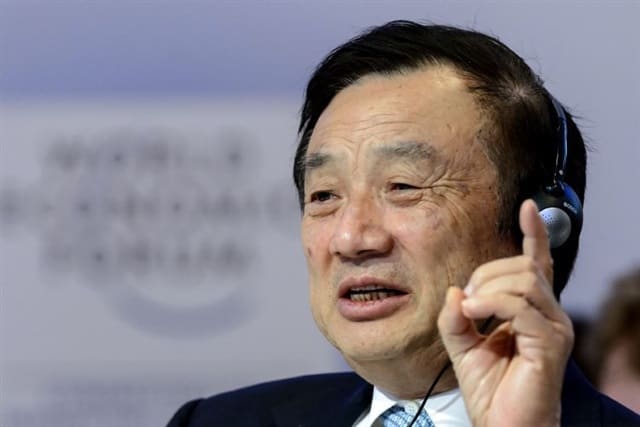
- ·China Huaneng Group chairman and president met Huawei founder Ren Zhengfei in Shenzhen to discuss AI, computing power, and compute-power coordination partnerships.
- ·China's data center energy consumption is expected to surpass 400 terawatt-hours by 2030, more than double current levels, driven primarily by AI workloads.
- ·The meeting positions Huaneng as a preferred utility partner for AI infrastructure and could accelerate integrated energy-AI facility deployment across China.
State Power Meets Tech Ambition
China Huaneng Group dispatched its top leadership to Huawei's Shenzhen headquarters in mid-August, signaling intensifying convergence between the nation's energy infrastructure and artificial intelligence ambitions. Chairman Wen Shugang and president Zhong Guodong met with Huawei founder Ren Zhengfei to explore potential cooperation spanning AI, computing power, and what both organizations term "compute-power coordination," according to Huaneng.
The meeting places two strategic pillars of China's industrial policy in direct alignment. Huaneng operates over 200 gigawatts of generation capacity, making it the world's largest power utility by installed base. Huawei, despite persistent U.S. export restrictions on advanced semiconductors, continues expanding its domestic AI chip offerings and cloud services infrastructure across the mainland.
The Compute-Power Coordination Push
The phrase "compute-power coordination" has emerged as a policy priority in China's technology roadmap. It refers to synchronizing electricity supply, grid management, and data center operations to support the massive energy demands of AI training and inference workloads. A single large-scale training cluster can consume power equivalent to a mid-sized city, creating both technical and economic challenges for grid operators.
State-owned utilities like Huaneng have faced mounting pressure from Beijing to facilitate the government's AI development goals. That includes ensuring stable, cost-effective electricity for data centers and exploring dynamic pricing models that align compute workloads with renewable energy availability. Huawei, for its part, has publicly advocated for tighter integration between telecom infrastructure, cloud platforms, and energy networks, arguing that AI-era data centers require fundamentally different power architectures than traditional facilities.
Why the Meeting Matters Now
China's data center energy consumption is projected to exceed 400 terawatt-hours by 2030, more than double current levels, driven primarily by AI workloads. Provincial governments have already begun restricting new data center approvals in regions facing power shortages, forcing hyperscalers and cloud providers to negotiate directly with utilities for dedicated capacity or co-location arrangements near generation assets.
Huaneng's move to engage Huawei directly suggests the utility is positioning itself as a preferred partner for AI infrastructure build-outs, rather than waiting for directives from the National Development and Reform Commission or provincial energy bureaus. The company has been diversifying beyond coal-fired generation, investing heavily in wind, solar, and nuclear assets that could support renewable-powered AI clusters, a selling point for global customers sensitive to carbon footprints.
For Huawei, the partnership opens a pathway to embed its equipment and software deeper into China's energy grid. The company already supplies telecom gear and enterprise IT systems to utilities, but compute-power coordination would require real-time orchestration layers, grid-edge AI inference, and potentially co-designed hardware that blurs the line between energy management and cloud computing.
Regional Implications
The Huaneng-Huawei dialogue reflects broader trends across Asia, where power constraints increasingly dictate AI infrastructure geography. In Singapore, data center moratoriums have forced operators to seek capacity in Malaysia and Indonesia. Japan's utilities are partnering with cloud providers to build AI-ready substations near decommissioned thermal plants. South Korea's government recently allocated dedicated transmission capacity for semiconductor fabs and AI campuses in Gyeonggi Province.
China's state-owned enterprise model allows faster coordination between energy and technology sectors than is possible in markets where utilities operate under stricter regulatory separation. If Huaneng and Huawei formalize a partnership, it could accelerate deployment of integrated energy-AI facilities and set a template for other state enterprises. That would deepen China's structural advantage in scaling AI infrastructure, even as semiconductor sanctions limit access to cutting-edge chips.
What Comes Next
Neither Huaneng nor Huawei disclosed timelines, investment figures, or specific projects under consideration. Industry observers will watch for pilot deployments in provinces where Huaneng controls large renewable portfolios, such as Inner Mongolia or Qinghai, which already host hyperscale data centers. Any formal agreement would likely include joint ventures on grid-scale battery storage, AI-optimized substation design, or demand-response platforms that shift compute workloads to match wind and solar generation curves.
The meeting also underscores Ren Zhengfei's continued influence over Huawei's strategic direction, despite stepping back from day-to-day operations. His personal involvement in the Huaneng talks signals that compute-power coordination is a top-tier priority for the company, not a mid-level sales initiative. That level of executive attention suggests Huawei views energy-AI integration as a multi-billion-dollar market and a hedge against ongoing semiconductor supply chain risks.
RELATED STORIES
Nvidia's Madison Huang Tours Asia Robotics Hubs in Seoul and Beijing
Cheng Wei-Lun · 3 min
Unitree Robotics IPO Lifts Founder's Net Worth to $16 Billion on First Trading Day
Cheng Wei-Lun · 3 min
China's Smart Vehicle Makers Hit by Component Shortage as AI Demand Surges
Cheng Wei-Lun · 3 min

Xiaomi's Q2 Revenue Slides 6% as Smartphone Sales Weaken Despite EV Gains
Cheng Wei-Lun · 3 min
Spot something wrong? Email editor@briefasia.com. We log every correction publicly.