Technology · AI
Cambricon Revenue Doubles as Chinese AI Chip Demand Outpaces Capacity
China's leading AI chip designer posted $890 million in first-half revenue, but scaling production remains the critical bottleneck for sustained growth

KEY TAKEAWAYS
- ·Cambricon Technologies reported first-half 2026 revenue of approximately $890 million, up 108% year-on-year, with net profit climbing 123% to CNY 2.31 billion.
- ·The company maintained a 55% gross margin for seven consecutive quarters, driven by strong domestic demand for AI accelerators amid U.S. export restrictions on Nvidia chips.
- ·Foundry capacity at TSMC and SMIC, not chip design, has become the primary bottleneck limiting Cambricon's ability to scale production and fulfill order backlogs.
Profitability Streak Extends to Seven Quarters
Cambricon Technologies has answered a question that lingered over China's semiconductor ambitions: can a domestic AI chip maker turn consistent profit while competing against entrenched global players? The Beijing-based designer reported first-half 2026 revenue of CNY 6 billion, approximately $890 million, up 108% year-on-year. Attributable net profit reached CNY 2.31 billion, climbing 123%, while adjusted net profit rose 137% to CNY 2.17 billion, according to company filings. Gross margin held near 55%, marking the seventh consecutive quarter of profitability.
The figures underscore a shift in China's AI infrastructure landscape. Demand for inference and training accelerators has intensified as Chinese cloud providers, internet platforms, and research institutions accelerate model deployment under constrained access to Nvidia's advanced GPUs. Cambricon's Gaudi and MLU-series chips have filled gaps left by U.S. export controls, which tightened again in late 2024 to restrict sales of H100 and successor architectures to Chinese buyers.
Demand Signal Strong, But Fab Slots Remain Tight
Revenue growth outpacing 100% in a capital-intensive hardware segment typically signals either a surge in unit shipments or a steep rise in average selling prices. Industry observers note both factors at play. Cambricon's MLU370 and newer MLU590 inference cards have seen adoption across Alibaba Cloud, Tencent, and ByteDance data centers, while the company's training clusters serve academic and government-backed AI labs. Order backlogs stretched into the third quarter, according to supply-chain sources familiar with the matter.
Yet production capacity, not design capability, has emerged as the binding constraint. Cambricon relies on TSMC and SMIC for wafer fabrication, competing for allocation alongside hundreds of other fabless designers. TSMC's 7 nm and 5 nm nodes remain oversubscribed, and SMIC's 14 nm and 12 nm lines, while expanding, cannot match the performance-per-watt of leading-edge processes. Lead times for tape-out to volume shipment have stretched to five months, double the pre-2024 norm.
The supply bottleneck carries strategic risk. If Cambricon cannot secure sufficient wafer starts, revenue growth may decelerate even as end-market demand continues to climb. The company has reportedly negotiated multi-quarter capacity commitments with both foundries, but these agreements lack the volume guarantees that Nvidia and AMD command at TSMC.
Margin Structure Reflects Design Leverage
A 55% gross margin in AI accelerators is notable. For comparison, Nvidia's data-center segment gross margin hovered near 70% in recent quarters, while smaller players such as Graphcore and Cerebras have operated below 40%. Cambricon's margin profile suggests the company has achieved scale in software toolchain amortization and design reuse, reducing per-unit non-recurring engineering costs.
The margin also reflects pricing power. Chinese buyers face limited alternatives for high-performance AI inference at scale, allowing Cambricon to command premium pricing relative to general-purpose GPU solutions from domestic competitors. Software ecosystem maturity has been critical: the company's Neuware SDK now supports PyTorch, TensorFlow, and ONNX models with minimal porting effort, reducing customer switching costs.
Still, sustaining these margins will require continued investment in compiler optimization, kernel libraries, and validation across evolving model architectures. Transformer variants and mixture-of-experts topologies demand frequent silicon updates, and any lag in roadmap execution could erode Cambricon's pricing advantage.
What Comes Next
The second half of 2026 will test whether Cambricon can translate financial momentum into market-share consolidation. The company faces intensifying competition from Huawei's Ascend line, which benefits from captive demand within Huawei's own cloud and telecom infrastructure, and from Moore Threads and Biren Technology, both of which have secured fresh funding rounds in recent months.
Export-control policy remains a wildcard. If U.S. restrictions tighten further to include equipment sales to Chinese fabs, SMIC's ability to ramp advanced nodes could stall, indirectly constraining Cambricon's supply. Conversely, any easing of controls, however unlikely in the current geopolitical climate, would reintroduce Nvidia competition and compress Cambricon's pricing umbrella.
For now, the numbers tell a story of a company capitalizing on a narrow but lucrative window. Whether that window widens or closes depends less on chip design prowess than on foundry diplomacy, geopolitical winds, and the speed at which China's domestic fab capacity matures.
RELATED STORIES
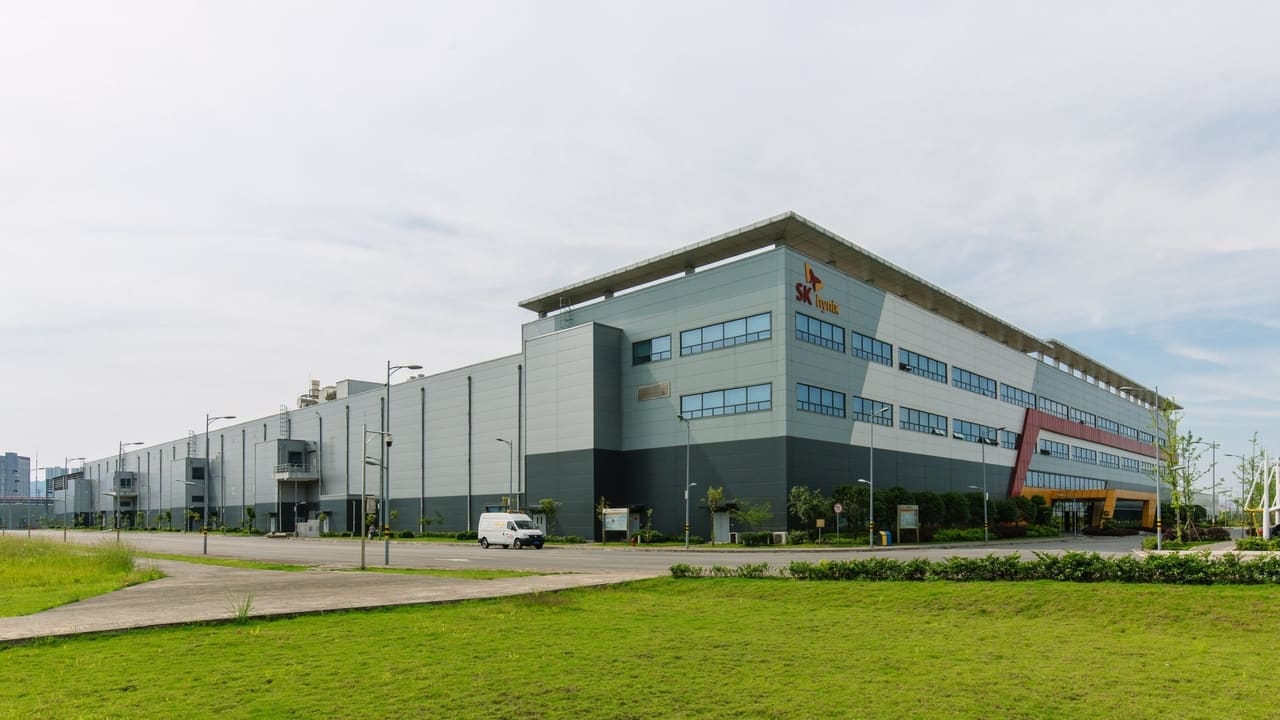
SK Hynix Reviews Future of China Packaging Facility Amid $3 Billion Valuation Talk
Cheng Wei-Lun · 2 min

SK Hynix Eyes Stake Sale in $3 Billion China Packaging Facility
Cheng Wei-Lun · 2 min

Moore Threads Targets Hong Kong IPO as Revenue Climbs 147%
Cheng Wei-Lun · 3 min

Asia's Memory Makers Shift Focus as DRAM Margins Challenge HBM Dominance
Cheng Wei-Lun · 4 min
Spot something wrong? Email editor@briefasia.com. We log every correction publicly.