Sustainability · Climate
Delhi's Poorest Women Cook Through 45-Degree Heat With No Way Out
In India's densest informal settlements, women spend eight times more hours than men on unpaid care work inside homes that trap heat like ovens
KEY TAKEAWAYS
- ·Women in Delhi's informal settlements recorded indoor surface temperatures of 36.5°C while cooking, with outdoor highs reaching 45°C this May and nighttime lows above 32°C.
- ·Indian women spend 46 percent of waking hours on unpaid care work, eight times men's contribution, in homes where 40 percent of urban residents lack reliable electricity and cooling.
- ·Technical solutions like vertical ventilation shafts and low-cost roof chimneys could reduce indoor heat by 3 to 4 degrees Celsius, but state-led retrofitting remains unlikely in self-built settlements.
Trapped by Tin Roofs and Gender
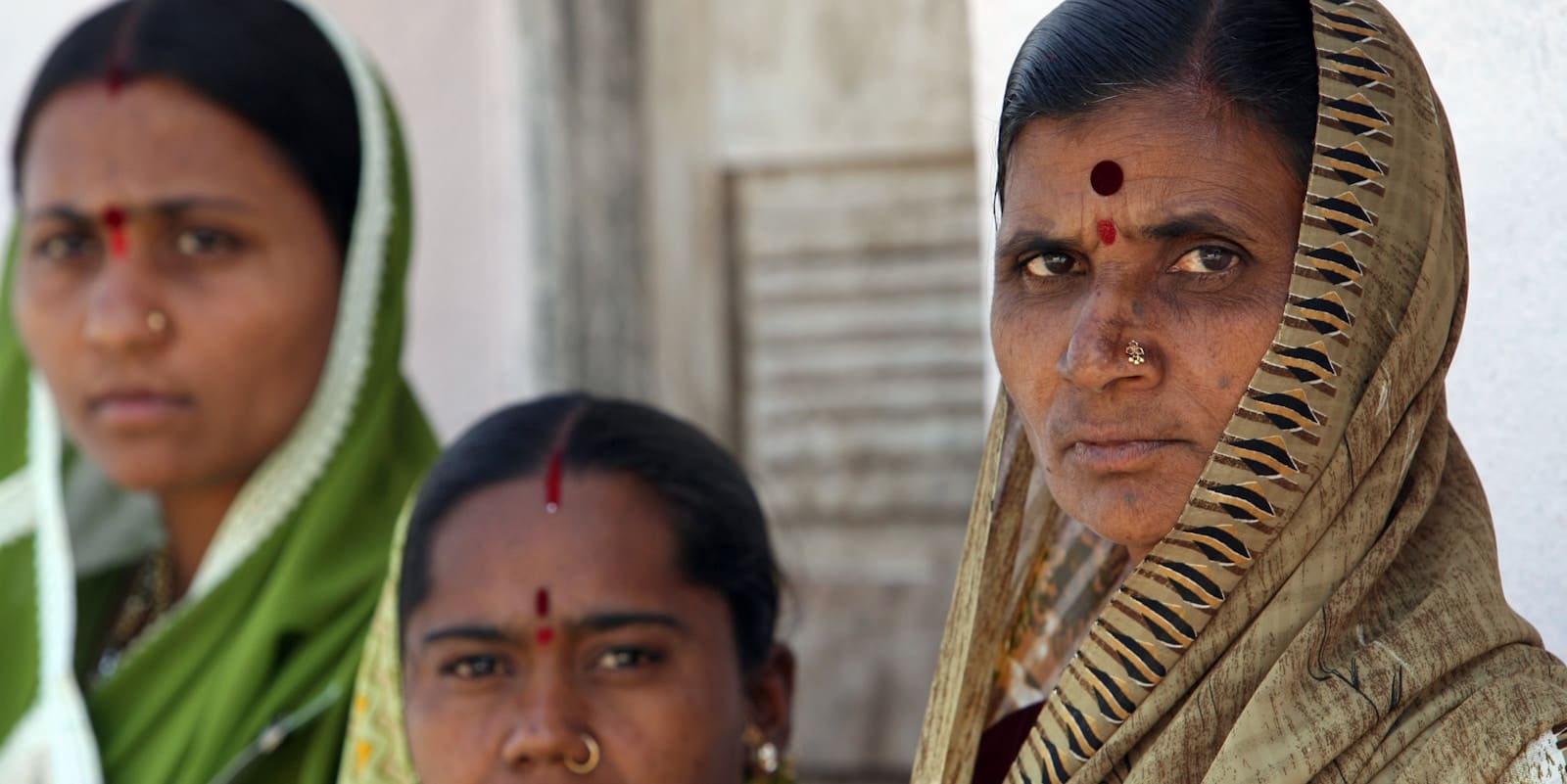
When thermal imaging equipment entered a single-room dwelling in Savda Ghevra last September, surface readings hit 36.5°C while a woman prepared afternoon meals for her children. That measurement came after summer had already passed its peak. This May, nighttime lows in Delhi stayed above 32°C, the highest nocturnal reading in 14 years, while daytime highs approached 45°C.
Kanchan begins her workday at 6 a.m. in that same metal-roofed structure on Delhi's northwest fringe. She prepares breakfast for her husband, then continues through midday when the tin overhead absorbs maximum solar radiation. By the time her children return from school, she stands over a stove making fresh flatbreads in conditions that would trigger workplace safety protocols in formal employment.
Her routine mirrors that of millions of women across India's expanding cities, where approximately 40 percent of the urban population occupies informal housing as of 2022. The combination of substandard construction, unreliable electricity, and deeply embedded caregiving expectations creates a heat trap that falls disproportionately on women.
The Architecture of Inequality
Fifty kilometers east in Kishan Kunj, two young women named Reshma and Manisha manage their household in a structure whose walls consist of woven mats rather than brick. When evening temperatures drop slightly outdoors, their brothers leave to socialize with friends. The women remain inside. Street harassment, poor lighting, and male-dominated public spaces after dark make venturing out unsafe.
Women in India devote 46 percent of their waking hours to unpaid care work on average, according to time-use data, eight times the hours men contribute regardless of education or marital status. As cities densify and temperatures climb, these hours unfold in spaces never designed for the labor they contain.
In Mumbai's Dharavi Koliwada neighborhood, home to an estimated one million people compressed into 2.6 square kilometers, rapid vertical construction has choked off airflow that once moved through the settlement. Mary, whose family belongs to the area's original fishing communities, describes how a creek and open sky used to allow breezes to circulate. Now additional floors and subdivided rooms have created sealed corridors of concrete.
Her neighbor Devyani cooks in a kitchen that previously had windows on three external walls. All three now face other buildings. Breaking through for ventilation is impossible when another family's home sits centimeters away. After cooking, she retreats to the building's stairwell, only marginally cooler than the kitchen itself.
When Cooling Becomes Conflict
Densification has transformed air conditioning from relief into a source of neighborhood tension. Wealthier residents install AC units whose exhaust vents blow hot air directly into adjacent homes occupied by families who cannot afford such appliances. Devyani notes the inequality bluntly: those with money cool their interiors while externalities flow to those without.
Electricity access compounds the problem. Two in five urban Indian households experience unexpected power cuts at least once daily, a figure likely higher in informal settlements where connections are often shared or improvised. Even when supply exists, costs constrain use. AC prices rose 5 to 15 percent before this summer, and research in Mumbai's informal areas shows energy-poor households deliberately limit cooling device operation to control bills.
Kanchan saved for four years from part-time work delivering electricity bills to purchase a refrigerator, an expense she deemed essential to prevent food spoilage in her tight grocery budget. Beyond that, her heat adaptations remain modest: waking earlier, taking periodic breaks, wetting cloth for her head, drinking buttermilk. These practices began after a new building rose next door, blocking what little air circulation her home received.
The Physiology of Constraint
Robert Meade, a researcher at Harvard T.H. Chan School of Public Health, studied heat exposure among women in Gujarat. His team initially advised breaks during peak temperature hours. Caregiving responsibilities made that guidance irrelevant. The physiological response to heat varies little by gender, Meade notes. What differs are the structural constraints: the house, the cultural expectations, the unpaid labor burden.
Health consequences accumulate but rarely enter medical records. Savda Ghevra lacks a nearby public hospital, relying instead on a small dispensary and one private doctor for those who can pay. Reshma reports blood pressure drops while cooking, triggering dizziness and vomiting. Manisha experiences nosebleeds. Another woman in Mumbai describes swollen feet after nights of disrupted sleep as her body's signal that heat has crossed a threshold.
A 2024 study covering 10 Indian cities, including Delhi and Mumbai, linked heatwaves to a 14.7 percent increase in daily mortality and estimated more than 1,100 annual heatwave-attributable deaths across study locations. Official mortality data remains under-reported and poorly tracked, failing to capture morbidity concentrated in poor-quality urban housing.
Solutions at the Margins
Technical fixes exist but face implementation barriers. Mukta Naik, an architect and urban planner with the Sustainable Futures Collaborative, points to vertical ventilation shafts with mechanized exhaust as one option. These systems provide escape routes for hot air in spaces where horizontal cross-ventilation is blocked, addressing both heat and indoor air pollution. Retrofitting is possible in existing structures.
A 2021 study in Mumbai's Andheri East tested a simulated chimney fitted to a one-room home's roof, one side painted black to draw heat, the rest translucent for light. Computer modeling showed the design could reduce interior temperatures by 3 to 4 degrees Celsius at relatively low cost.
Yet India's track record on informal settlement upgrades offers little optimism for state-led retrofitting. Naik suggests the more realistic path involves household-level adoption supported by technical assistance and home-improvement financing. Subsidized cooling devices, equipment standardization to lower costs, and incentives for affordable cooling unit production would also help.
Even in households that own air conditioning, cooling distribution follows gender lines. Mumtaz in Savda Ghevra purchased an AC unit recently, running it only after her son returns in the evening and through the night. Her daughter-in-law cooks and cleans through afternoon hours without it, both because extended operation exceeds the household budget and because, as Mumtaz states plainly, the men work hard outside and deserve a cool home when they return.
Zarina, another resident, constantly splashes water on her clothes while cooking to stay cool. The wet fabric has caused rashes across her body. Gender norms require her to remain fully covered throughout the day, adding another layer to heat exposure that urban planning has historically ignored.
RELATED STORIES
Human Development Patterns Drive Assam's Deadly 2026 Floods
Priyanka V. Rao · 3 min
Mumbai's Electric Bus Push Leaves Drivers in Precarious Contracts
Priyanka V. Rao · 4 min
India's Young Farmers Adopt Drones and Digital Tools to Navigate Climate Pressures
Priyanka V. Rao · 5 min
Oil Stockpiles Fall as Hormuz Disruption Stalls Middle East Shipments
Cheng Wei-Lun · 3 min
Spot something wrong? Email editor@briefasia.com. We log every correction publicly.