Technology · AI
DeepSeek Releases V4-Flash API for Agent Tasks
Chinese AI firm launches public beta of upgraded model with enhanced agent capabilities and new API support
KEY TAKEAWAYS
- ·DeepSeek launched the public beta of its V4-Flash API with agent task upgrades, scoring 82.7 on Terminal Bench 2.1 and 54.4 on DeepSWE.
- ·The model adds Responses API support and Codex compatibility, targeting enterprise automation in finance and logistics across Asia.
- ·The update applies only to V4-Flash; DeepSeek's V4-Pro API and consumer models remain on earlier versions, suggesting a staged rollout strategy.
Production Release Goes Live
DeepSeek has moved its V4-Flash API from preview to public beta, marking a formal production release of the model with a focus on agent-oriented workloads. The Chinese AI developer announced the V4-Flash-0731 version, which retains the same architectural framework and parameter count as the earlier preview but has undergone a complete retraining cycle.
The timing positions DeepSeek alongside a wave of Asian AI labs racing to deploy specialized models for agentic systems, where language models autonomously execute multi-step tasks rather than simply responding to prompts. China's regulatory environment has increasingly favored domestic model deployment, and DeepSeek's API strategy reflects that shift toward commercial infrastructure.
Benchmark Performance
DeepSeek disclosed benchmark results showing the V4-Flash model achieved 82.7 on Terminal Bench 2.1, a synthetic test bed that evaluates command-line task completion. The model also scored 54.4 on DeepSWE, a software engineering benchmark that measures code generation and debugging accuracy.
These numbers place the model in the competitive middle tier of publicly available APIs, though direct comparisons remain difficult given the lack of standardized testing protocols across Chinese and Western benchmarks. Terminal Bench 2.1 is a relatively new evaluation suite, and adoption remains limited outside China-based labs.
The company did not release scores on more widely tracked benchmarks such as HumanEval or MMLU, which would have allowed clearer positioning against models from Anthropic, OpenAI, and Alibaba Cloud.
API Expansion
The V4-Flash-0731 release introduces support for the Responses API, a structured output format that allows developers to define expected JSON schemas for model replies. This feature reduces parsing errors in production applications where predictable data structures are critical, particularly in financial services and logistics automation.
DeepSeek also adapted the model for Codex, the code generation framework originally developed by OpenAI and later adopted by several Chinese labs as a reference architecture. Codex compatibility broadens the range of developer tools that can integrate V4-Flash without custom middleware.
The API update applies exclusively to the V4-Flash endpoint. DeepSeek confirmed that its V4-Pro API, which targets higher-complexity reasoning tasks, remains unchanged. The models powering the company's consumer-facing app and website also continue to run on earlier versions, suggesting a staged rollout strategy.
Strategic Positioning
DeepSeek's incremental release approach contrasts with the simultaneous multi-model launches favored by competitors such as Baidu and SenseTime. By isolating the V4-Flash upgrade to a single API tier, the company appears to be testing production stability before broader deployment.
The agent task emphasis aligns with enterprise demand in Asia, where automation of customer service, supply chain coordination, and back-office workflows has accelerated. Singapore-based fintech platforms and Seoul logistics operators have been early adopters of agentic AI, and DeepSeek's API pricing, while not disclosed in the announcement, is expected to undercut Western providers.
China's AI sector has seen a consolidation of inference infrastructure over the past year, with regulatory pressure pushing smaller labs to partner with or license technology from a handful of approved providers. DeepSeek's public beta signals its intent to secure a position in that narrowing field, particularly as export controls limit access to cutting-edge Nvidia hardware.
What Comes Next
The public beta phase typically lasts three to six months for Chinese AI APIs, during which developers can test integration but face no formal service-level agreements. DeepSeek has not announced a timeline for general availability or pricing tiers for the V4-Flash API.
Industry observers will watch whether the company releases benchmark results on internationally recognized tests, which would clarify its competitive standing. The decision to keep V4-Pro and consumer models on older versions suggests further updates may follow once V4-Flash proves stable under production load.
For now, the V4-Flash launch represents another data point in Asia's fragmented AI infrastructure race, where multiple labs compete for developer mindshare in a market increasingly walled off from Western cloud providers.
RELATED STORIES
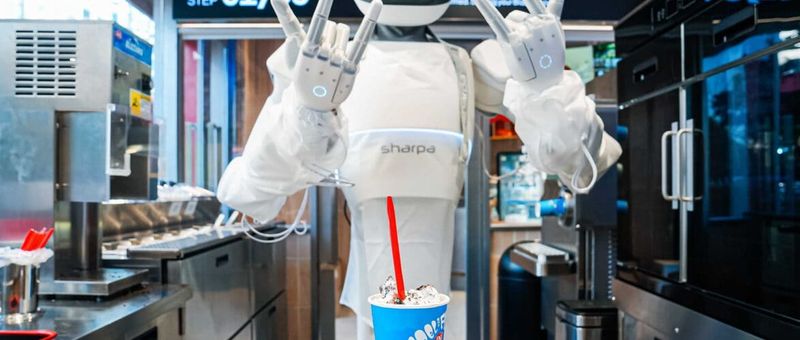
Sharpa Secures $668 Million at $3.3 Billion Valuation in Tech Giant-Backed Round
Cheng Wei-Lun · 2 min
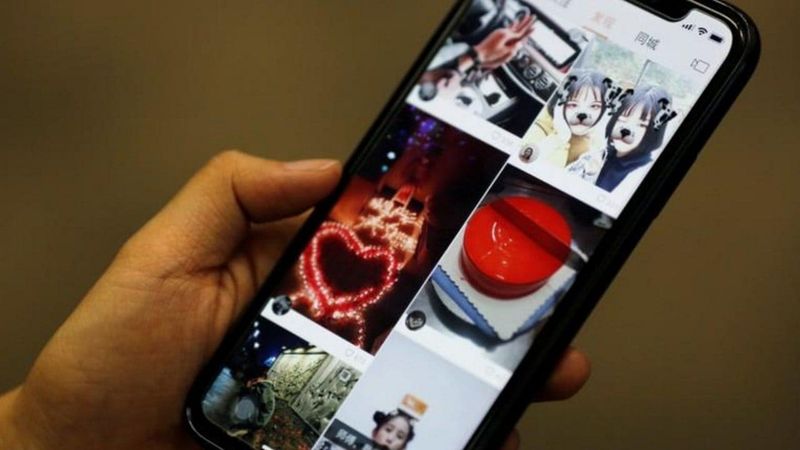
China Scrubs 5.6 Million AI-Generated Posts in Platform Cleanup
Cheng Wei-Lun · 3 min
Li Auto Expands Battery Roster with CALB as Third Supplier
Siti Nuraini · 2 min
BYD Sets Sights on 2 Million Overseas Sales in 2026 After Brazil, Europe Surge
Cheng Wei-Lun · 3 min
Spot something wrong? Email editor@briefasia.com. We log every correction publicly.