Technology · Products
Li Auto Expands Battery Roster with CALB as Third Supplier
The Chinese EV maker is bringing on China Aviation Lithium Battery to power its expanding electric vehicle line-up, starting with battery electric models.
KEY TAKEAWAYS
- ·Li Auto is adding China Aviation Lithium Battery as a third supplier for its electric vehicle batteries, starting with battery electric models including potentially the Li i6 sedan.
- ·CALB holds approximately eight per cent of China's passenger EV battery market and will supplement existing supply from CATL and Farasis Energy for the automaker.
- ·The diversification gives Li Auto pricing leverage and supply continuity as it targets 800,000 vehicle deliveries in 2026 while battery costs represent 30 to 40 per cent of EV manufacturing expense.
New Supply Chain Partner
Li Auto is adding China Aviation Lithium Battery as a third battery supplier for its vehicle line-up, according to people with knowledge of the plans. The arrangement will initially focus on the automaker's battery electric models, with CALB cells expected to supplement existing supply from Contemporary Amperex Technology (CATL) and Farasis Energy.
The Li i6 may become the first vehicle to incorporate CALB batteries under the preliminary timeline, one person familiar with the discussions said. Li Auto announced the i6 sedan earlier this year as part of its push into the pure electric segment, complementing its existing range-extender models that combine internal combustion engines with electric powertrains.
Diversification Strategy
The move reflects a broader pattern among Chinese EV manufacturers seeking to reduce concentration risk in their battery procurement. Li Auto currently sources lithium-ion cells primarily from CATL, the world's largest EV battery manufacturer by production volume, which also supplies Tesla, BMW, and Volkswagen. Farasis serves as a secondary supplier for select models.
CALB ranks among China's top five battery producers by installed capacity. The Luoyang-based company supplies cells to domestic manufacturers including BAIC, Geely, and GAC, and has secured contracts with commercial vehicle makers in Europe. In the second quarter of 2026, CALB held approximately eight per cent of the Chinese passenger EV battery market by installed gigawatt-hours, according to data from the China Automotive Battery Innovation Alliance.
Production Implications
Bringing a third supplier into the chain gives Li Auto additional negotiating leverage on pricing and delivery terms, particularly as the company scales production. The automaker delivered 123,781 vehicles in the second quarter of 2026, a 54 per cent increase year-on-year, driven by demand for its L-series SUVs and the newer Mega electric van.
Battery costs represent roughly 30 to 40 per cent of total manufacturing expense for pure electric vehicles, making supplier relationships critical to margin management. Multi-sourcing also provides continuity insurance if one supplier faces production disruptions or quality issues.
Li Auto has not publicly confirmed the CALB partnership. The company typically announces supply agreements after finalising technical validation and commercial terms. CALB similarly declined to comment on customer relationships that have not been officially disclosed.
Market Context
The supplier expansion comes as Li Auto accelerates its transition toward full battery electric vehicles after initially building its brand on extended-range hybrids. The company aims to launch multiple pure EV models through 2027, targeting the competitive 200,000 to 300,000 yuan price segment where BYD, Nio, and Xpeng compete intensely.
China's EV battery industry remains highly consolidated, with the top three suppliers controlling over 70 per cent of domestic installed capacity. However, second-tier manufacturers like CALB, EVE Energy, and Gotion High-Tech are gaining share as automakers diversify their supply bases and battery technology evolves toward lithium iron phosphate and next-generation chemistries.
Li Auto's supply chain decisions will influence its production flexibility and cost structure as it pursues a target of 800,000 deliveries for the full year 2026. The company's ability to secure stable battery supply at competitive pricing directly affects its gross margin, which reached 21.5 per cent in the first quarter before seasonal and mix effects.
RELATED STORIES
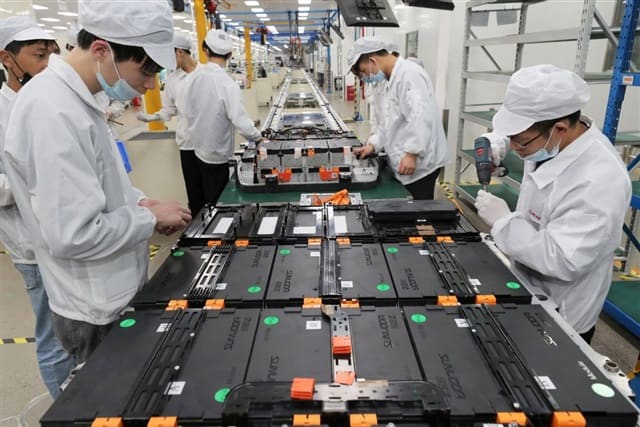
China's Battery Dominance Faces Quality Test as CALB Defect Spreads
Anand Sundaram · 3 min
China's Auto Chip Race Shifts to Volume as Horizon Robotics Crosses 15 Million Units
Jun-ho Seo · 3 min
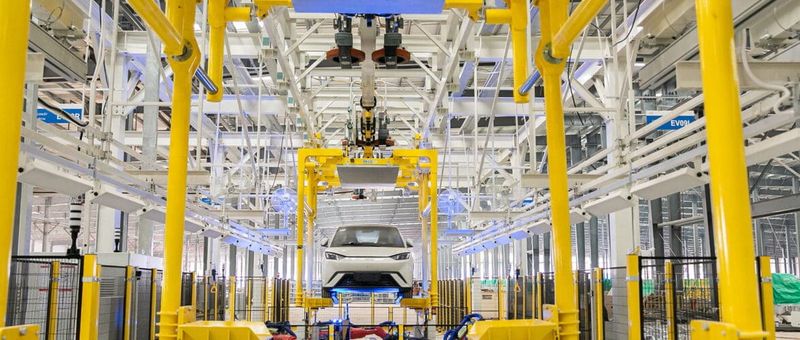
BYD Sets Sights on 2 Million Overseas Sales in 2026 After Brazil, Europe Surge
Cheng Wei-Lun · 3 min

Nio Sets 40,000-Unit Monthly Delivery Target for Q4
Anand Sundaram · 3 min
Spot something wrong? Email editor@briefasia.com. We log every correction publicly.