Technology · Products
China's Battery Dominance Faces Quality Test as CALB Defect Spreads
A single supplier's flaw affecting GAC Aion vehicles exposes the fragility of concentration in the world's largest EV battery ecosystem
KEY TAKEAWAYS
- ·A battery defect at CALB, the world's fourth-largest EV battery maker, has affected GAC Aion vehicles and triggered regulatory scrutiny in China.
- ·Chinese manufacturers control 72 per cent of global EV battery production, meaning a single supplier's quality issue can spread across continents rapidly.
- ·The incident underscores tension between China's rapid capacity expansion in new energy sectors and the need for robust quality control systems at scale.
The Concentration Risk
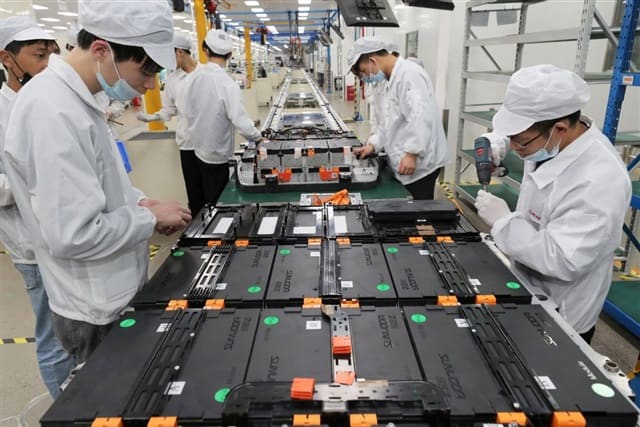
Chinese battery manufacturers control 72 per cent of global electric vehicle battery production, a dominance that has reshaped automotive supply chains from Detroit to Stuttgart. That scale now carries a different kind of weight. A quality controversy involving GAC Aion vehicles and their supplier, China Aviation Lithium Battery Co (CALB), has exposed what happens when a single defect ripples through an ecosystem this large.
CALB ranks as the world's fourth-largest EV battery producer. The company supplies cells to GAC Aion, the electric vehicle subsidiary of Guangzhou Automobile Group. Recent reports of battery failures in Aion models have drawn regulatory attention and raised questions about quality control protocols during China's rapid capacity buildout in new energy sectors.
The incident arrives as China's battery industry races to meet both domestic EV demand and export orders from automakers across Europe and Asia. Production capacity has grown faster than testing infrastructure in some cases, according to industry observers. When a supplier at CALB's scale encounters a defect, the geographic spread of affected vehicles can span continents within weeks.
Scale and Speed
China's battery sector expanded through a combination of state policy support, vertical integration, and aggressive capex deployment. Companies including CATL, BYD, and CALB have built gigafactories at a pace unmatched elsewhere. That speed delivered cost advantages and secured partnerships with major automakers. It also compressed the timeline for validating new cell chemistries and manufacturing processes.
GAC Aion, which began as an internal EV project within GAC Group, now operates as a standalone brand targeting the mid-market segment in China. The brand relies on external suppliers for battery packs, a common structure in China's EV ecosystem. CALB's lithium iron phosphate (LFP) cells power several Aion models. LFP chemistry offers lower cost and improved thermal stability compared to nickel-based alternatives, but quality still hinges on manufacturing precision.
The nature of the defect has not been disclosed in public filings. What is clear is that the issue affected multiple vehicles, prompting internal reviews at both GAC Aion and CALB. Chinese regulators have opened inquiries, standard procedure when consumer safety complaints reach a threshold.
The Supplier Web
Battery supply chains in China are tightly interwoven. CALB sources cathode materials from multiple suppliers, while its cells flow into vehicles produced by GAC, Geely, and export customers. A defect at the cell level can therefore touch several brands simultaneously, complicating recall logistics and liability negotiations.
This interconnectedness is a feature, not a bug, of China's industrial policy. Clustering suppliers and manufacturers in the same region reduces transport costs and accelerates iteration cycles. The trade-off is that quality failures propagate quickly. When one link falters, downstream partners face production halts or field actions.
CALB has not issued a public statement detailing corrective measures. GAC Aion has acknowledged the issue and stated that it is working with its supplier to address affected units. Neither company has quantified the number of vehicles involved or the expected cost of remediation.
What Comes Next
The episode will likely accelerate discussions around battery traceability and supplier audits. European automakers, many of whom source cells from Chinese manufacturers, already face pressure from regulators to demonstrate supply chain due diligence. A high-profile defect case adds urgency to those requirements.
For Chinese battery makers, the incident is a reminder that scale without robust quality systems creates reputational risk. CATL, the industry leader, has invested heavily in testing facilities and digital traceability platforms. Smaller players like CALB now face similar expectations from customers and regulators alike.
China's 72 per cent share of global battery production is unlikely to shrink in the near term. Capacity additions in Europe and North America are ramping, but they start from a much smaller base. The question is whether quality control evolves as quickly as production volume. The CALB case suggests that in some corners of the industry, it has not kept pace.
RELATED STORIES
LG Pivots to AI-Defined Vehicle Platform as Korea Chases China's Self-Driving Lead
Jun-ho Seo · 3 min
China's Auto Chip Race Shifts to Volume as Horizon Robotics Crosses 15 Million Units
Jun-ho Seo · 3 min
China's Chip Makers Split Three Ways Beneath the Revenue Growth
Tran Quoc Bao · 3 min
JCET Eyes $968 Million to Scale AI Packaging Lines
Tran Quoc Bao · 3 min
Spot something wrong? Email editor@briefasia.com. We log every correction publicly.