Finance · Markets
Asian Equities Climb Despite Bond Market Turbulence
Seoul tech stocks surge on massive buyback plans while investors weigh Treasury intervention and persistent inflation concerns
KEY TAKEAWAYS
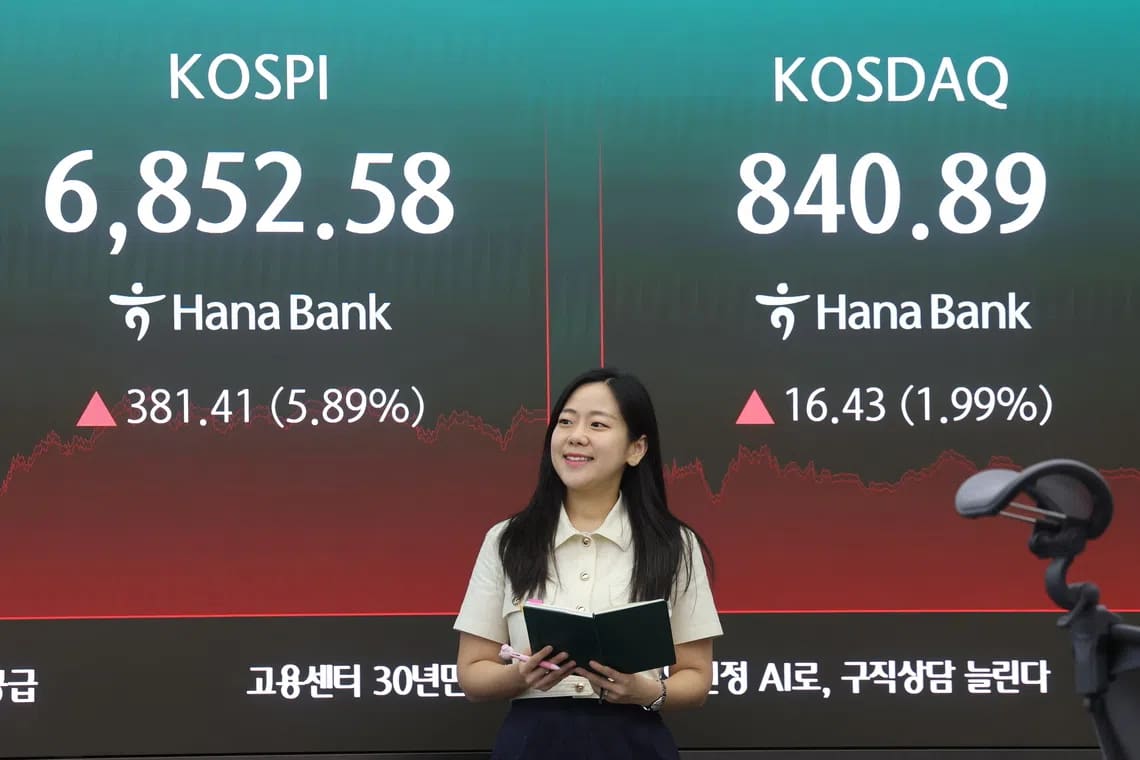
- ·Asian markets rose on August 21 with Seoul leading on Samsung's potential $79 billion shareholder return and SK Hynix's $29 billion buyback announcement.
- ·US Treasury plans to double sovereign bond buybacks initially lowered 30-year yields from 2007 levels but gains reversed as investors questioned effectiveness amid persistent inflation above 2 per cent.
- ·Technology firms seeking up to $500 billion in corporate debt for AI infrastructure and heavy government borrowing calendars are creating supply pressures in global bond markets ahead of Fed Chair Warsh's Jackson Hole speech.
Regional Bourses Defy US Weakness
Regional equity markets advanced on August 21, with Seoul leading gains after major semiconductor manufacturers unveiled substantial shareholder return programs. The rally contrasted with overnight declines in US markets, where elevated government borrowing and persistent inflation above target levels continued to weigh on sentiment.
Samsung shares jumped 3.9 per cent following reports of a potential shareholder return package valued at up to $79 billion. SK Hynix added more than 2 per cent, extending the previous session's 12 per cent surge after the company announced a $29 billion stock buyback plan.
Hong Kong, Singapore, Wellington, Taipei, Mumbai, Bangkok and Jakarta all posted gains. Tokyo and Sydney edged lower, while Shanghai closed flat. European markets opened higher, with London, Paris and Frankfurt in positive territory.
Treasury Intervention Draws Mixed Response
Washington's latest attempt to contain rising long-term borrowing costs generated limited confidence among market participants. The Treasury Department announced plans to at least double sovereign bond buybacks on August 19, a day after the 30-year yield reached levels not seen since 2007, just before the global financial crisis.
The move initially sent long-term rates lower, but yields rebounded the following session. Mark Malek of Muriel Siebert & Co characterized the intervention as "a housekeeping move destined to be short-term, at best."
Secretary Scott Bessent told CNBC his department possessed a "big toolkit" to address yield increases it views as disconnected from underlying financial conditions. Potential measures include expanding bond purchases beyond the recently announced scale.
Bessent attributed the yield spike to thin August trading and a wave of corporate bond issuance. "We believe that the yields don't reflect the underlying fundamentals," he said, adding that inflation would ease once the Iran conflict resolves and oil prices retreat.
Inflation has remained above the Federal Reserve's 2 per cent target for more than five years. The deadlock over reopening the Strait of Hormuz has pushed oil prices higher over the past two weeks, adding pressure to consumer prices.
Supply Dynamics and Policy Uncertainty
The yield surge stems from multiple factors converging in debt markets. Governments on both sides of the Atlantic face heavy borrowing calendars this year due to increased spending commitments, creating abundant supply for investors to choose from.
Technology giants planning massive infrastructure investments have added another layer of issuance. Amazon, Alphabet, Meta and other firms are looking to raise up to $500 billion through corporate bonds to fund AI infrastructure projects, according to Michael Hewson at MCH Market Insights.
"This excess in supply is also likely an additional factor serving to weigh on global sovereign debt markets with some investors preferring to invest in Big Tech as opposed to indebted sovereigns," Hewson wrote.
Market participants also pointed to uncertainty around monetary policy direction. Fed Chair Kevin Warsh has declined to provide forward guidance on the central bank's plans, leaving traders without clear signals on future rate moves.
Investors will scrutinize Warsh's speech at next week's annual gathering of central bankers and finance officials in Jackson Hole, Wyoming, hoping for clarity on policy trajectory.
Currency Moves Reflect Diverging Outlooks
The yen strengthened against the dollar after Japanese inflation data showed prices rising in July, driven by higher energy costs linked to the Middle East crisis. The pickup gives the Bank of Japan potential room to raise interest rates at its September meeting.
All three major US equity indexes fell on August 20 as technology companies, which rely heavily on debt financing for capital-intensive projects, declined on the yield increase.
The contrast between Asian and US market performance highlights diverging regional dynamics. While North American investors remain focused on debt sustainability and inflation persistence, Asian markets are responding to company-specific catalysts and signs of corporate confidence in shareholder returns.
The coming weeks will test whether Treasury interventions can durably stabilize borrowing costs or whether structural supply-demand imbalances in debt markets will continue driving yields higher despite official efforts to contain them.
RELATED STORIES
Seoul's Leveraged ETF Experiment Leaves Retail Investors Nursing Psychiatric Wounds
Jun-ho Seo · 4 min

Bank of Korea Signals Cautious Approach to Future Rate Decisions
Cheng Wei-Lun · 3 min
Singapore Eyes Retail Fund Expansion as Seoul's Leveraged ETF Losses Sound Warning
Priyanka V. Rao · 4 min
Seoul's Semiconductor Surge Fuels Debate Over Central Bank Tightening
Cheng Wei-Lun · 3 min
Spot something wrong? Email editor@briefasia.com. We log every correction publicly.