Finance · Markets
Asian Bond Yields Climb as Treasury Buyback Optimism Fades
Markets retreat after brief rally on US debt management plans, with investors doubting long-term impact on borrowing costs
KEY TAKEAWAYS
- ·Asian bond yields climbed on August 21 after the 30-year US Treasury yield rose six basis points to 5.25 percent, reversing an earlier rally on buyback news.
- ·US Treasury Secretary Scott Bessent indicated buyback operations could exceed $4 billion starting September, but analysts doubt this will lower yields long-term.
- ·Regional equities fell with the MSCI Asia-Pacific gauge down 0.2 percent, while Bitcoin surged past $70,000 and Samsung plans a shareholder return package worth up to $101 billion.
Markets Reverse Course After Brief Rally
Bond markets across Asia opened lower on August 21, tracking a reversal in US Treasuries after an initial rally sparked by expanded debt buyback plans quickly lost momentum. The 30-year US Treasury yield climbed six basis points to close at 5.25 percent, erasing most of the decline that followed the Treasury's surprise announcement of larger buybacks for long-dated bonds.
Australia and New Zealand government bonds declined in early trading, reflecting investor skepticism that buyback operations alone can address the structural drivers behind elevated borrowing costs. The 10-year US yield also reversed course, closing at 4.70 percent after initially dropping on the buyback news.
US Treasury Secretary Scott Bessent indicated that the expanded buyback program, scheduled to begin in September, could exceed the previously announced $4 billion size. Yet market participants remain unconvinced that these measures will provide more than temporary relief from multi-decade high yields driven by persistent inflation concerns and elevated government spending.
Regional Equities Extend Losses
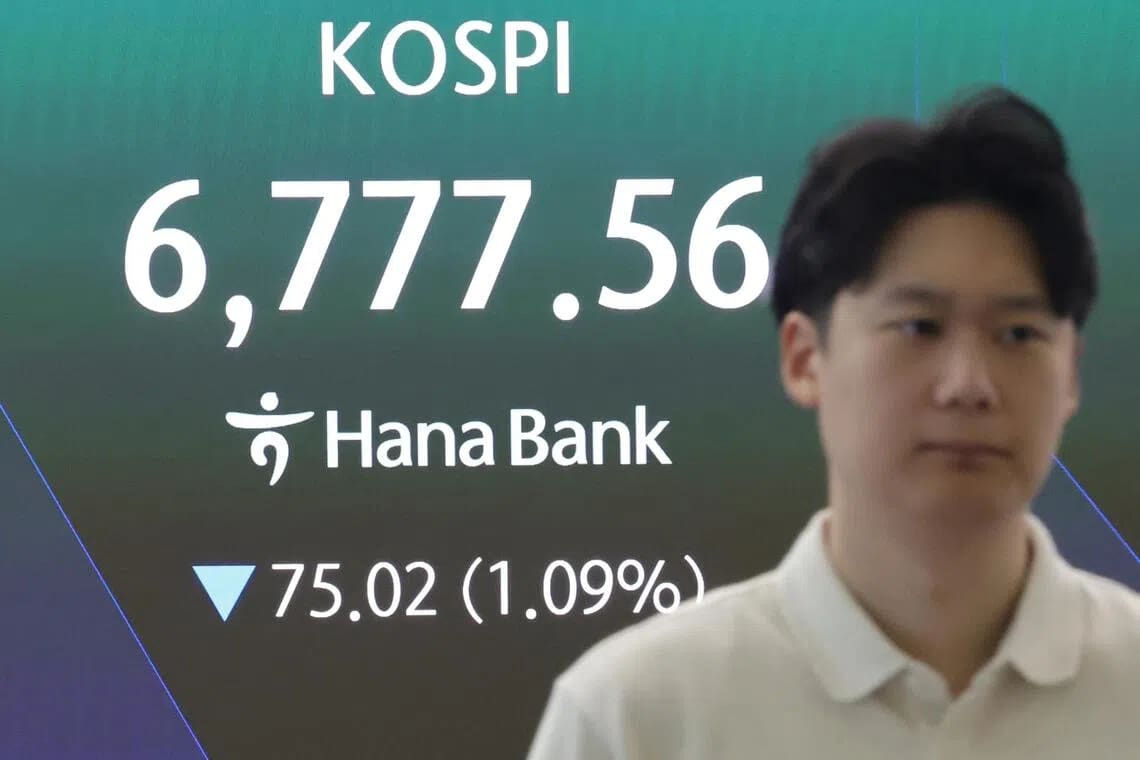
The MSCI Asia-Pacific equities gauge fell 0.2 percent, continuing a broader retreat across risk assets. Wall Street set the tone with the S&P 500 Index dropping 0.9 percent and the Nasdaq 100 declining 0.7 percent for its fifth consecutive session of losses. Walmart's steepest single-day decline since 2022, triggered by disappointing sales figures, weighed heavily on sentiment.
Technology shares remain in focus across Asia. Samsung Electronics is set to unveil a shareholder return package on August 21 that could reach 110 trillion won ($101 billion), according to people familiar with the plans. The announcement comes as the Seoul-based manufacturer navigates competitive pressures in memory chips and smartphones.
Cryptocurrency markets showed strength amid the broader risk-off mood. Bitcoin surged past $70,000 for the first time in more than two months following a meeting between President Donald Trump and crypto industry leaders, trading around $72,600 in early Asian hours.
Currency and Commodity Moves
The dollar edged lower against a basket of major currencies, with the yen holding steady near 158.90 per dollar after briefly breaching the 159 level. Japan's core inflation gauge accelerated for a second consecutive month, reinforcing expectations that the Bank of Japan may raise interest rates as soon as September. Market participants are closely watching for signals from Tokyo on the timing of policy normalization.
Oil prices provided modest relief to risk sentiment, with Brent crude slipping 0.7 percent to $93.10 per barrel after a five-day rally. The recent climb reflected President Trump's threats of "economic warfare" against Iran, though Tehran's response to a proposed deal remains uncertain. Gold steadied around $4,530 an ounce.
Structural Concerns Persist
Fixed income strategists warn that the Treasury's evolving debt management approach may ultimately prove counterproductive. Analysts at JPMorgan Chase, Jefferies, and PGIM note that unpredictable policy shifts can increase term premium, the extra yield investors demand to compensate for uncertainty over the life of a bond.
Mark Malek, chief investment officer at Muriel Siebert & Co, characterized Wednesday's buyback expansion as "just a housekeeping move destined to be short-term, at best." The fundamental challenge, he noted, is that buybacks do not address the underlying reasons for rising yields.
Hardika Singh at Fundstrat Global Advisors expressed similar doubts about the sustainability of yield relief. "Making yields go down over the longer period will require the painful work of bringing down the debt," Singh said, adding that what she termed the "Bessent put" would likely fail to prevent yields from reaching multi-decade highs.
Fiscal Path Under Scrutiny
Bessent dismissed short-term market volatility as "noise" and emphasized that an upcoming fiscal plan would provide clarity on the administration's broader strategy. Yet the trajectory of US government debt remains a central concern for global investors, with elevated long-term borrowing costs increasingly feeding through to corporate financing and equity valuations.
The confluence of persistent inflation, expansionary fiscal policy, and geopolitical uncertainty has created a challenging environment for Asian fixed income markets, which often take cues from Treasury moves. Regional central banks face the dual pressures of managing domestic price stability while navigating capital flow volatility driven by US rate expectations.
With the Bank of Japan poised to tighten policy and the Federal Reserve's path uncertain, currency and bond market turbulence is likely to persist across the region. Investors are watching for concrete fiscal measures from Washington that could credibly address debt sustainability concerns and provide a more durable foundation for lower yields.
RELATED STORIES
Japan's Foreign Exchange Account Surplus Hits $31 Billion on Yen Weakness
Aiko Nakamura · 3 min
Asian Equities Rise as US Treasury Buyback Plan Faces Market Doubt
Priyanka V. Rao · 4 min

Evergrande Founder Fined $1.31 Billion as China's Treasury Holdings Decline
Cheng Wei-Lun · 3 min
Asian Equities Climb as Treasury Buyback Pledge Meets Market Skepticism
Cheng Wei-Lun · 3 min
Spot something wrong? Email editor@briefasia.com. We log every correction publicly.