Asia · Trade
Washington Sets 15% Tariff on Polysilicon Imports to Shield Domestic Chip Supply
New trade measures target ultra-pure silicon derivatives as White House moves to counter Beijing's growing reach in semiconductor and solar manufacturing chains
KEY TAKEAWAYS
- ·The Trump administration will impose a 15 percent tariff and minimum import prices on polysilicon and its derivatives, affecting both semiconductor and solar manufacturing supply chains.
- ·The hybrid trade measure follows a year-long Commerce Department national security investigation into polysilicon, the ultra-pure silicon material critical to chip fabrication and photovoltaic cells.
- ·The decision will impact Asia's interconnected manufacturing networks, from Taiwan and South Korea's chip fabs to Malaysia and Vietnam's solar assembly operations that rely on global polysilicon sourcing.
White House Moves to Protect Critical Material Supply
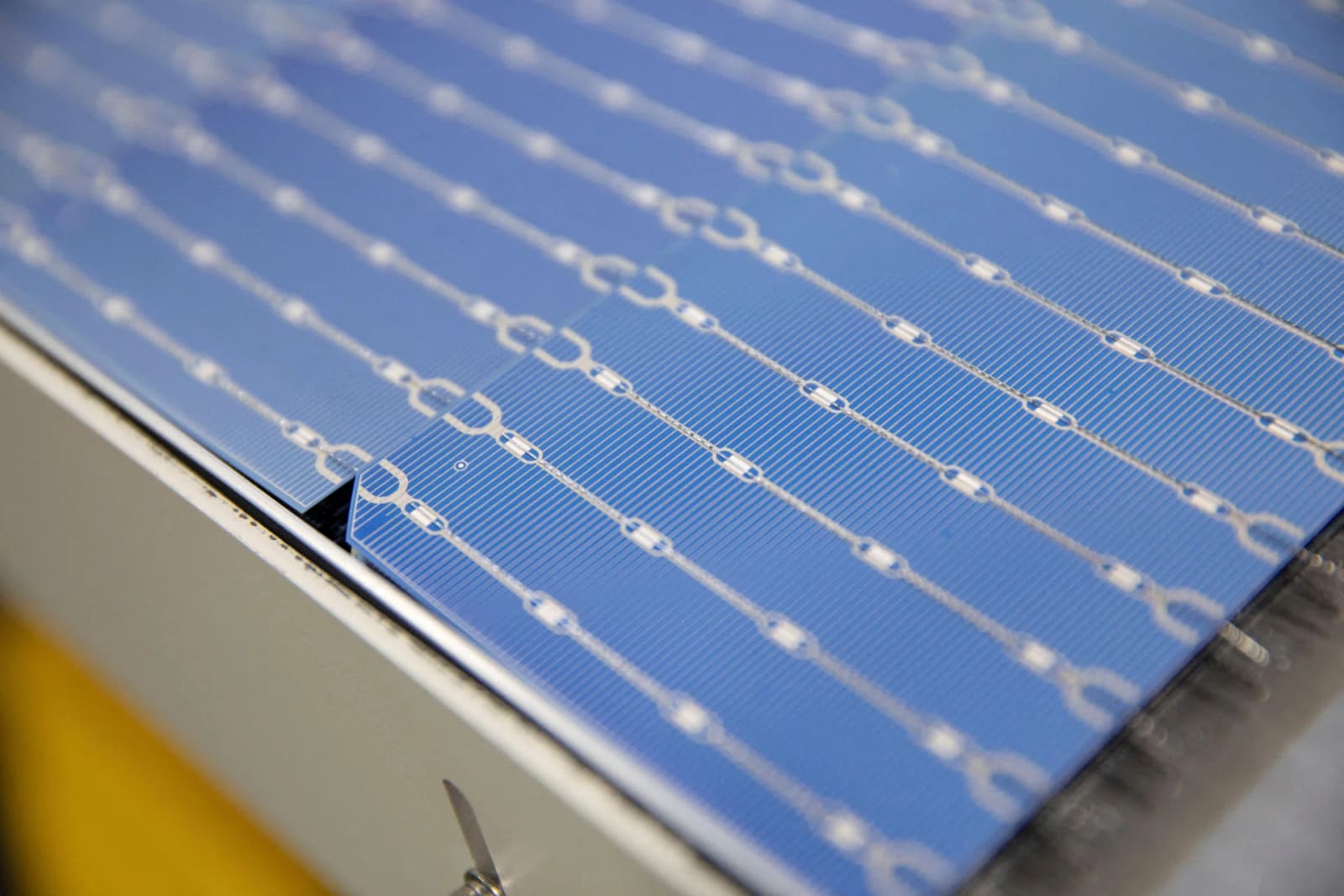
The Trump administration is set to announce a 15 percent tariff on polysilicon derivatives alongside a system of minimum import prices, according to four people with knowledge of the decision. The measures will apply to polysilicon, wafers, cells, and modules used in both semiconductor and solar panel manufacturing.
President Donald Trump is expected to sign the proclamation Thursday, following a year-long national security investigation by the Commerce Department. The hybrid approach combines tariffs with price floors, a structure designed to prevent low-cost imports from undercutting domestic producers.
Polysilicon, an ultra-pure form of silicon, sits at the beginning of two critical supply chains: semiconductors and solar energy. The material undergoes extensive refining to remove impurities, making it suitable for chip fabrication and photovoltaic cells. Its strategic importance has grown as Washington seeks to reduce reliance on foreign suppliers for technologies deemed essential to national security.
Dual Impact on Tech and Energy Sectors
The new trade policy carries implications for both the semiconductor industry and the domestic solar manufacturing sector. While the administration frames the move as necessary to protect US polysilicon factories from Chinese expansion in the chip supply chain, the measures will also affect solar panel imports at a moment when federal support for renewable energy has diminished.
The decision arrives as the White House has rolled back several renewable energy programs, creating tension between industrial policy goals and climate initiatives. Solar manufacturers who depend on imported polysilicon or downstream products may face higher costs, potentially slowing installation rates and raising project expenses.
American polysilicon producers have long argued that Chinese competitors benefit from state subsidies and excess capacity, allowing them to flood global markets with below-cost materials. The minimum import prices aim to establish a floor that prevents such dumping, while the tariff adds a layer of protection regardless of pricing.
Strategic Calculus in US-China Tech Competition
The polysilicon investigation represents one strand in a broader pattern of US efforts to limit Chinese influence over technology supply chains. Washington has pursued export controls on advanced chip equipment, investment screening for semiconductor ventures, and restrictions on Chinese access to cloud computing resources.
Polysilicon capacity has become concentrated in China over the past decade, with domestic producers expanding aggressively in regions like Xinjiang and Inner Mongolia. This concentration has raised concerns in Washington about supply chain vulnerabilities, particularly for semiconductors used in defense and critical infrastructure.
The Commerce Department's national security review examined whether reliance on foreign polysilicon posed risks to US chip production. The resulting tariff and price floor system suggests officials concluded that domestic capacity requires trade protection to remain viable against lower-cost imports.
Asia's Role in the Silicon Supply Web
The new measures will reverberate across Asia's interconnected semiconductor and solar ecosystems. Taiwan, South Korea, and Japan host major wafer and chip fabrication facilities that source polysilicon globally. Malaysia and Vietnam have emerged as solar module assembly hubs, often using Chinese-origin polysilicon and cells.
Minimum import prices could disrupt established procurement patterns, forcing manufacturers to recalibrate supply contracts and production costs. Companies with diversified sourcing may adjust more easily than those heavily dependent on single-origin materials.
Singapore, a regional hub for semiconductor equipment and materials trading, will likely see shifts in polysilicon logistics as traders navigate the new tariff landscape. The city-state's role as a transshipment point and financial center positions it at the intersection of these supply chain adjustments.
The administration's decision underscores how raw material control has become a focal point in US-China technology competition, with implications extending far beyond the two economies to the entire Asian manufacturing network that depends on stable, cost-effective access to polysilicon and its derivatives.
RELATED STORIES

Manila Eyes Nickel Processing to Escape China's Price Control
Priyanka V. Rao · 4 min
Washington's Polysilicon Tariffs Set to Squeeze Korean Solar Producers
Cheng Wei-Lun · 3 min
Shein Retreats From Vietnam Warehouse Bet as China Manufacturing Proves Irreplaceable
Cheng Wei-Lun · 4 min
Shein Scales Back Vietnam Expansion, Reinforces China Manufacturing Base
Cheng Wei-Lun · 3 min
Spot something wrong? Email editor@briefasia.com. We log every correction publicly.