Asia · Trade
Washington Moves to Impose 15% Tariff on Polysilicon Derivatives
The Trump administration is set to announce results of its Section 232 investigation into foreign polysilicon imports as early as this week, with new duties targeting a material critical to solar panel production.
KEY TAKEAWAYS
- ·The Trump administration is preparing a 15% tariff on polysilicon derivative products, with Section 232 investigation results expected as early as Thursday.
- ·China controls roughly 80% of global polysilicon production capacity, while Southeast Asian module assembly hubs rely heavily on Chinese wafers and cells.
- ·The tariff could raise costs for U.S. solar projects and force manufacturers in Vietnam, Thailand, and Malaysia to seek alternative suppliers or absorb margin pressure.
A New Trade Barrier for Solar Supply Chains
The Trump administration is preparing to impose a 15% tariff on polysilicon derivative products, a move that will add friction to solar panel supply chains across Asia and beyond. The tariff is expected to be announced alongside the findings of a Section 232 national security investigation into foreign polysilicon imports, with results due as early as Thursday.
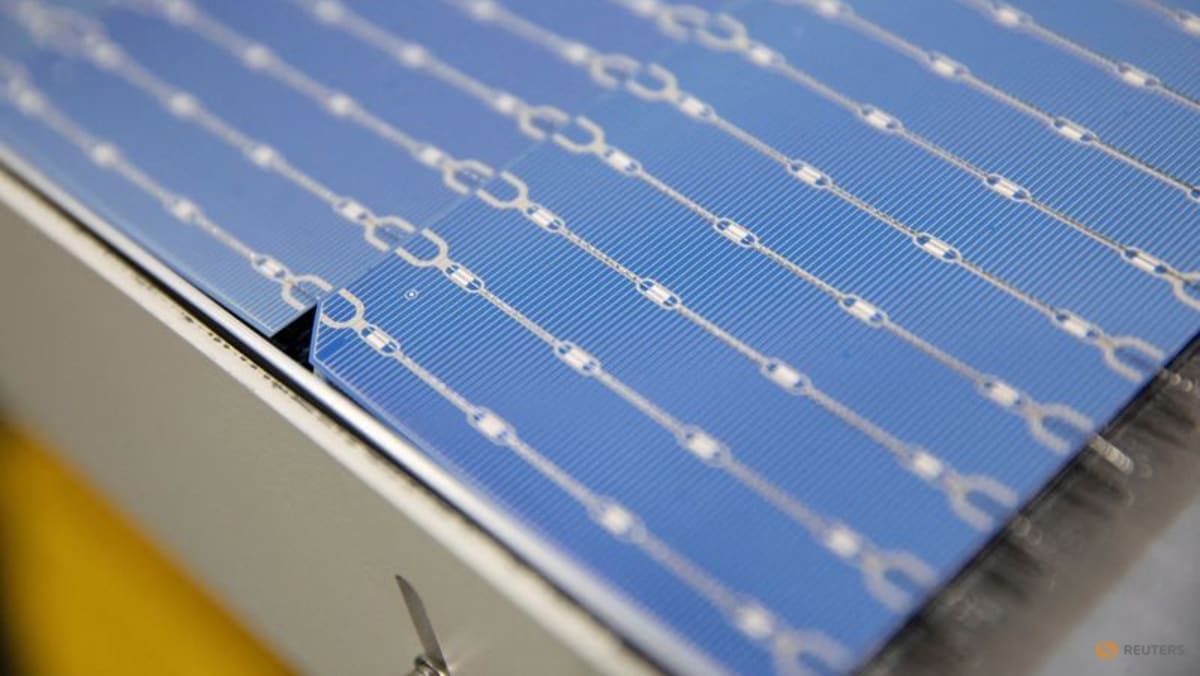
Polysilicon is the refined silicon used to manufacture photovoltaic cells, the building blocks of solar panels. While the United States produces some polysilicon domestically, much of the global supply originates in China, which dominates upstream solar manufacturing. Derivative products include wafers, ingots, and other intermediate forms used in module assembly.
The Section 232 provision of the Trade Expansion Act of 1962 allows the U.S. president to impose tariffs or quotas on imports deemed a threat to national security. The administration has previously invoked Section 232 to levy duties on steel, aluminum, and automobiles. This marks the first time polysilicon has been subjected to such a review.
Asia's Solar Manufacturing Hubs Face Uncertainty
The tariff will have immediate implications for Asian manufacturers that export solar components to the United States. China controls roughly 80% of global polysilicon production capacity, according to industry data. Major producers include Tongwei, Daqo New Energy, and GCL Technology, all of which supply wafers and cells to module makers across the region.
Southeast Asian countries including Vietnam, Thailand, and Malaysia have emerged as key solar module assembly hubs in recent years, in part to circumvent earlier U.S. tariffs on Chinese-made panels. Many of these facilities still rely on Chinese polysilicon and wafers. A 15% duty on derivatives could compress margins for manufacturers operating in these markets or force them to seek alternative suppliers.
South Korea's Hanwha Q Cells and Taiwan's Sino-American Silicon Products are among the non-Chinese polysilicon producers with exposure to the U.S. market. Both have invested in domestic U.S. manufacturing, a strategy that may insulate them from the new tariff if derivative products are defined narrowly. The exact scope of the tariff remains unclear pending the formal announcement.
Trade Policy and Energy Transition Collide
The timing of the tariff reflects the administration's broader trade posture, which has prioritized domestic manufacturing and supply chain resilience over cost optimization. Solar installations in the United States have grown rapidly over the past decade, driven by falling module prices and federal incentives. A tariff on polysilicon derivatives could raise costs for utility-scale solar projects and slow deployment, particularly if domestic supply cannot scale quickly enough to meet demand.
Industry groups have argued that tariffs on solar inputs undermine the administration's stated goal of energy independence by making renewable projects less competitive with fossil fuels. The Solar Energy Industries Association has previously warned that upstream tariffs could cost jobs in installation and project development, sectors that employ far more workers than polysilicon manufacturing.
The Section 232 investigation was initiated earlier this year, though details of the review process have not been publicly disclosed. The mechanism has been controversial in international trade circles, with U.S. trading partners arguing that national security justifications are being stretched to cover economic protectionism. The World Trade Organization has ruled against previous U.S. Section 232 tariffs, though enforcement of those rulings remains contested.
What Comes Next
Market participants will be watching the formal announcement for details on tariff scope, implementation timeline, and any exemptions or exclusions. If the tariff applies broadly to wafers and cells, it could accelerate efforts by U.S. solar developers to secure long-term supply agreements with domestic or allied producers. If it is narrowly defined, the impact may be limited to specific product categories.
The tariff also raises questions about how other governments will respond. China has previously retaliated against U.S. trade measures with its own tariffs or export restrictions. Any move to limit polysilicon exports could further tighten global supply and drive up prices for solar manufacturers worldwide.
For now, the 15% duty represents another data point in the evolving trade relationship between Washington and Beijing, with solar energy caught in the middle. As the industry waits for clarity, the message from the administration is clear: supply chain security, as defined by domestic production, takes precedence over short-term cost considerations.
RELATED STORIES
Trump's Polysilicon Tariffs Create New Winners in Asia's Solar Supply Chain
Cheng Wei-Lun · 4 min
Washington Imposes Price Floors and Tariffs to Rebuild Polysilicon Supply Chain
Priyanka V. Rao · 3 min
Trump Administration Targets Polysilicon Imports With New 15% Tariff
Cheng Wei-Lun · 4 min
Washington's Polysilicon Tariffs Set to Squeeze Korean Solar Producers
Cheng Wei-Lun · 3 min
Spot something wrong? Email editor@briefasia.com. We log every correction publicly.