Asia · Trade
Washington Imposes Price Floors and Tariffs to Rebuild Polysilicon Supply Chain
New trade measures target Chinese dominance in raw materials critical to both semiconductor manufacturing and solar panel production across the United States.
KEY TAKEAWAYS
- ·The White House imposed a 15 percent tariff and minimum import prices on polysilicon and derivatives, taking effect December 4 under national security authority.
- ·The United States operates two polysilicon plants through Hemlock Semiconductor in Michigan and Wacker Chemie in Tennessee, both serving chip and solar supply chains.
- ·Solar demand accounts for over 97 percent of global polysilicon consumption, making panel manufacturing essential to sustaining production for the semiconductor industry.
Trade Protections Target Critical Material
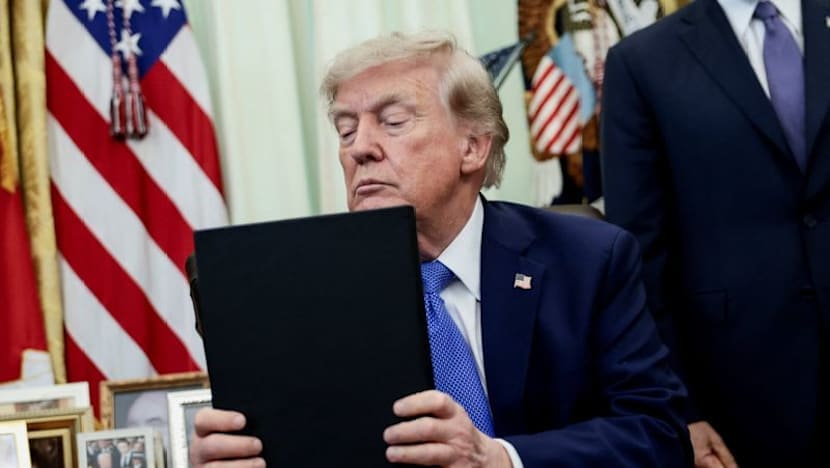
The White House imposed a 15 percent tariff and a series of minimum import prices on polysilicon and its derivatives Thursday, invoking national security authority to shield domestic production of a raw material essential to both semiconductor and solar panel manufacturing. The measures, which take effect December 4, mark an escalation in efforts to reduce dependence on Chinese supply chains for materials underpinning artificial intelligence infrastructure and energy systems.
The order establishes price floors of $21 per kilogram for polysilicon, $100 per kilogram for ingots and wafers, $0.22 per watt for solar cells, and $0.38 per watt for solar modules. The administration invoked Section 232 of the Trade Expansion Act of 1962, the same statute previously used to justify steel and aluminum tariffs on national security grounds.
Polysilicon, an ultra-pure form of silicon, sits at the beginning of two critical supply chains. In semiconductors, it becomes the wafers that carry integrated circuits. In solar energy, manufacturers convert silicon wafers into photovoltaic cells and assemble them into panels. China controls the majority of global polysilicon production, creating what Washington views as a strategic vulnerability.
Two Facilities Anchor Domestic Capacity
The United States currently operates two polysilicon plants. Hemlock Semiconductor runs a Michigan facility through a joint venture between Corning and Japan's Shin-Etsu Handotai. Germany's Wacker Chemie operates a Tennessee factory. Both companies welcomed the measures, though Wacker said it was still assessing the full impact.
A Corning spokesperson said the decision encourages continued investment in domestic capacity and supports long-term competitiveness. Wacker emphasized the implications for semiconductor supply chain resilience and defense interests in a statement.
The chip industry's stake in polysilicon production appears modest at first glance. Semiconductors account for just 2.4 percent of global polysilicon demand, according to the Semiconductor Industry Association. Yet the industry depends on solar's much larger consumption to sustain polysilicon production at scale. Without solar panel manufacturing to anchor demand, the economics of running polysilicon plants for chips alone become difficult.
Solar Manufacturing Remains Concentrated Downstream
American solar manufacturing has expanded since Congress created tax incentives in 2022, but growth has concentrated in panel assembly rather than upstream components. Companies still rely heavily on imported wafers and cells, which require longer investment timelines and larger capital commitments than final assembly operations.
First Solar, Qcells (the U.S. arm of South Korea's Hanwha), and T1 Energy praised the trade action. Dan Barcelo, CEO of T1 Energy, called it a decisive win for advanced manufacturing and domestic energy supply chains. T1 operates a Texas panel plant and is investing $510 million in a cell factory.
The four-month delay before implementation has drawn concern from trade attorneys who have represented domestic solar manufacturers in previous cases against Chinese competitors. Tim Brightbill of Wiley Rein warned the lag could trigger an import surge as buyers rush to lock in lower prices before the measures take effect. Companies that purchase solar panels have argued they need time to renegotiate supply contracts to accommodate higher costs.
Incentive Program Authorized
The proclamation also authorizes the Commerce Department to create an incentive program for companies investing in polysilicon or derivative production facilities. Details of the program, including funding levels and eligibility criteria, have not been announced.
American solar producers have spent a decade accusing Chinese rivals of dumping panels below cost, receiving unfair government subsidies, and shifting manufacturing to third countries to circumvent U.S. tariffs. Previous tariff rounds targeted finished solar panels but left upstream supply chains largely untouched.
The hybrid approach combining minimum import prices with percentage tariffs represents a shift in trade policy architecture. Minimum prices create a floor regardless of how low foreign producers attempt to price their goods, while the percentage tariff adds cost proportional to declared value. Together, the measures aim to ensure that even heavily subsidized imports cannot undercut domestic producers.
The connection between solar and semiconductor supply chains adds complexity to trade policy in this sector. Strengthening one industry's domestic capacity serves the other's strategic needs, a dynamic that has shaped the administration's approach to polysilicon as a dual-use material with implications for both energy independence and technology competition with Beijing.
RELATED STORIES
Washington's Polysilicon Tariffs Set to Squeeze Korean Solar Producers
Cheng Wei-Lun · 3 min

Manila Eyes Nickel Processing to Escape China's Price Control
Priyanka V. Rao · 4 min
Shein Retreats From Vietnam Warehouse Bet as China Manufacturing Proves Irreplaceable
Cheng Wei-Lun · 4 min
Shein Scales Back Vietnam Expansion, Reinforces China Manufacturing Base
Cheng Wei-Lun · 3 min
Spot something wrong? Email editor@briefasia.com. We log every correction publicly.