Asia · Trade
Trump Administration Targets Polysilicon Imports With New 15% Tariff
Move aims to counter Chinese dominance in material critical to solar panels and semiconductor manufacturing
KEY TAKEAWAYS
- ·The Trump administration introduced a 15% tariff and minimum price on polysilicon imports, targeting China's 96% share of global production.
- ·Solar panels consume most polysilicon output, while semiconductors account for 2.4% of 2025 demand, exposing Asian electronics and energy supply chains to higher costs.
- ·The tariff takes effect in 30 days and may prompt idled U.S. producers to restart capacity if the price floor justifies new investment.
A Direct Challenge to Chinese Supply Chains
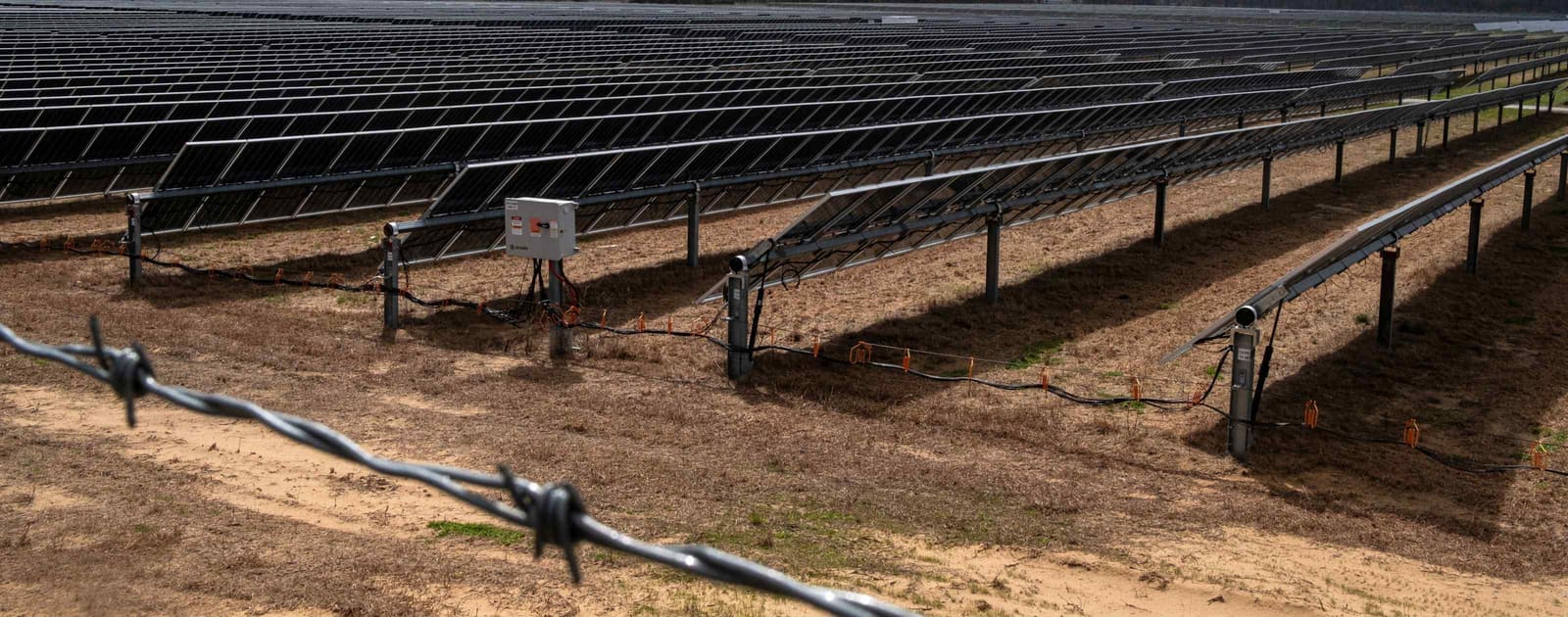
The Trump administration unveiled a 15% tariff on polysilicon imports Thursday, paired with minimum price requirements designed to blunt China's overwhelming control of a material essential to both renewable energy and advanced computing. Chinese companies command 96% of worldwide polysilicon production, leaving U.S. buyers with few alternatives and Washington concerned about strategic vulnerability.
Polysilicon serves as the foundation for photovoltaic cells in solar installations and, to a lesser extent, wafers in semiconductor fabrication. The solar sector consumes the bulk of annual output, while chipmaking accounts for 2.4% of global polysilicon demand in 2025, according to the Semiconductor Industry Association. That modest share still represents hundreds of millions of dollars in trade and touches supply chains across Asia, from Taiwan's foundries to South Korea's memory fabs.
Why the White House Is Moving Now
Trade officials framed the measure as a national security priority rather than purely economic protectionism. With nearly all polysilicon originating in China, any supply disruption or price manipulation carries immediate consequences for U.S. solar deployment targets and for the domestic chip industry, which Washington has spent tens of billions of dollars to reshore through the CHIPS Act.
The tariff structure includes both a percentage levy and a floor price, a dual mechanism intended to prevent Chinese exporters from undercutting the duty through aggressive discounting. Details on the minimum price threshold have not yet been published, but industry observers expect it to track spot market benchmarks from the past 24 months, when polysilicon traded between $8 and $12 per kilogram.
Ripple Effects Across Asian Supply Chains
The new duty will ripple outward from China. Japanese trading houses that broker polysilicon for solar module assemblers in Southeast Asia will face higher landed costs, squeezing margins on projects already operating on thin returns. South Korean conglomerates with vertically integrated solar operations, including Hanwha Qcells, may accelerate plans to secure non-Chinese feedstock or absorb the tariff if long-term contracts lock in pricing.
Taiwan's semiconductor supply chain, though less exposed by volume, confronts a different calculus. Leading foundries source ultra-pure polysilicon from a handful of suppliers, some of which maintain production in China despite headquarters elsewhere. If those facilities fall within the tariff's scope, wafer costs could tick upward, compounding pressure from export controls on advanced chipmaking equipment.
India's ambitions to build a self-sufficient solar manufacturing base gain indirect support from the U.S. move. New Delhi has offered subsidies for domestic polysilicon production, but projects remain years from meaningful output. A higher global price floor may improve the economics for Indian startups and joint ventures that have struggled to compete with Chinese scale.
Pushback and Uncertainty
Industry groups representing solar installers in the United States have warned that the tariff will raise project costs at a time when the Inflation Reduction Act is driving record deployment. Module prices have already climbed in recent quarters as raw material costs stabilized following a sharp downturn in 2023 and 2024. Adding a 15% levy on polysilicon imports could delay utility-scale projects that depend on narrow internal rates of return.
Semiconductor trade associations have been more muted, noting that chipmakers have diversified polysilicon suppliers over the past decade and that the material represents a small fraction of total wafer expense. Still, any incremental cost increase complicates efforts to match Asian fab economics in the United States, where labor and energy expenses already run higher.
China's Ministry of Commerce has not issued a formal response, but state media editorials Thursday evening criticized the tariff as "economic coercion" and hinted at potential countermeasures. Beijing has previously restricted exports of rare earth elements and gallium in retaliation for U.S. trade actions, and polysilicon buyers worry that a tit-for-tat cycle could tighten global supply further.
What Comes Next
The tariff takes effect in 30 days, giving importers a narrow window to finalize orders under the old regime. Customs and Border Protection will publish technical guidance on product classification, including whether the duty applies to polysilicon embedded in finished wafers or only to raw granules and chunks.
Longer term, the policy's success hinges on whether it spurs new capacity outside China. Hemlock Semiconductor in Michigan and REC Silicon in Washington State have idled or scaled back polysilicon lines in recent years, unable to compete with Chinese costs. Both companies have signaled interest in restarting production if market conditions improve, and the tariff may provide the price support needed to justify capital investment.
For Asia's electronics and energy industries, the move underscores a broader reconfiguration of trade flows as Washington and Beijing decouple in critical materials. Companies that built supply chains around Chinese polysilicon now face a choice: pay the tariff, relocate production, or lobby for exemptions. Each path carries risk, and few expect clarity before the U.S. presidential election cycle intensifies in the coming months.
RELATED STORIES

Manila Eyes Nickel Processing to Escape China's Price Control
Priyanka V. Rao · 4 min
Washington's Polysilicon Tariffs Set to Squeeze Korean Solar Producers
Cheng Wei-Lun · 3 min
Shein Retreats From Vietnam Warehouse Bet as China Manufacturing Proves Irreplaceable
Cheng Wei-Lun · 4 min
Shein Scales Back Vietnam Expansion, Reinforces China Manufacturing Base
Cheng Wei-Lun · 3 min
Spot something wrong? Email editor@briefasia.com. We log every correction publicly.